#plants

gen: 2026/08/08:17:46 in 56.5 secname: Fukien tea bonsai
type: thingscientific name: Ehretia microphylla (syn. Carmona retusa)
pts: 0confidence level: 82%
Generated
^^ less ^^
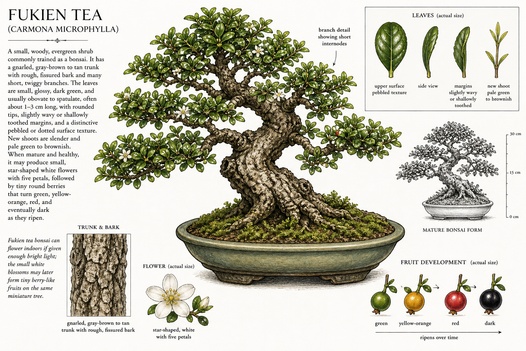
It is a Fukien tea bonsai.

Scientific name: Ehretia microphylla (syn. Carmona retusa).

A small, woody, evergreen shrub commonly trained as a bonsai. It has a gnarled, gray-brown to tan trunk with rough, fissured bark and many short, twiggy branches. The leaves are small, glossy, dark green, and usually obovate to spatulate, often about 1–3 cm long, with rounded tips, slightly wavy or shallowly toothed margins, and a distinctive pebbled or dotted surface texture. New shoots are slender and pale green to brownish. When mature and healthy, it may produce small, star-shaped white flowers with five petals, followed by tiny round berries that turn green, yellow-orange, red, and eventually dark as they ripen..

Fukien tea bonsai can flower indoors if given enough bright light; the small white blossoms may later form tiny berry-like fruits on the same miniature tree..

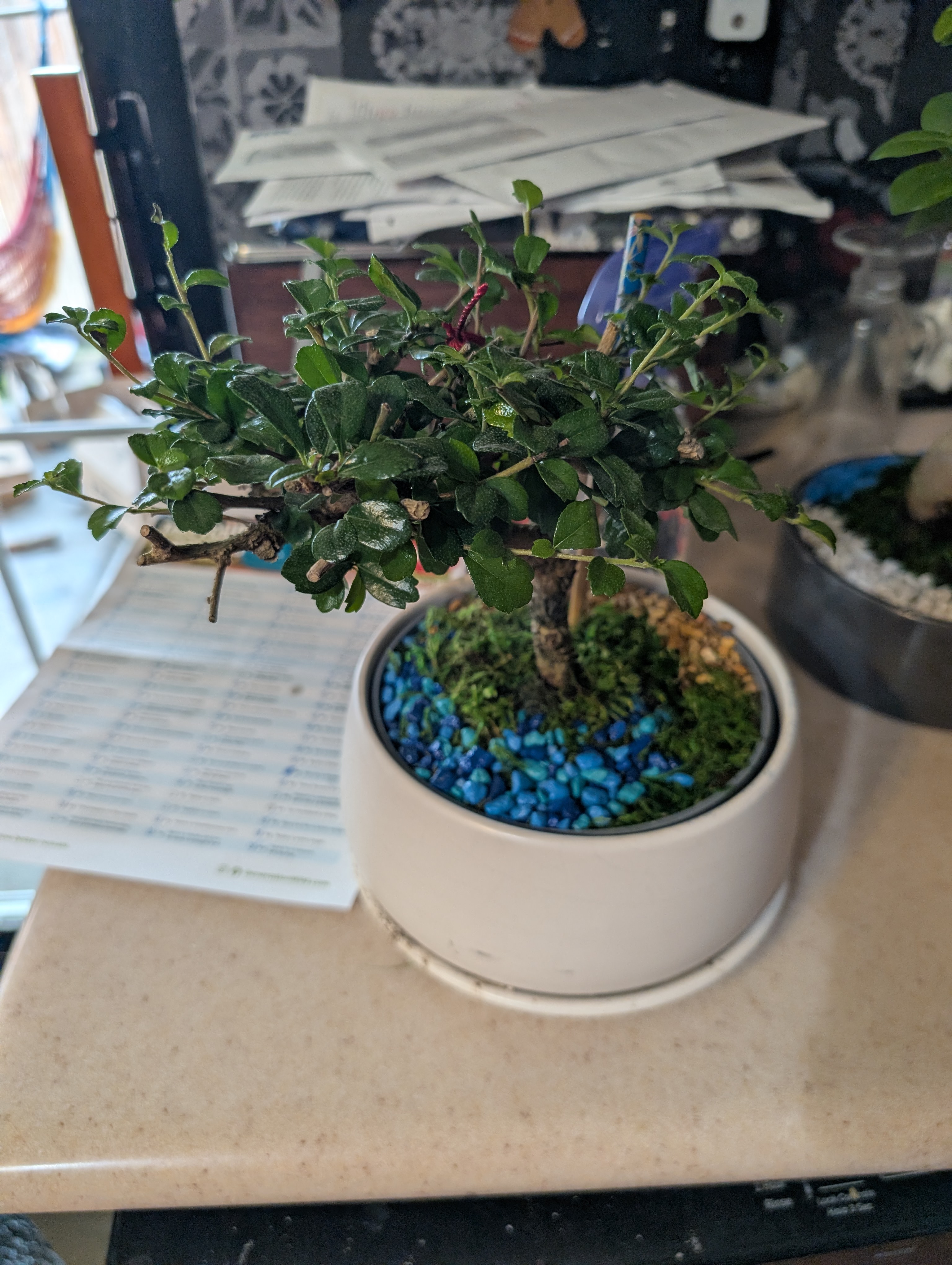
The plant appears to be a small woody bonsai with dense clusters of very small, glossy, dark green leaves. The leaves show a bumpy, dotted surface and slightly scalloped or toothed margins, which are key visual traits of Fukien tea. Its twiggy growth habit and rough, miniature trunk are also typical of Fukien tea bonsai sold as indoor bonsai. Similar bonsai plants such as Chinese elm or boxwood can have small leaves, but Chinese elm leaves are thinner and more clearly serrated, while boxwood leaves are smoother and more oval with less of the distinctive speckled surface.

Holder
∨∨ more ∨∨
Generated
^^ less ^^
There once was a desk, calm and bright,
With sunny drawers and keys set for flight,
A seascape says "shore thing, y'all,"
And headphones stand by the call,
While the plant whispers "leaf me" in light.
Holder
author:Unknowninstitution:Unknown¿porque no los dos?
tl;drThe provided image appears to be entirely blank (a uniform white field) with no visible article text, headline, photos, charts, or readable elements. Because there is no discernible content to evaluate, it’s not possible to assess the piece’s claims, sourcing, framing, or omissions. If you intended to share a screenshot or article, please re-upload a clearer image or paste the text/URL for analysis.
deeper:With no legible content, there’s nothing to score for bias (language, selection of facts, framing) or quality (evidence, sourcing, accuracy, context). The only quality issue observable is that the image itself is unusable for analysis—likely an upload/rendering problem or an empty screenshot.
media:
∨∨ more ∨∨
gen: 2026/07/15:16:06 in 1 min 44.2 secname: Common purslane
type: thingscientific name: Portulaca oleracea
pts: 0confidence level: 94%
Generated
^^ less ^^
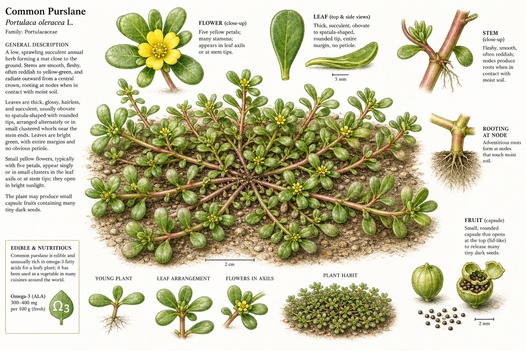
It is a Common purslane.

Scientific name: Portulaca oleracea.

A low, sprawling succulent annual herb forming a mat close to the ground. Stems are smooth, fleshy, often reddish to yellow-green, and radiate outward from a central crown, rooting at nodes when in contact with moist soil. Leaves are thick, glossy, hairless, and succulent, usually obovate to spatula-shaped with rounded tips, arranged alternately or in small clustered whorls near the stem ends. Leaves are bright green, with entire margins and no obvious petiole. Small yellow flowers, typically with five petals, appear singly or in small clusters in the leaf axils or at stem tips; they open in bright sunlight. The plant may produce small capsule fruits containing many tiny dark seeds..

Common purslane is edible and unusually rich in omega-3 fatty acids for a leafy plant; it has been used as a vegetable in many cuisines around the world..

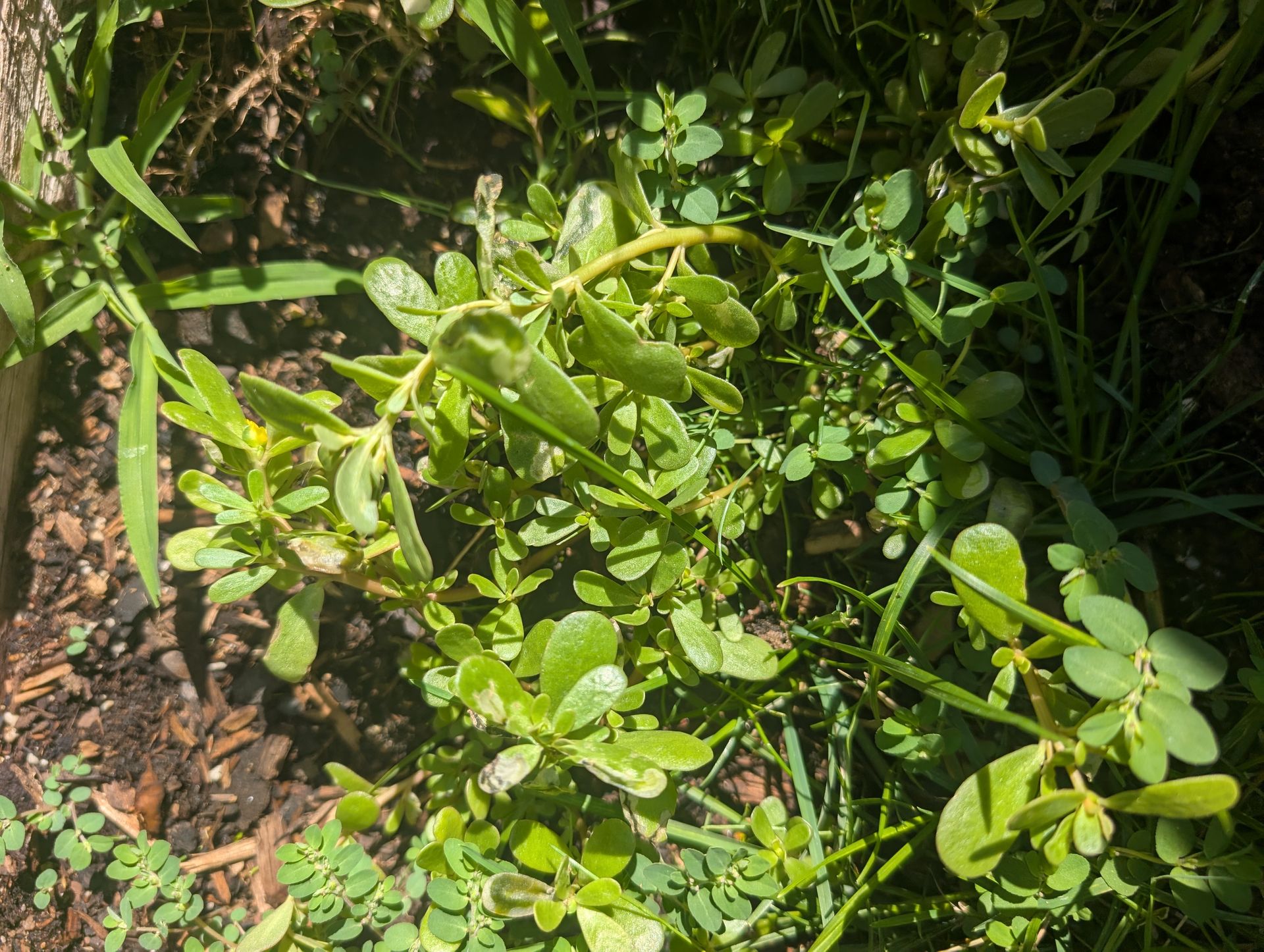
The plant in the image has the key traits of common purslane: prostrate, fleshy, smooth stems; glossy succulent oval-to-spatulate leaves; clustered leaf arrangement at the nodes; and a small yellow flower visible near the lower left. These features distinguish it from similar lawn weeds such as spotted spurge, which has thinner, non-succulent leaves and milky sap, and from clovers or oxalis, which have compound leaves rather than thick single succulent leaves. The mat-forming growth habit in disturbed garden soil is also typical of Portulaca oleracea.

Holder
∨∨ more ∨∨
gen: 2026/07/14:01:20 in 1 min 37.3 secname: Lupine
type: thingscientific name: Lupinus sp.
pts: 0confidence level: 78%
Generated
^^ less ^^
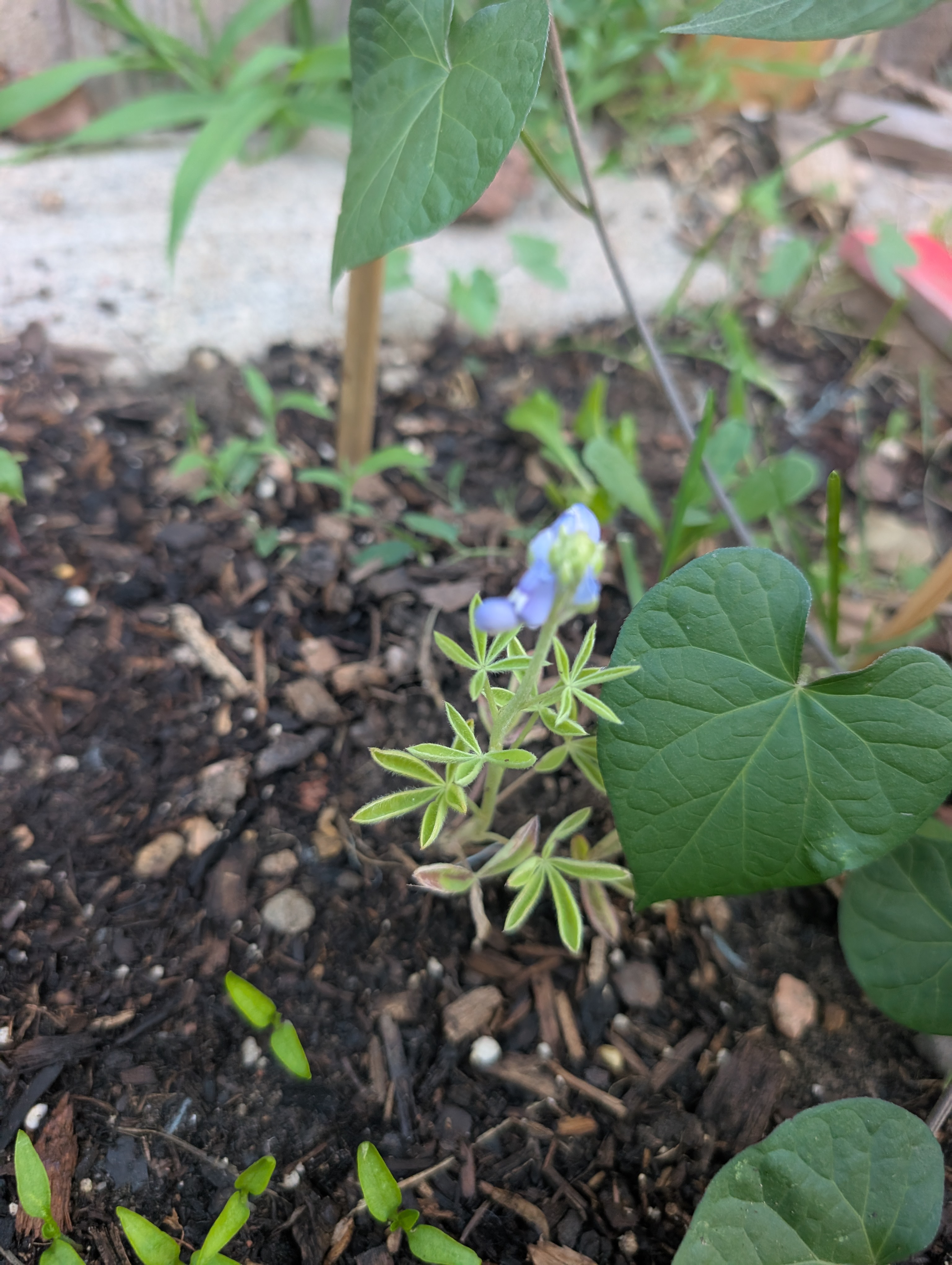
It is a Lupine.

Scientific name: Lupinus sp..

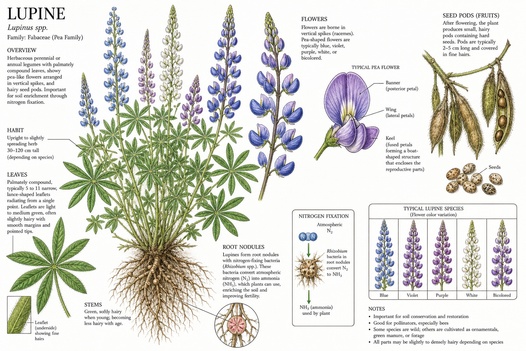
A herbaceous legume with upright to slightly spreading, softly hairy green stems. The leaves are palmately compound: typically 5 to 11 narrow, lance-shaped leaflets radiate from a single point like the fingers of a hand. Leaflets are light to medium green, often slightly fuzzy, with smooth margins and pointed tips. Mature plants produce vertical flower spikes or racemes bearing pea-shaped blossoms, commonly blue, violet, purple, white, or bicolored. Each flower has the typical legume structure with a banner petal, wing petals, and a keel. After flowering, the plant forms small, hairy seed pods containing hard seeds..

Lupines are members of the pea family and can form root nodules with nitrogen-fixing bacteria, helping enrich soil by converting atmospheric nitrogen into forms plants can use..

The clearest identifiable plant features are the palmate, star-like compound leaves with several narrow leaflets and the small blue-purple pea-type flower visible near the lower center of the image. These traits are characteristic of Lupinus, commonly called lupines or, in some regions, bluebonnets. The image also contains large heart- to shield-shaped leaves from a neighboring plant, so the identification is made from the lupine-like flower and compound leaves rather than those larger leaves. Because the photo is somewhat blurred and shows mixed vegetation, I can identify the genus with moderate confidence but not the exact species.

Holder
∨∨ more ∨∨
You made it to the bottom. Now dance!

created by: RobotPirateNinjaDiscord
owned and operated by: RPN Omnigalactic Insitutution as of: 2026/08/31: 11:46 in 0 ms
Enter Code
Login with Account