#space
| gen: 2026/08/19:16:22 in 39.6 sec (old)bias: 2 (Center) |
| type: newsquality: 84 |
| pts: 0 |
 | author: | Denise Chow | institution: | NBC News | ¿porque no los dos? |
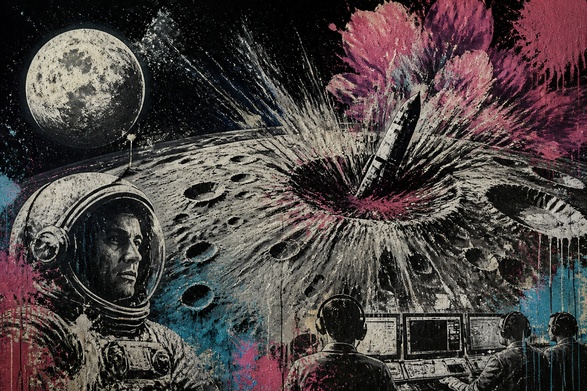
| tl;dr | NBC News reports that NASA’s Lunar Reconnaissance Orbiter photographed a new lunar crater formed when a SpaceX Falcon 9 upper-stage rocket impacted the moon on Aug. 4. The story explains how researchers identified the impact site using before/after imagery, estimates crater size and ejecta patterns, and notes the challenges of precisely tracking spent rocket stages in deep space. It also situates the event in broader concerns about orbital debris and responsible disposal practices. | ||||
| deeper: | The piece is largely straight, evidence-led reporting: it cites NASA imaging, gives dates, measurements, and methodological context (before/after photos, tracking uncertainty). It includes some interpretive framing around “sustainability” and debris management, but it also provides SpaceX’s statement and avoids sensational language. Quality is solid: clear structure, concrete details, and relevant historical context (prior misattribution of a lunar impact). Minor limits: it relies heavily on NASA/SpaceX sources and doesn’t deeply probe independent verification or accountability beyond brief discussion. | ||||
media: | |||||
| gen: 2026/08/17:02:21 in 40.2 sec (old)bias: 5 (Unknown) |
| type: newsquality: 25 |
| pts: 0 |

 | author: | Unknown | institution: | Unknown | ¿porque no los dos? |
| tl;dr | The provided image is a very low-resolution, tall screenshot of a dark-mode article page featuring a prominent space-related image (an Earth/planet with fiery impact imagery). However, the headline and body text are too pixelated to read reliably, so the article’s specific claims, evidence, and framing cannot be accurately assessed from this file alone. | ||||
| deeper: | Because the text is not legible, I can’t verify what the article asserts, what sources it cites, or whether it uses loaded language. The only clear signal is a dramatic impact-style image, which often indicates sensational framing in science/space coverage, but that’s not enough to judge the full piece. Quality is scored low mainly due to insufficient readable information in the screenshot, not necessarily because the underlying article is poor. | ||||
media: | |||||
| gen: 2026/08/10:22:46 in 4 min 9.8 sec (old)bias: 2 (Center) |
| type: lolsquality: 74 |
| pts: 0 |

#space#rockets#satellites#japan#navigation#h3 rocket#space launch#navigation sat#high earth orb#jaxa
 | author: | Unknown | institution: | Yahoo News | ¿porque no los dos? |
| tl;dr | The article reports that Japan’s H3 rocket successfully launched a roughly 10,800‑pound navigation satellite into high Earth orbit, with accompanying launch imagery/video. It frames the mission as a technical milestone for Japan’s space program and provides basic context about the rocket and payload, focusing on what launched, when/where it launched, and the outcome (reaching the intended orbit). | ||||
| deeper: | The piece is largely straight, event-focused coverage with minimal political framing: it emphasizes factual mission details (vehicle, payload mass, orbit, and visuals) and reads like standard space/technology reporting. Any bias is mild and comes from a celebratory tone common in spaceflight write-ups and the selection of positive context. Quality is solid for a brief news article, but the screenshot suggests limited technical depth and sourcing details beyond the basic mission narrative and video. | ||||
media: | |||||
| gen: 2026/08/06:14:01 in 40.6 sec (old)bias: 2 (Center) |
| type: newsquality: 78 |
| pts: 0 |
 | author: | Unknown | institution: | Unknown | ¿porque no los dos? |
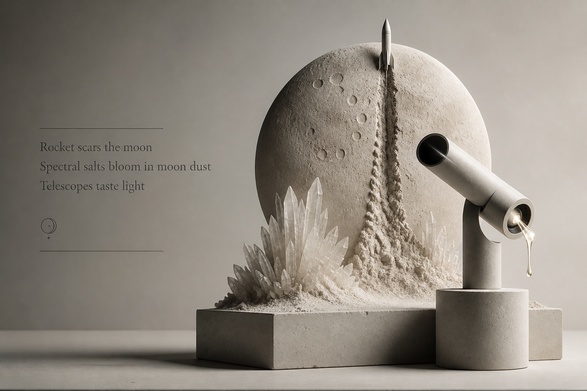
| tl;dr | The piece reports that scientists observed evidence of a SpaceX rocket stage (space debris) impacting the Moon, describing what was detected, why the impact was expected, and what researchers hope to learn from the resulting crater(s). It frames the event as a scientific opportunity—an unintended experiment—while also touching on the broader issue of tracking and managing objects left in cislunar space. | ||||
| deeper: | The language is largely technical and explanatory, relying on scientists’ statements and observational methods rather than political framing. Potential bias comes from mild “science opportunity” framing that can downplay accountability questions around space debris, but it still treats the impact as an unplanned event. Quality is solid: clear headline, relevant image, and a straightforward narrative; however, it appears to lean on a limited set of expert voices and does not deeply interrogate responsibility, regulatory gaps, or competing interpretations of attribution. | ||||
media: | |||||
| gen: 2026/08/02:23:33 in 2 min 7.2 sec (old)bias: 2 (Center) |
| type: lolsquality: 45 |
| pts: 0 |

 | author: | Unknown | institution: | Unknown | ¿porque no los dos? |
| tl;dr | The screenshot appears to be a long webpage showing a main headline that begins “From Hardspace to …: How space challenges can inspire …” alongside a vertical list of other articles with thumbnails. The visible theme looks like space/engineering/technology (possibly space-debris, satellite servicing, or related “space challenges”). Because the image resolution is too low to reliably read the full headline, body text, author, or outlet, only a high-level content assessment is possible. | ||||
| deeper: | The page layout and headline framing suggest a science/technology explainer rather than partisan political advocacy, so ideological bias appears low. Any bias is more likely “tech-optimism” (favoring innovation/engineering solutions) based on the headline’s positive “inspire” framing. Quality can’t be rated highly because the screenshot is too low-resolution to verify claims, sources, evidence, or even the full topic; the presentation looks like a standard article list page, but credibility signals (named author, citations, publication) aren’t legible. | ||||
media: | |||||
| gen: 2026/07/31:16:20 in 41.8 sec (old)bias: 2 (Center) |
| type: newsquality: 82 |
| pts: 0 |
 | author: | Andrew Roth | institution: | The Guardian | ¿porque no los dos? |
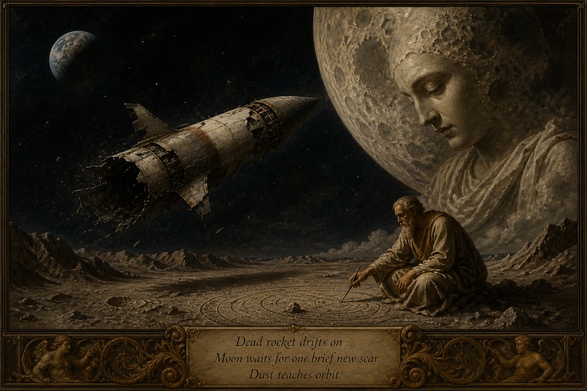
| tl;dr | The article reports that an out-of-control rocket upper stage—believed to be from a SpaceX Falcon 9 launch—was expected to impact the Moon, and that astronomers would watch the event and later analyze the crater(s). It explains why such impacts happen (spent stages left in solar orbit), what scientists hope to learn from observing the crash, and notes it would be a rare/second-known accidental rocket impact on the lunar surface. The piece includes expert commentary and basic technical context. | ||||
| deeper: | The writing is largely descriptive and fact-focused, relying on named scientists/experts and explaining orbital dynamics and observational plans. The main skew is mild sensational framing (“slam,” “collision”) and a narrative emphasis on novelty/rarity, but it doesn’t strongly push an ideological agenda. Quality is solid: clear context, attribution, and relevant background; limitations include uncertainty around identification/timing and the inherent tentativeness of predictions, which could be stated even more explicitly throughout. | ||||
media: | |||||


You made it to the bottom. Now dance!


owned and operated by: RPN Omnigalactic Insitutution as of: 2026/10/13: 22:44 in 0 ms
Enter Code
Login with Account