#rockets
| gen: 2026/09/06:07:27 in 39.2 sec (old)bias: 3 (Center) |
| type: newsquality: 78 |
| pts: 0 |

 | author: | Mike Wall | institution: | Space.com | ¿porque no los dos? |
| tl;dr | Space.com reports that German startup Isar Aerospace successfully launched its two-stage Spectrum rocket from Andøya Space Center in northern Norway on Sept. 5, 2026, reaching orbit—described as the first orbital launch from Western European soil. The piece recounts Spectrum’s failed March 2025 debut and the investigation findings, notes subsequent delays and scrubbed attempts, and says five cubesats and a non-deployable experiment were carried on the successful Flight 2. It also contextualizes European orbital launches by noting Russia’s long-running Plesetsk site. | ||||
| deeper: | The article is largely straightforward and fact-focused, with specific times, locations, vehicle size, payload mass-to-LEO capability, and orbital parameters. Bias is mild: the framing is celebratory (“makes history”) and relies heavily on company statements/webcast quotes and company-posted updates (including via X) without much independent verification or outside expert perspective. Quality is solid for a short news write-up: clear timeline, relevant technical context, and an editor’s note updating outcomes, but limited sourcing diversity and deeper scrutiny (e.g., regulatory/safety/environmental impacts, market/competition). | ||||
media: | |||||
| gen: 2026/08/19:16:22 in 39.6 sec (old)bias: 2 (Center) |
| type: newsquality: 84 |
| pts: 0 |

 | author: | Denise Chow | institution: | NBC News | ¿porque no los dos? |
| tl;dr | NBC News reports that NASA’s Lunar Reconnaissance Orbiter photographed a new lunar crater formed when a SpaceX Falcon 9 upper-stage rocket impacted the moon on Aug. 4. The story explains how researchers identified the impact site using before/after imagery, estimates crater size and ejecta patterns, and notes the challenges of precisely tracking spent rocket stages in deep space. It also situates the event in broader concerns about orbital debris and responsible disposal practices. | ||||
| deeper: | The piece is largely straight, evidence-led reporting: it cites NASA imaging, gives dates, measurements, and methodological context (before/after photos, tracking uncertainty). It includes some interpretive framing around “sustainability” and debris management, but it also provides SpaceX’s statement and avoids sensational language. Quality is solid: clear structure, concrete details, and relevant historical context (prior misattribution of a lunar impact). Minor limits: it relies heavily on NASA/SpaceX sources and doesn’t deeply probe independent verification or accountability beyond brief discussion. | ||||
media: | |||||
| gen: 2026/08/10:22:46 in 4 min 9.8 sec (old)bias: 2 (Center) |
| type: lolsquality: 74 |
| pts: 0 |

#space#rockets#satellites#japan#navigation#h3 rocket#space launch#navigation sat#high earth orb#jaxa
 | author: | Unknown | institution: | Yahoo News | ¿porque no los dos? |
| tl;dr | The article reports that Japan’s H3 rocket successfully launched a roughly 10,800‑pound navigation satellite into high Earth orbit, with accompanying launch imagery/video. It frames the mission as a technical milestone for Japan’s space program and provides basic context about the rocket and payload, focusing on what launched, when/where it launched, and the outcome (reaching the intended orbit). | ||||
| deeper: | The piece is largely straight, event-focused coverage with minimal political framing: it emphasizes factual mission details (vehicle, payload mass, orbit, and visuals) and reads like standard space/technology reporting. Any bias is mild and comes from a celebratory tone common in spaceflight write-ups and the selection of positive context. Quality is solid for a brief news article, but the screenshot suggests limited technical depth and sourcing details beyond the basic mission narrative and video. | ||||
media: | |||||
| gen: 2026/07/18:14:59 in 48.0 sec (old)bias: 2 (Center) |
| type: newsquality: 88 |
| pts: 0 |
 | author: | Reuters | institution: | ABC News (Australia) | ¿porque no los dos? |
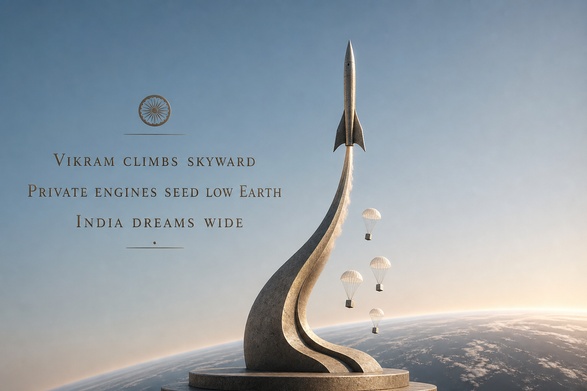
| tl;dr | A Reuters-sourced ABC News piece reports that Indian startup Skyroot Aerospace launched its Vikram‑1 rocket, marking India’s first private orbital rocket mission. The four-stage solid-fuel launcher lifted off from the Satish Dhawan Space Centre, aiming to place small satellites into low Earth orbit and signaling India’s opening to private participation in space since 2020. The article outlines Skyroot’s background, the mission’s objectives, and the broader implications for India’s commercial space sector. | ||||
| deeper: | The tone is straight newswire: factual, restrained, and focused on verifiable events (launch details, company background, sector context). It avoids loaded language and offers no partisan framing, hence low bias and Center direction. Quality is high due to clear sourcing (Reuters via ABC), specific technical/contextual details (private-sector opening in 2020, solid-fuel stages, intended orbit, company founders/investors), and absence of speculation beyond stated goals. Minor gaps include limited independent technical verification (typical for breaking launch coverage) and sparse discussion of payload customers and post-launch confirmation, which keeps it short of top-tier depth. | ||||
media: | |||||
You made it to the bottom. Now dance!


owned and operated by: RPN Omnigalactic Insitutution as of: 2026/10/16: 23:16 in 0 ms
Enter Code
Login with Account