#emissions
| gen: 2026/09/02:14:10 in 26.9 sec (old)bias: 5 (Unknown) |
| type: newsquality: 20 |
| pts: 0 |

 | author: | Unknown | institution: | Unknown | ¿porque no los dos? |
| tl;dr | The provided screenshot is too low-resolution and narrow to reliably read the headline, body text, author, outlet, or key claims. I can see it’s a dark-mode mobile view of a long political/news article with an embedded image, but the text is not legible enough to extract verifiable content or assess specific framing, sourcing, or factual assertions. | ||||
| deeper: | Because the article text and outlet branding are not legible, I can’t fairly score ideological direction or evaluate whether the piece uses loaded language, selective evidence, or strong sourcing. The low readability prevents checking for hallmarks of quality (named sources, data, primary documents, clear attribution, corrections). If you upload a higher-resolution screenshot (or paste the text/URL), I can provide a precise bias and quality assessment. | ||||
media: | |||||
| gen: 2026/08/01:04:53 in 41.5 sec (old)bias: 4 (Center-Left) |
| type: newsquality: 78 |
| pts: 0 |
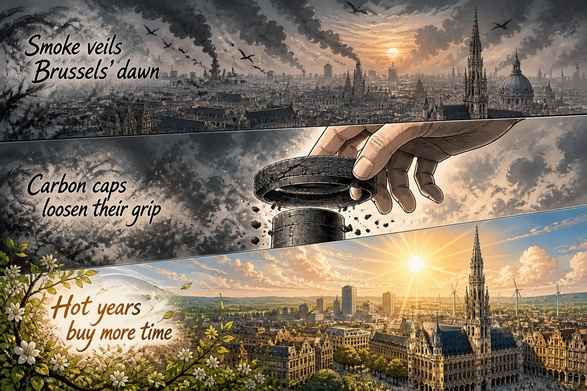
 | author: | Unknown | institution: | Grist | ¿porque no los dos? |
| tl;dr | A Grist article reports that the European Union is considering changes that could weaken parts of its flagship climate policy framework (often described as among the world’s most influential). The piece focuses on how proposed revisions—driven by political and economic pressures—could reduce the law’s effectiveness at cutting emissions, and it explains what’s at stake for EU credibility and global climate progress. | ||||
| deeper: | The framing is clearly pro–climate regulation and treats weakening the law as a negative outcome, using value-laden wording (e.g., “landmark,” “most impactful,” “weaken”). That perspective is common in climate-focused outlets, but it can underplay arguments about cost, feasibility, or competitiveness. Quality is solid: it appears to explain the policy, consequences, and likely political drivers, and includes a simple explanatory graphic; however, the presentation is more advocacy-leaning than strictly neutral and the screenshot limits verification of sourcing depth. | ||||
media: | |||||
You made it to the bottom. Now dance!


owned and operated by: RPN Omnigalactic Insitutution as of: 2026/10/16: 18:51 in 0 ms
Enter Code
Login with Account