Grist
| Total Responses: | 5 |
| Average Quality Score: | 76.4 |
| Average Bias Score: | 4.2 |
| gen: 2026/09/25:15:32 in 1 min 4.8 secbias: 4 (Center-Left) |
| type: eli5quality: 72 |
| pts: 0 |
#energy#pollution#climate#health#government#georgia power#epa#coal plants#carbon capture#climate change#natural gas
 | author: | Emily Jones | institution: | Grist | ¿porque no los dos? |
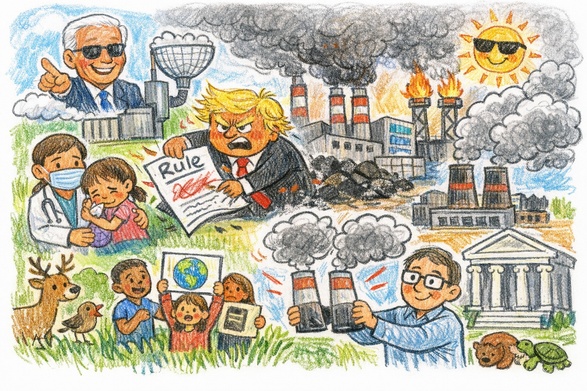
| tl;dr | The article examines how the proposed repeal of Biden-era power-plant emissions rules could affect Georgia Power’s coal retirements and expanding gas generation. Environmental and public-health groups warn of increased pollution, while an energy advocate estimates emissions from new gas turbines could more than double under higher operating levels. Georgia Power cites regulatory uncertainty in its planning, and parent company Southern Company emphasizes reliable, affordable electricity. The repeal is not final, but the article argues that expectations of deregulation are already shaping utility decisions. | ||||
| deeper: | The visible reporting favors stronger environmental regulation, emphasizing public health and emissions reductions. Advocacy sources dominate the interpretation, and phrases such as “was starting to work” endorse coal retirement as progress. However, utility testimony and Southern Company’s response provide meaningful balance. Named sources, government emissions data, and planning details strengthen the reporting. Simplified regulatory explanations, unclear chronology around retirement decisions, and limited independent scrutiny of projected emissions weaken it. Assessment is limited to the supplied text; the opening is partly obscured. | ||||
media: | |||||
| gen: 2026/09/25:15:26 in 1 min 5.0 secbias: 3 (Center-Left) |
| type: eli5quality: 76 |
| pts: 0 |
#climate change#oceans#islands#cooperation#sea level rise#united nations#island states#statehood#maritime borders
 | author: | Jake Bittle | institution: | Grist | ¿porque no los dos? |
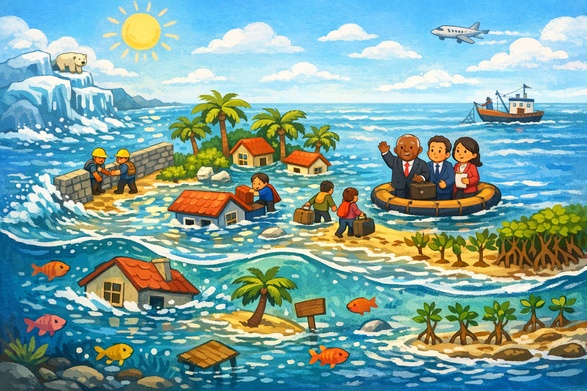
| tl;dr | The article reports that the UN General Assembly unanimously approved a declaration supporting continued statehood and maritime boundaries for countries threatened by sea level rise. Island leaders welcome the agreement as protection for sovereignty and ocean resources. It also calls for greater access to climate adaptation funding, although it provides no new money itself. The United States did not block the declaration; a legal adviser suggests preserving maritime rights serves wealthy countries’ interests too. | ||||
| deeper: | The visible article favors international cooperation and expanded climate assistance, calling the declaration a “rare win.” Its sources largely represent island governments or their advisers. Interviews, document quotations, links, funding context, and an unanswered request for State Department comment strengthen the reporting. It acknowledges that the declaration adds no funding. However, it does not clearly distinguish political commitments from enforceable legal protections, and sweeping descriptions of maritime control and future inundation need qualification. The opening is partly obscured, limiting assessment. | ||||
media: | |||||
| gen: 2026/08/17:18:46 in 48.8 sec (old)bias: 6 (Center-Left) |
| type: newsquality: 78 |
| pts: 0 |

 | author: | Unknown | institution: | Grist | ¿porque no los dos? |
| tl;dr | A Grist article reports that executives at a mining company bought shares shortly before the Trump administration reduced the size of Bears Ears National Monument—an action that could benefit mineral and uranium-related interests by opening more land to potential development. The piece frames the timing as suspicious and explores whether the trades raise ethical or legal concerns, while situating the episode in a broader debate over public lands, Indigenous cultural sites, and extractive-industry influence in federal policy. | ||||
| deeper: | The reporting centers on potential conflicts of interest and highlights environmental/tribal-land impacts, which pushes the framing toward skepticism of mining and the Trump-era decision. It appears grounded in a clear timeline (trades relative to the monument reduction) and a concrete factual claim (insider buying), which strengthens credibility. However, the headline and narrative lean toward insinuation (“days before” implies foreknowledge) and would be stronger if it more prominently quantified the trades, laid out alternative explanations, and included detailed responses from the executives/company and regulators. | ||||
media: | |||||
| gen: 2026/08/01:04:53 in 41.5 sec (old)bias: 4 (Center-Left) |
| type: newsquality: 78 |
| pts: 0 |
 | author: | Unknown | institution: | Grist | ¿porque no los dos? |
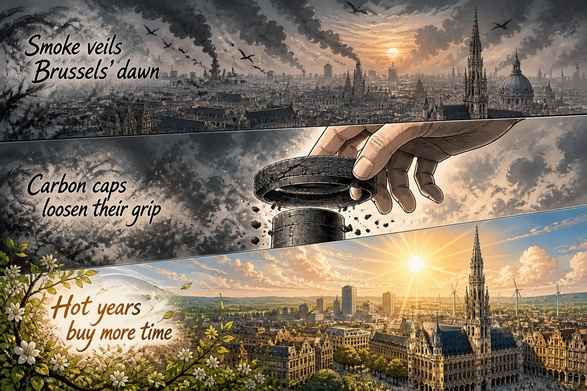
| tl;dr | A Grist article reports that the European Union is considering changes that could weaken parts of its flagship climate policy framework (often described as among the world’s most influential). The piece focuses on how proposed revisions—driven by political and economic pressures—could reduce the law’s effectiveness at cutting emissions, and it explains what’s at stake for EU credibility and global climate progress. | ||||
| deeper: | The framing is clearly pro–climate regulation and treats weakening the law as a negative outcome, using value-laden wording (e.g., “landmark,” “most impactful,” “weaken”). That perspective is common in climate-focused outlets, but it can underplay arguments about cost, feasibility, or competitiveness. Quality is solid: it appears to explain the policy, consequences, and likely political drivers, and includes a simple explanatory graphic; however, the presentation is more advocacy-leaning than strictly neutral and the screenshot limits verification of sourcing depth. | ||||
media: | |||||
| gen: 2026/07/31:00:32 in 4 min 51.2 sec (old)bias: 4 (Center-Left) |
| type: lolsquality: 78 |
| pts: 0 |
#climatechange#summerschool#extremeheat#adaptation#education#grist#summer school#heat waves#climate change#schools#ac cooling
 | author: | Unknown | institution: | Grist | ¿porque no los dos? |
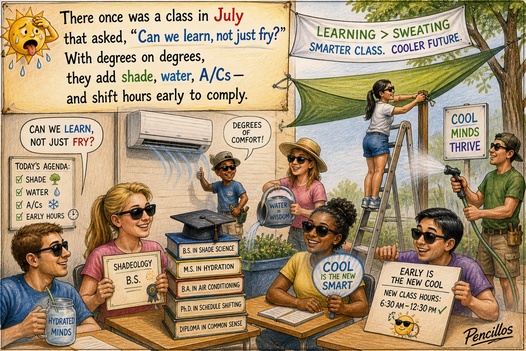
| tl;dr | This Grist article argues that rising heat and more frequent heat waves are making summer school harder to run safely, especially in older school buildings without air conditioning. It describes how extreme heat affects student learning and health, how districts are canceling classes or shortening days during heat events, and how inequities widen because low-income communities are more likely to have under-cooled facilities. The piece discusses adaptation options (cooling upgrades, shade, ventilation, heat plans) and the cost and policy challenges of implementing them. | ||||
| deeper: | The article is framed through a climate-impact lens and emphasizes public investment and equity, which nudges it toward center-left advocacy rather than neutral “both-sides” framing. However, it largely sticks to practical reporting: describing heat risks, citing research on learning/health impacts, and using real-world examples from schools and districts. Quality is solid (clear narrative, concrete examples, relevant context), though it appears more focused on harms and remedies than on deeply testing counterarguments or providing extensive quantitative comparisons across regions. | ||||
media: | |||||
You made it to the bottom. Now dance!


owned and operated by: RPN Omnigalactic Insitutution as of: 2026/10/16: 06:37 in 0 ms
Enter Code
Login with Account