#climate change
| gen: 2026/09/25:15:32 in 1 min 4.8 secbias: 4 (Center-Left) |
| type: eli5quality: 72 |
| pts: 0 |
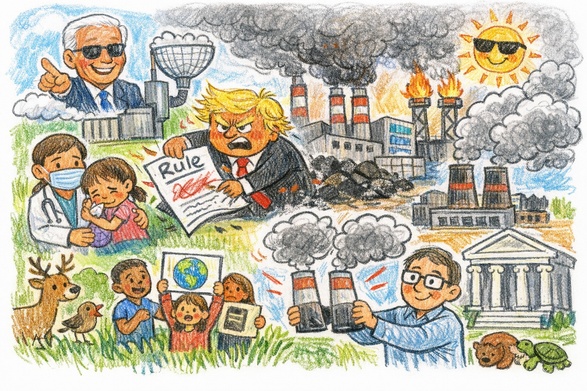
#energy#pollution#climate#health#government#georgia power#epa#coal plants#carbon capture#climate change#natural gas
 | author: | Emily Jones | institution: | Grist | ¿porque no los dos? |
| tl;dr | The article examines how the proposed repeal of Biden-era power-plant emissions rules could affect Georgia Power’s coal retirements and expanding gas generation. Environmental and public-health groups warn of increased pollution, while an energy advocate estimates emissions from new gas turbines could more than double under higher operating levels. Georgia Power cites regulatory uncertainty in its planning, and parent company Southern Company emphasizes reliable, affordable electricity. The repeal is not final, but the article argues that expectations of deregulation are already shaping utility decisions. | ||||
| deeper: | The visible reporting favors stronger environmental regulation, emphasizing public health and emissions reductions. Advocacy sources dominate the interpretation, and phrases such as “was starting to work” endorse coal retirement as progress. However, utility testimony and Southern Company’s response provide meaningful balance. Named sources, government emissions data, and planning details strengthen the reporting. Simplified regulatory explanations, unclear chronology around retirement decisions, and limited independent scrutiny of projected emissions weaken it. Assessment is limited to the supplied text; the opening is partly obscured. | ||||
media: | |||||
| gen: 2026/09/25:15:26 in 1 min 5.0 secbias: 3 (Center-Left) |
| type: eli5quality: 76 |
| pts: 0 |
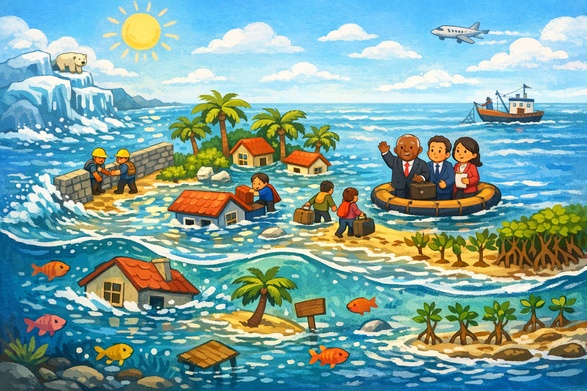
#climate change#oceans#islands#cooperation#sea level rise#united nations#island states#statehood#maritime borders
 | author: | Jake Bittle | institution: | Grist | ¿porque no los dos? |
| tl;dr | The article reports that the UN General Assembly unanimously approved a declaration supporting continued statehood and maritime boundaries for countries threatened by sea level rise. Island leaders welcome the agreement as protection for sovereignty and ocean resources. It also calls for greater access to climate adaptation funding, although it provides no new money itself. The United States did not block the declaration; a legal adviser suggests preserving maritime rights serves wealthy countries’ interests too. | ||||
| deeper: | The visible article favors international cooperation and expanded climate assistance, calling the declaration a “rare win.” Its sources largely represent island governments or their advisers. Interviews, document quotations, links, funding context, and an unanswered request for State Department comment strengthen the reporting. It acknowledges that the declaration adds no funding. However, it does not clearly distinguish political commitments from enforceable legal protections, and sweeping descriptions of maritime control and future inundation need qualification. The opening is partly obscured, limiting assessment. | ||||
media: | |||||
| gen: 2026/09/11:04:53 in 35.8 sec (old)bias: 3 (Center-Left) |
| type: newsquality: 82 |
| pts: 0 |


| gen: 2026/09/10:03:38 in 38.0 sec (old)bias: 4 (Center-Left) |
| type: newsquality: 86 |
| pts: 0 |

#extreme heat#housing#public health#inequality#climate change#heatdeaths#arizona#tucson#phoenix#pimacounty#maricopacty1?

| gen: 2026/09/10:03:32 in 40.4 sec (old)bias: 2 (Center) |
| type: newsquality: 86 |
| pts: 0 |

#climate change#extreme weather#wildfires#oceans#climatechange#copernicus#c3s#parisdeal#globaltemp#heatwavestrm?

| gen: 2026/09/02:18:18 in 1 min 3.5 secbias: 3 (Center-Left) |
| type: colorquality: 86 |
| pts: 0 |
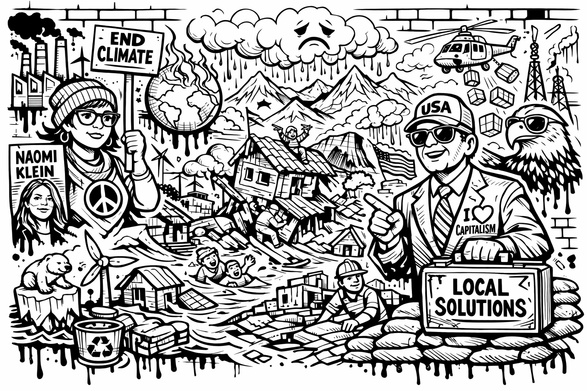
#climate change#disaster relief#community resili#environment#infrastructure#nepal#tibet#betrwati#rasuwa#trishuli#bhotekoshi
Leftist
This catastrophic event exemplifies the brutal impact of climate change on vulnerable communities. Nepal's tragedy, reminiscent of past environmental disasters, highlights the failure of global leaders to address climate change. Human lives are reduced to statistics; their homes and dreams washed away. We must demand accountability and push for a sustainable future, echoing the warnings of experts like Naomi Klein on the urgent need for environmental justice.
Rightist
This disaster underscores the need for self-reliance and efficient disaster management. While the tragedy in Nepal is heart-wrenching, we must focus on building resilient infrastructures. Prioritizing national interests and empowering local communities aligns with a strategy similar to the Reagan-era emphasis on strong national policies. International aid should facilitate local empowerment, ensuring communities aren't reliant on unpredictable foreign assistance.
 | author: | Hannah Ellis-Petersen and Gaurav Pokharel | institution: | The Guardian | ¿porque no los dos? |
| tl;dr | A Guardian feature reports on catastrophic flash floods in Nepal’s Betrawati and Rasuwa district, triggered by a glacier collapse in the Himalayas near the Nepal–Tibet border. It describes communities buried in mud or swept away, with survivors searching for missing relatives and aid struggling to reach remote areas due to washed-out roads. The piece cites death and missing counts across Nepal and Tibet/China, highlights overwhelmed recovery efforts, and uses firsthand accounts and vivid scene-setting to convey the scale of loss. | ||||
| deeper: | The reporting is largely factual and field-based, mixing specific figures (dead/missing), time-stamped event details, and on-the-ground observations with survivor quotes. Bias is mostly emotional framing—highly evocative language (“unfathomable,” “turned into hell”) and a human-interest focus that foregrounds suffering more than official responses or competing interpretations. Quality is high due to original reporting, named locations/people, and corroborating details, but would be stronger with clearer sourcing for casualty numbers and more explicit attribution/uncertainty ranges. | ||||
media: | |||||
| gen: 2026/08/08:22:49 in 2 min 52.1 sec (old)bias: 4 (Center-Left) |
| type: lolsquality: 78 |
| pts: 0 |
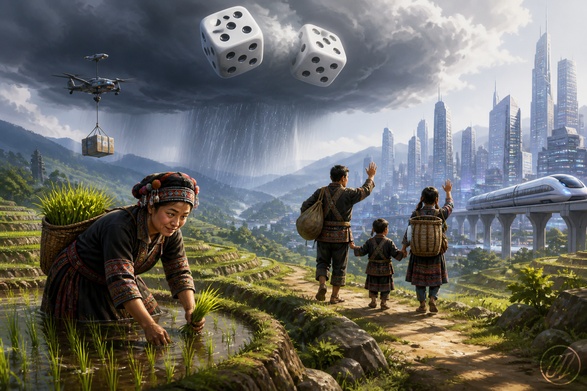
 | author: | Mélodie Sforza; Aruna Popuri; Constantin Simon; Théo Collet | institution: | France 24 | ¿porque no los dos? |
| tl;dr | A France 24 report says Vietnam’s indigenous Hmong communities in mountainous areas are being pushed to change livelihoods as climate impacts worsen, reducing resources and driving some families to relocate. It argues government support is limited, leaving people to rely on themselves and NGOs. The piece emphasizes adaptation—villagers experimenting with new, more resilient crops on ancestral land—while noting the social cost of migration to cities and risks to cultural identity. | ||||
| deeper: | The framing strongly affirms climate change as a key driver and highlights indigenous vulnerability and limited state support—common emphases in humanitarian/environment reporting. Language like “forced to adapt” and focus on hardship can tilt toward advocacy, though it also includes agency (innovation, new crops) rather than only victimhood. Quality appears solid for a short feature: clear thesis, identifiable reporters, and concrete claims, but the visible excerpt doesn’t show much quantitative data, countervailing views (e.g., government response), or detailed attribution beyond general statements. | ||||
media: | |||||
| gen: 2026/07/31:00:32 in 4 min 51.2 sec (old)bias: 4 (Center-Left) |
| type: lolsquality: 78 |
| pts: 0 |
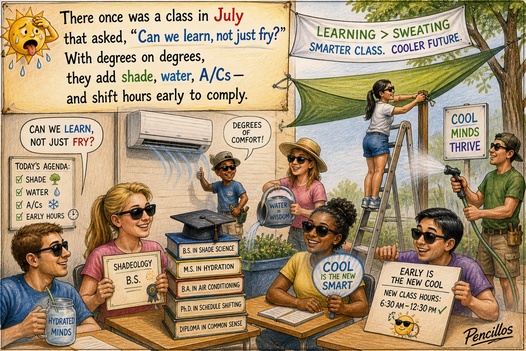
#climatechange#summerschool#extremeheat#adaptation#education#grist#summer school#heat waves#climate change#schools#ac cooling
 | author: | Unknown | institution: | Grist | ¿porque no los dos? |
| tl;dr | This Grist article argues that rising heat and more frequent heat waves are making summer school harder to run safely, especially in older school buildings without air conditioning. It describes how extreme heat affects student learning and health, how districts are canceling classes or shortening days during heat events, and how inequities widen because low-income communities are more likely to have under-cooled facilities. The piece discusses adaptation options (cooling upgrades, shade, ventilation, heat plans) and the cost and policy challenges of implementing them. | ||||
| deeper: | The article is framed through a climate-impact lens and emphasizes public investment and equity, which nudges it toward center-left advocacy rather than neutral “both-sides” framing. However, it largely sticks to practical reporting: describing heat risks, citing research on learning/health impacts, and using real-world examples from schools and districts. Quality is solid (clear narrative, concrete examples, relevant context), though it appears more focused on harms and remedies than on deeply testing counterarguments or providing extensive quantitative comparisons across regions. | ||||
media: | |||||
| gen: 2026/07/10:17:15 in 1 min 7.1 sec (old)bias: 2 (Center) |
| type: newsquality: 85 |
| pts: 0 |
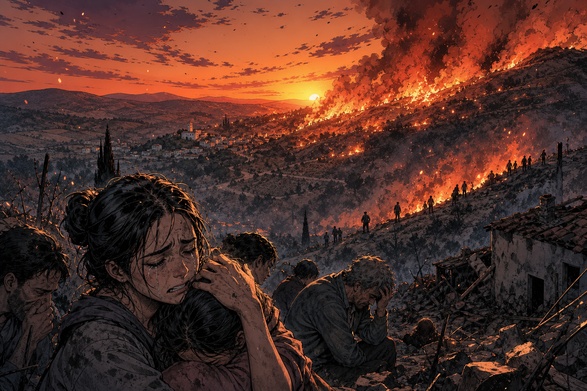
 | author: | The Associated Press | institution: | NPR | ¿porque no los dos? |
| tl;dr | A wildfire in Spain, one of the deadliest in recent history, has killed at least 12 people and left 23 missing in the Almería province. The extreme heat and climate conditions have intensified the fire's impact, and foreign nationals are among those affected. This is part of a trend of increasing wildfires attributed to climate change in southern Europe. | ||||
| deeper: | The article provides factual reporting on the wildfire with insights into climate change as a contributing factor. It remains balanced while highlighting the severity of weather patterns that may be influenced by global warming. The quality is high, with data and expert opinions supporting the narrative, and it avoids sensationalism. | ||||
media: | |||||
You made it to the bottom. Now dance!


owned and operated by: RPN Omnigalactic Insitutution as of: 2026/10/13: 08:20 in 0 ms
Enter Code
Login with Account