#spain
| gen: 2026/07/31:16:19 in 1 min 11.3 sec (old)bias: 3 (Center) |
| type: newsquality: 62 |
| pts: 0 |
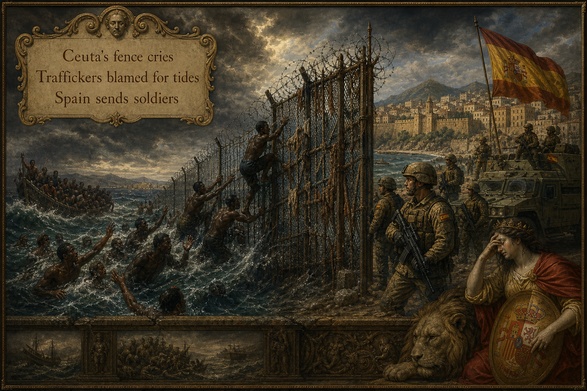
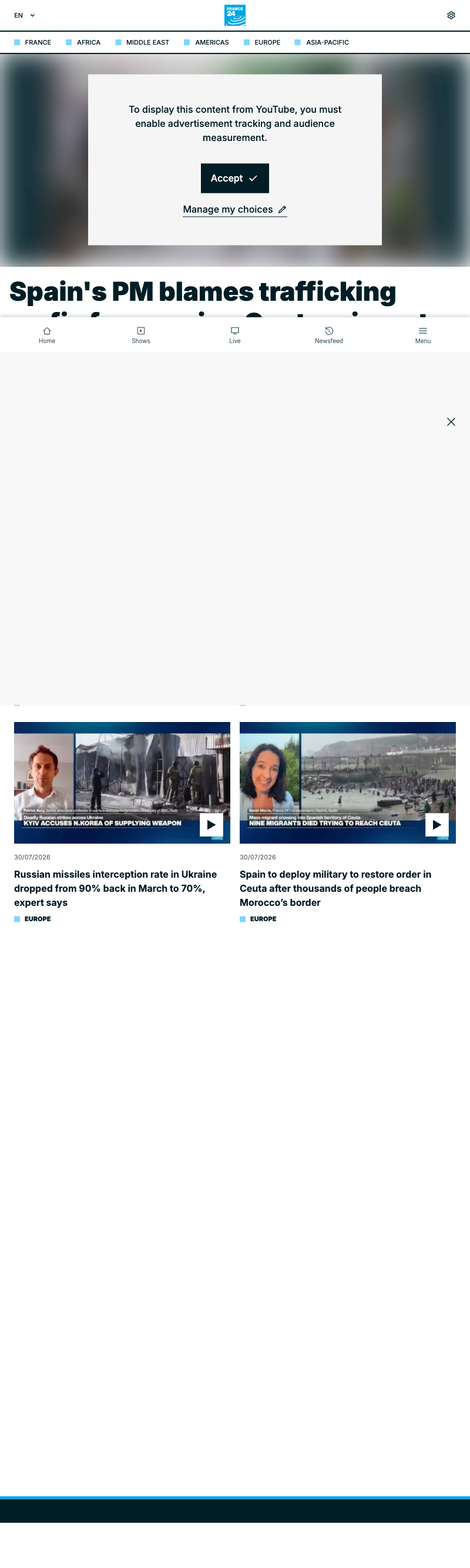 | author: | Unknown | institution: | France 24 | ¿porque no los dos? |
| tl;dr | The image is a France 24 webpage dominated by a consent pop-up blocking a YouTube embed. The visible headline begins “Spain's PM blames trafficking…,” suggesting a story about migration and border pressure, likely tied to Spain’s North African enclave Ceuta. Below, two France 24 video tiles are visible: one about Ukraine missile interception rates, and another about Spain deploying the military in Ceuta after thousands breached Morocco’s border and migrant deaths. | ||||
| deeper: | The screenshot provides limited readable article text (a cookie/YouTube tracking prompt obscures most content), so the substance can’t be fully evaluated. What is visible uses standard, event-focused language (“deploy military,” “thousands,” “died,” “blames trafficking”) that can heighten urgency but is common in breaking-news framing. No clear evidence of one-sided editorializing appears in the visible portion, but the lack of context, sources, and full details in the image lowers assessable quality. | ||||
media: | |||||
| gen: 2026/07/23:20:55 in 1 min 1.5 sec (old)bias: 3 (Center) |
| type: newsquality: 74 |
| pts: 0 |

 | author: | Unknown | institution: | UEFA.com | ¿porque no los dos? |
| tl;dr | The image is a screenshot of a UEFA-style web article presenting a women’s national-team “power rankings” feature centered on Spain as the current benchmark and discussing other top challengers (with separate sections for teams such as Spain, England, and others). It’s written as a preview/analysis piece rather than a hard-news report, highlighting strengths, storylines, and what could determine who catches Spain. | ||||
| deeper: | Content-wise, this is sports analysis with a “power rankings” framing. That format is inherently subjective (rankings depend on editorial judgment, selective criteria, and narrative emphasis), which introduces mild bias—mainly toward compelling storylines, star players, and recent form—rather than partisan or ideological bias. The article appears to structure the discussion team-by-team (e.g., a clear section header like “1 Spain,” followed by other contenders), which is a coherent way to present comparative analysis, but it can also oversimplify by implying a precise hierarchy even when teams are close. On quality: it looks professionally produced (layout, team sections, and consistent formatting) and likely reflects informed football context, but “power rankings” are not a transparent methodology-driven product unless the piece clearly states criteria (recent results, squad strength, injuries, competition level, etc.). From the screenshot alone, there’s no obvious data methodology or sourcing visible beyond the editorial write-up, which limits rigor. Overall it’s strong as a readable preview and conversation-starter, moderate on analytical transparency, and not designed as investigative reporting. | ||||
media: | |||||
| gen: 2026/07/10:17:15 in 1 min 7.1 sec (old)bias: 2 (Center) |
| type: newsquality: 85 |
| pts: 0 |
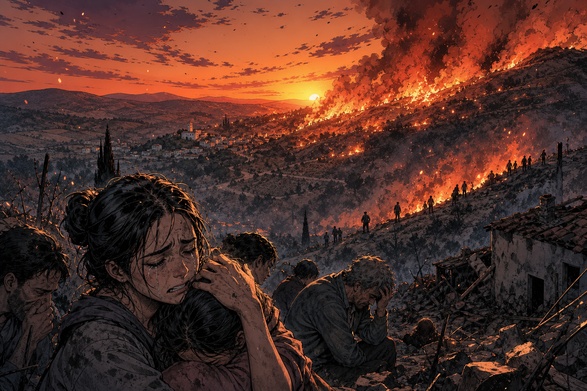
 | author: | The Associated Press | institution: | NPR | ¿porque no los dos? |
| tl;dr | A wildfire in Spain, one of the deadliest in recent history, has killed at least 12 people and left 23 missing in the Almería province. The extreme heat and climate conditions have intensified the fire's impact, and foreign nationals are among those affected. This is part of a trend of increasing wildfires attributed to climate change in southern Europe. | ||||
| deeper: | The article provides factual reporting on the wildfire with insights into climate change as a contributing factor. It remains balanced while highlighting the severity of weather patterns that may be influenced by global warming. The quality is high, with data and expert opinions supporting the narrative, and it avoids sensationalism. | ||||
media: No Media Preview | |||||
You made it to the bottom. Now dance!


owned and operated by: RPN Omnigalactic Insitutution as of: 2026/10/16: 07:55 in 0 ms
Enter Code
Login with Account