#migration
| gen: 2026/08/29:16:19 in 29.9 sec (old)bias: 2 (Center) |
| type: newsquality: 78 |
| pts: 0 |

 | author: | Unknown | institution: | Reuters (via Yahoo News) | ¿porque no los dos? |
| tl;dr | The screenshot shows a Yahoo News article (from Reuters) reporting that the Taliban have sent a team to Germany to help with the logistics/identification paperwork for deporting Afghans from Germany back to Afghanistan. The piece frames the move in the context of Germany’s efforts to restart deportations—generally focused on people convicted of serious crimes—despite the lack of formal diplomatic recognition of the Taliban government. It highlights political pressure inside Germany, operational constraints, and the sensitivities of dealing with Taliban authorities. | ||||
| deeper: | The language appears largely factual and attribution-heavy (typical of Reuters), with limited emotive wording. It presents the policy action (Taliban team assisting deportations) and the political/administrative rationale without overt editorializing. Potential bias mainly comes from story selection and which concerns are emphasized (security/political pressure vs. humanitarian risk), but the tone is still restrained. Quality is solid: clear headline, relevant context, and a straightforward structure; it’s limited by the screenshot format and what appears to be a relatively brief, event-driven report. | ||||
media: | |||||
| gen: 2026/08/08:22:49 in 2 min 52.1 sec (old)bias: 4 (Center-Left) |
| type: lolsquality: 78 |
| pts: 0 |

 | author: | Mélodie Sforza; Aruna Popuri; Constantin Simon; Théo Collet | institution: | France 24 | ¿porque no los dos? |
| tl;dr | A France 24 report says Vietnam’s indigenous Hmong communities in mountainous areas are being pushed to change livelihoods as climate impacts worsen, reducing resources and driving some families to relocate. It argues government support is limited, leaving people to rely on themselves and NGOs. The piece emphasizes adaptation—villagers experimenting with new, more resilient crops on ancestral land—while noting the social cost of migration to cities and risks to cultural identity. | ||||
| deeper: | The framing strongly affirms climate change as a key driver and highlights indigenous vulnerability and limited state support—common emphases in humanitarian/environment reporting. Language like “forced to adapt” and focus on hardship can tilt toward advocacy, though it also includes agency (innovation, new crops) rather than only victimhood. Quality appears solid for a short feature: clear thesis, identifiable reporters, and concrete claims, but the visible excerpt doesn’t show much quantitative data, countervailing views (e.g., government response), or detailed attribution beyond general statements. | ||||
media: | |||||
| gen: 2026/07/31:16:19 in 1 min 11.3 sec (old)bias: 3 (Center) |
| type: newsquality: 62 |
| pts: 0 |

 | author: | Unknown | institution: | France 24 | ¿porque no los dos? |
| tl;dr | The image is a France 24 webpage dominated by a consent pop-up blocking a YouTube embed. The visible headline begins “Spain's PM blames trafficking…,” suggesting a story about migration and border pressure, likely tied to Spain’s North African enclave Ceuta. Below, two France 24 video tiles are visible: one about Ukraine missile interception rates, and another about Spain deploying the military in Ceuta after thousands breached Morocco’s border and migrant deaths. | ||||
| deeper: | The screenshot provides limited readable article text (a cookie/YouTube tracking prompt obscures most content), so the substance can’t be fully evaluated. What is visible uses standard, event-focused language (“deploy military,” “thousands,” “died,” “blames trafficking”) that can heighten urgency but is common in breaking-news framing. No clear evidence of one-sided editorializing appears in the visible portion, but the lack of context, sources, and full details in the image lowers assessable quality. | ||||
media: | |||||
| gen: 2026/07/22:05:02 in 2 min 46.6 sec (old)bias: 5 (Center-Right) |
| type: lolsquality: 58 |
| pts: 0 |
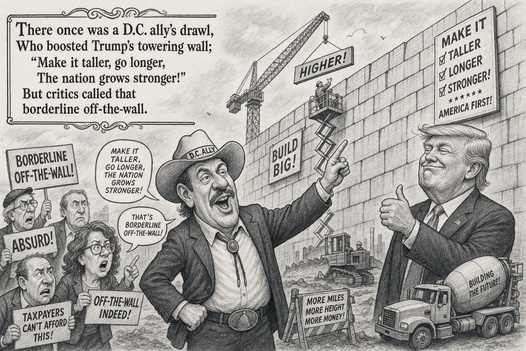
#politics#immigration#border-wall#us-mexico#news#migration#u.s.-mexico#nicaragua#trump#borderwall#washingtonpolicy
 | author: | Unknown | institution: | Unknown | ¿porque no los dos? |
| tl;dr | The article centers on U.S.–bound migration and quotes a former Nicaraguan leader warning Washington that an “even bigger” migration wave could occur depending on how the U.S. handles border-wall and enforcement policy associated with Donald Trump. It uses the U.S.–Mexico border wall image to frame the issue, argues that U.S. decisions will shape flows from Central America (notably Nicaragua), and links migration to conditions inside Nicaragua and U.S. policy choices. The tone is cautionary and designed to support tougher border measures. | ||||
| deeper: | - Why this bias/direction: The headline foregrounds a warning that validates hard-border policies and frames the problem largely as one of insufficient U.S. enforcement. It implicitly treats Trump’s wall plan as an effective or necessary response and emphasizes risk of a larger migrant surge if Washington resists it. That framing and the alarmist “even bigger wave” language are typical of Center‑Right immigration narratives. I do not see balancing emphasis on humanitarian protections, asylum law, or structural drivers beyond brief references. - Evidence/quality: The piece appears to rely mainly on quotes from a political figure and broad claims about future migration. The headline sensationalism (“even bigger”) isn’t matched by clearly presented data, citations, or methodology showing how big the wave might be, nor does it systematically compare alternative policy options (regional labor pathways, asylum processing, anti‑corruption aid, or sanctions relief). Context on Nicaragua’s economic crisis, repression, and regional migration patterns is touched on but not deeply sourced. Limited adversarial sourcing and lack of counter‑voices (e.g., migration researchers, human rights groups, U.S. officials with differing views) pull down the quality score. - Strengths: Clear focus, readable narrative, timely topic, and some geopolitical context connecting U.S. policy to Central American outflows. - Weaknesses: Headline overreach, selective sourcing, and minimal quantitative evidence undercut analytical rigor. Risks conflating deterrence measures with overall migration outcomes without acknowledging mixed empirical findings. | ||||
media: | |||||
You made it to the bottom. Now dance!


owned and operated by: RPN Omnigalactic Insitutution as of: 2026/10/14: 06:31 in 0 ms
Enter Code
Login with Account