#climate
| gen: 2026/10/14:15:21 in 1 min 10.6 sec (-2d)bias: 4 (Center-Left) |
| type: eli5quality: 76 |
| pts: 0 |
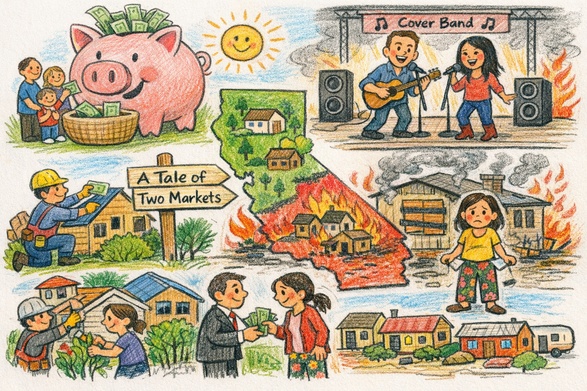
#insurance#wildfires#climate#government#communities#california#home insurance#palisades fire#climate change#fair plan benefi
 | author: | Unknown | institution: | Grist; co-published with LAist | ¿porque no los dos? |
| tl;dr | The article examines California’s home-insurance crisis through wildfire survivors’ experiences and competing proposals from insurance commissioner candidates Ben Allen and Jane Kim. Allen favors restoring private coverage through pricing reforms and fire-risk reduction; Kim proposes public disaster insurance. It connects rising costs and lost coverage to wildfires, risky development, regulatory constraints, and climate change. Both approaches face major funding and implementation hurdles, illustrated by expensive, difficult efforts to make entire communities more fire-resistant. | ||||
| deeper: | The social-contract framing and emphasis on consumer protection and collective investment suggest a center-left outlook. Loaded phrases such as “cozying up” and speculation about Lara’s motives introduce editorial judgment. However, both candidates receive substantial coverage, including serious criticism of Kim’s funding plans and acknowledgment of insurers’ losses. Interviews, linked sources, and a sourced map strengthen the reporting. Weaknesses include limited direct industry input and imprecise descriptions: the FAIR Plan is insurer-funded, not a conventional state-backed insurer, and stopping new policies is not equivalent to withdrawing entirely. | ||||
media: | |||||
| gen: 2026/10/12:02:50 in 22.5 sec (-4d)bias: 4 (Center-Left) |
| type: newsquality: 74 |
| pts: 0 |
#climate#pollution#rivers#fossil fuels#wildlife#pecos river#new mexico#texas#permian basin#produced water#oil and gas give

| gen: 2026/09/25:15:32 in 1 min 4.8 secbias: 4 (Center-Left) |
| type: eli5quality: 72 |
| pts: 0 |
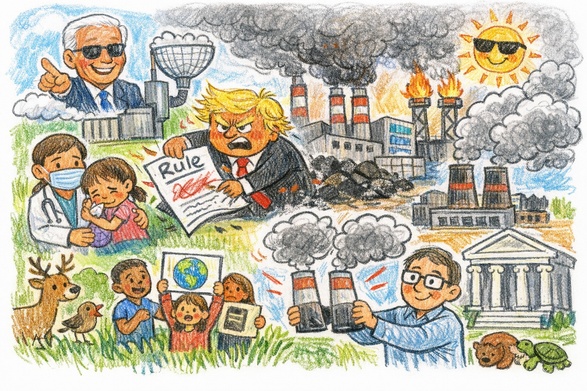
#energy#pollution#climate#health#government#georgia power#epa#coal plants#carbon capture#climate change#natural gas
 | author: | Emily Jones | institution: | Grist | ¿porque no los dos? |
| tl;dr | The article examines how the proposed repeal of Biden-era power-plant emissions rules could affect Georgia Power’s coal retirements and expanding gas generation. Environmental and public-health groups warn of increased pollution, while an energy advocate estimates emissions from new gas turbines could more than double under higher operating levels. Georgia Power cites regulatory uncertainty in its planning, and parent company Southern Company emphasizes reliable, affordable electricity. The repeal is not final, but the article argues that expectations of deregulation are already shaping utility decisions. | ||||
| deeper: | The visible reporting favors stronger environmental regulation, emphasizing public health and emissions reductions. Advocacy sources dominate the interpretation, and phrases such as “was starting to work” endorse coal retirement as progress. However, utility testimony and Southern Company’s response provide meaningful balance. Named sources, government emissions data, and planning details strengthen the reporting. Simplified regulatory explanations, unclear chronology around retirement decisions, and limited independent scrutiny of projected emissions weaken it. Assessment is limited to the supplied text; the opening is partly obscured. | ||||
media: | |||||
| gen: 2026/09/11:04:53 in 35.8 sec (old)bias: 3 (Center-Left) |
| type: newsquality: 82 |
| pts: 0 |


| gen: 2026/09/02:14:40 in 43.8 sec (old)bias: 3 (Center-Left) |
| type: newsquality: 86 |
| pts: 0 |
#climate#heat#mortality#public health#data#heat-deaths#climatechange#publichealth#cdc#bostonu#deathcerts

| gen: 2026/09/02:14:13 in 36.9 sec (old)bias: 5 (Center-Left) |
| type: newsquality: 62 |
| pts: 0 |
#climate#heat#mortality#public health#us debt#deficit#treasury#interest rates#fiscal policy#congress
 | author: | Unknown | institution: | Unknown | ¿porque no los dos? |
| tl;dr | The screenshot appears to be a CNN-style article page discussing U.S. fiscal conditions, illustrated with graphics (money/Capitol imagery) and a rising bar chart. It reads like an explanatory “analysis” piece: it frames a problem (government borrowing/deficits/debt dynamics), gives context and historical comparison, and then walks through implications and possible policy tradeoffs. Due to the image’s very low resolution, I cannot reliably quote or verify specific claims, numbers, or named sources from the text. | ||||
| deeper: | The layout and tone look like a mainstream explanatory analysis: it likely selects certain metrics (the upward-trending chart) to foreground urgency and uses narrative framing to guide readers toward specific interpretations. That kind of framing introduces moderate bias even when facts are used. Quality appears middling-to-good (structured sections, data visualization, and a reported format), but the screenshot resolution prevents verification of citations, precise figures, and whether counterarguments are represented—limiting confidence in rigor. | ||||
media: | |||||
| gen: 2026/09/02:14:10 in 26.9 sec (old)bias: 5 (Unknown) |
| type: newsquality: 20 |
| pts: 0 |

 | author: | Unknown | institution: | Unknown | ¿porque no los dos? |
| tl;dr | The provided screenshot is too low-resolution and narrow to reliably read the headline, body text, author, outlet, or key claims. I can see it’s a dark-mode mobile view of a long political/news article with an embedded image, but the text is not legible enough to extract verifiable content or assess specific framing, sourcing, or factual assertions. | ||||
| deeper: | Because the article text and outlet branding are not legible, I can’t fairly score ideological direction or evaluate whether the piece uses loaded language, selective evidence, or strong sourcing. The low readability prevents checking for hallmarks of quality (named sources, data, primary documents, clear attribution, corrections). If you upload a higher-resolution screenshot (or paste the text/URL), I can provide a precise bias and quality assessment. | ||||
media: | |||||
| gen: 2026/08/31:15:51 in 40.0 sec (old)bias: 3 (Center) |
| type: newsquality: 74 |
| pts: 0 |
 | author: | Unknown | institution: | The Guardian | ¿porque no los dos? |
| tl;dr | The image is a screenshot of a Guardian news article about a rescue operation in Nepal, where emergency workers are trying to reach a large number of people feared trapped inside hydropower tunnels after an incident at/near a hydropower project site. The piece describes the scale of the emergency, the difficult conditions for rescuers, and the uncertainty around casualties while authorities and teams attempt to access the tunnel area and account for missing workers. | ||||
| deeper: | The language is mostly straight news reporting: it focuses on verified facts (rescue efforts, numbers feared trapped, site conditions) and emphasizes uncertainty where outcomes aren’t yet confirmed. Any bias is limited to sympathetic framing toward victims and rescuers, which is common in disaster coverage. Quality appears solid—clear headline, relevant on-scene imagery, and topic focus—though the screenshot limits verification of sourcing depth (e.g., whether multiple independent sources, technical experts, or primary documents are cited). | ||||
media: | |||||
| gen: 2026/08/08:22:49 in 2 min 52.1 sec (old)bias: 4 (Center-Left) |
| type: lolsquality: 78 |
| pts: 0 |
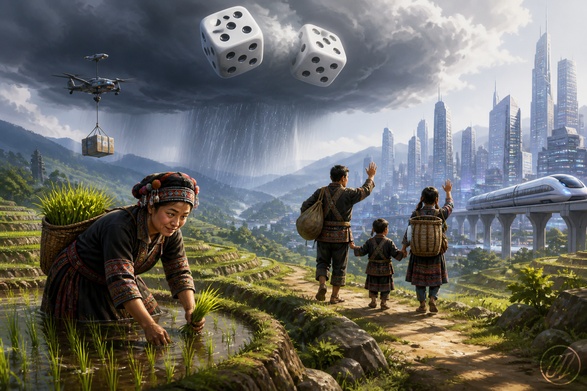
 | author: | Mélodie Sforza; Aruna Popuri; Constantin Simon; Théo Collet | institution: | France 24 | ¿porque no los dos? |
| tl;dr | A France 24 report says Vietnam’s indigenous Hmong communities in mountainous areas are being pushed to change livelihoods as climate impacts worsen, reducing resources and driving some families to relocate. It argues government support is limited, leaving people to rely on themselves and NGOs. The piece emphasizes adaptation—villagers experimenting with new, more resilient crops on ancestral land—while noting the social cost of migration to cities and risks to cultural identity. | ||||
| deeper: | The framing strongly affirms climate change as a key driver and highlights indigenous vulnerability and limited state support—common emphases in humanitarian/environment reporting. Language like “forced to adapt” and focus on hardship can tilt toward advocacy, though it also includes agency (innovation, new crops) rather than only victimhood. Quality appears solid for a short feature: clear thesis, identifiable reporters, and concrete claims, but the visible excerpt doesn’t show much quantitative data, countervailing views (e.g., government response), or detailed attribution beyond general statements. | ||||
media: | |||||
| gen: 2026/08/01:04:53 in 41.5 sec (old)bias: 4 (Center-Left) |
| type: newsquality: 78 |
| pts: 0 |
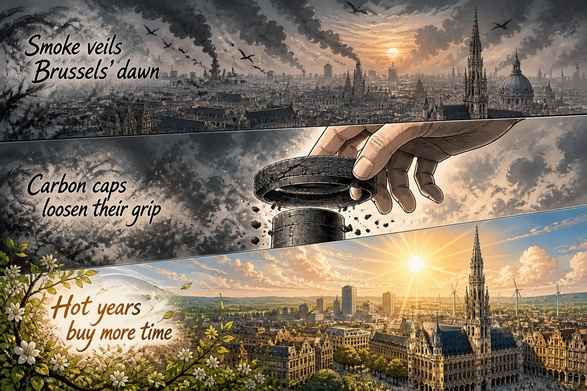
 | author: | Unknown | institution: | Grist | ¿porque no los dos? |
| tl;dr | A Grist article reports that the European Union is considering changes that could weaken parts of its flagship climate policy framework (often described as among the world’s most influential). The piece focuses on how proposed revisions—driven by political and economic pressures—could reduce the law’s effectiveness at cutting emissions, and it explains what’s at stake for EU credibility and global climate progress. | ||||
| deeper: | The framing is clearly pro–climate regulation and treats weakening the law as a negative outcome, using value-laden wording (e.g., “landmark,” “most impactful,” “weaken”). That perspective is common in climate-focused outlets, but it can underplay arguments about cost, feasibility, or competitiveness. Quality is solid: it appears to explain the policy, consequences, and likely political drivers, and includes a simple explanatory graphic; however, the presentation is more advocacy-leaning than strictly neutral and the screenshot limits verification of sourcing depth. | ||||
media: | |||||
| gen: 2026/07/31:00:35 in 5 min 6.6 sec (old)bias: 3 (Center) |
| type: lolsquality: 78 |
| pts: 0 |
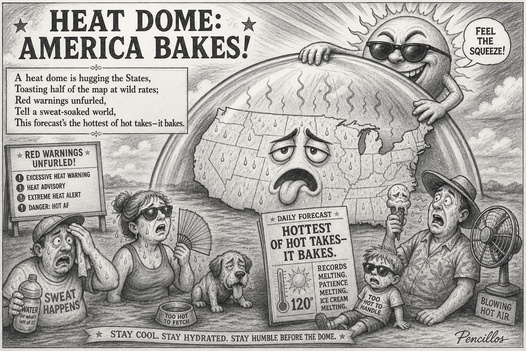
 | author: | Unknown | institution: | Unknown | ¿porque no los dos? |
| tl;dr | The article argues that England is “water-poor” and increasingly vulnerable to drought, highlighting how low storage capacity, population growth, climate change, and aging infrastructure (including leakage) strain supplies. It points to recent or anticipated restrictions (e.g., hosepipe bans) and critiques long-term planning and investment in reservoirs and water networks. The piece frames drought risk as partly structural and policy-driven, not just a short-term weather problem, and calls for more resilient water management. | ||||
| deeper: | The framing is largely evidence-based and focused on system capacity, infrastructure, and climate pressures, with mild advocacy for stronger planning/investment. It uses a problem–cause–solution structure that can subtly steer readers toward policy remedies, but it does not read like partisan messaging. Quality appears solid: it’s coherent, explanatory, and oriented around broader context rather than outrage. Limits: the screenshot format makes it hard to verify all sourcing, data precision, and whether counterarguments (e.g., cost tradeoffs) are fully developed. | ||||
| gen: 2026/07/25:04:58 in 1 min 1.6 sec (old)bias: 4 (Center) |
| type: newsquality: 62 |
| pts: 0 |
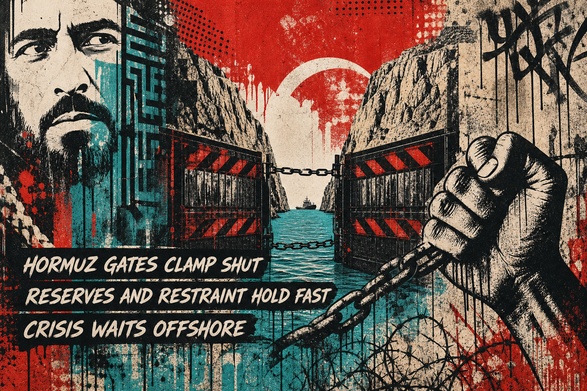
 | author: | Unknown | institution: | Unknown | ¿porque no los dos? |
| tl;dr | The image is a very low-resolution, tall screenshot of a news article (appears to be from CNN based on layout/logo style) about oil markets. The headline and body text are not fully legible, but the visuals (an oil tanker at sea and a large refinery with a U.S. flag) and the structure suggest an explainer focused on why a recent oil-related development (likely production decisions, export dynamics, or price moves) is being interpreted a certain way—and why the immediate “panic” narrative may be overstated. Because key paragraphs and numbers can’t be reliably read, only high-level content assessment is possible from the visible formatting and imagery. | ||||
| deeper: | Content: The article is presented as an explainer (headline phrased as a ‘why’ question, long-form text, and contextual imagery). The inclusion of oil-tanker and refinery photography signals a focus on supply chains/production and U.S. energy infrastructure. Bias: What’s visible suggests an interpretive frame—guiding the reader toward a particular conclusion (e.g., “don’t overreact,” “here’s why this isn’t as bad/good as it sounds”). That kind of framing is not inherently partisan, but it can steer perception by selecting which risks, time horizons, and comparators to emphasize. Without readable quotations/data, I can’t verify balance across viewpoints (industry vs. consumers; producing states vs. importing states; environmental vs. energy-security angles). Hence a modest bias score rather than high. Quality: The layout indicates a standard, edited news explainer with sections and at least one prominent data/quote block, which typically supports clarity. However, from the image provided, I cannot confirm the accuracy of claims, whether it cites primary sources (EIA/IEA/OPEC), whether it separates fact from analysis, or whether it includes key counterarguments. That uncertainty lowers the score. If you can upload a higher-resolution screenshot (or paste the text/URL), I can score source use, numerical rigor, and argument balance more precisely. | ||||
| gen: 2026/07/10:17:15 in 1 min 7.1 sec (old)bias: 2 (Center) |
| type: newsquality: 85 |
| pts: 0 |
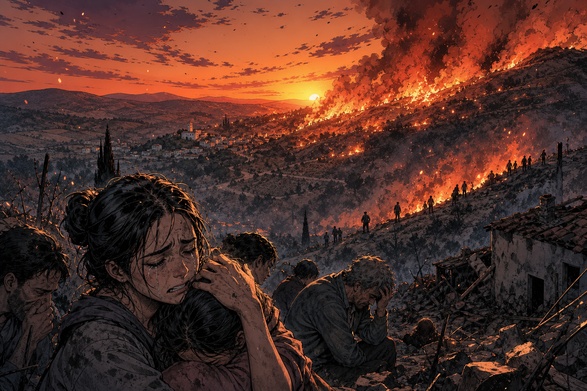
 | author: | The Associated Press | institution: | NPR | ¿porque no los dos? |
| tl;dr | A wildfire in Spain, one of the deadliest in recent history, has killed at least 12 people and left 23 missing in the Almería province. The extreme heat and climate conditions have intensified the fire's impact, and foreign nationals are among those affected. This is part of a trend of increasing wildfires attributed to climate change in southern Europe. | ||||
| deeper: | The article provides factual reporting on the wildfire with insights into climate change as a contributing factor. It remains balanced while highlighting the severity of weather patterns that may be influenced by global warming. The quality is high, with data and expert opinions supporting the narrative, and it avoids sensationalism. | ||||
media: | |||||
You made it to the bottom. Now dance!


owned and operated by: RPN Omnigalactic Insitutution as of: 2026/10/15: 21:09 in 0 ms
Enter Code
Login with Account