NPR
| Total Responses: | 173 |
| Average Quality Score: | 78.9 |
| Average Bias Score: | 3.4 |
| gen: 2026/10/07:16:31 in 33.5 sec (old)bias: 1 (Center) |
| type: newsquality: 35 |
| pts: 0 |
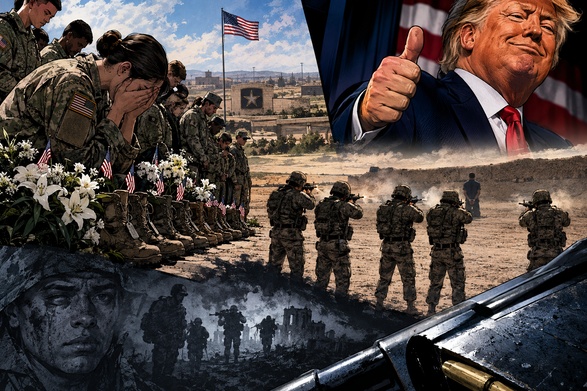
#politics#military#death penalty#crime#donald trump#fort hood#firing squad#military justice#2009 shooting
 | author: | Rachel Treisman | institution: | NPR | ¿porque no los dos? |
| tl;dr | The displayed page says President Trump approved execution by firing squad for the former Army psychiatrist who killed 13 people at Fort Hood in 2009. Dated October 7, 2026, it contains only a headline and one-sentence news summary, without supporting sources, legal details, or an execution date. The screenshot alone does not establish the claim’s accuracy or the page’s authenticity. | ||||
| deeper: | The wording is straightforward and neither praises nor condemns Trump or capital punishment, providing little evidence of political bias. However, the visible report simply repeats its headline without identifying a source for the approval, explaining military execution rules, or discussing appeals. Its clarity is a strength, but the lack of supporting evidence and context limits its quality. This assessment covers only the displayed text, not any associated broadcast. | ||||
media: | |||||
| gen: 2026/10/06:04:06 in 20.9 sec (old)bias: 2 (Center) |
| type: newsquality: 76 |
| pts: 0 |

 | author: | The Associated Press | institution: | NPR | ¿porque no los dos? |
| tl;dr | The article reports that the FBI arrested Wanying Zhang at Los Angeles International Airport for allegedly acting as an unregistered Chinese agent. Authorities accuse her of monitoring Taiwanese President Lai Ching-te’s relatives in the United States and sending photographs, videos, and license plate information to Chinese officials. Taiwan condemned the alleged surveillance as transnational repression. No defense response was available, and China’s embassy did not immediately comment. The article also outlines tensions over Taiwan’s status and Lai’s defense spending plans. | ||||
| deeper: | The report generally distinguishes accusations from established facts and attributes inflammatory language to officials rather than adopting it. U.S. and Taiwanese government accounts dominate, but it notes efforts to obtain Chinese comment and the absence of an identifiable defense lawyer. This creates a limited official-source slant without a clear left–right agenda. Useful context and specific allegations strengthen the reporting; the lack of court-document detail or independent corroboration limits it. The unusual title “Assistant U.S. State Attorney” also warrants verification. | ||||
media: | |||||
| gen: 2026/09/30:20:56 in 27.3 sec (old)bias: 3 (Center-Left) |
| type: newsquality: 78 |
| pts: 0 |

#nuclear energy#data centers#public lands#utah#environment#valar atomics#project beehive#nuclear power#utahுட
 | author: | Geoff Brumfiel | institution: | NPR | ¿porque no los dos? |
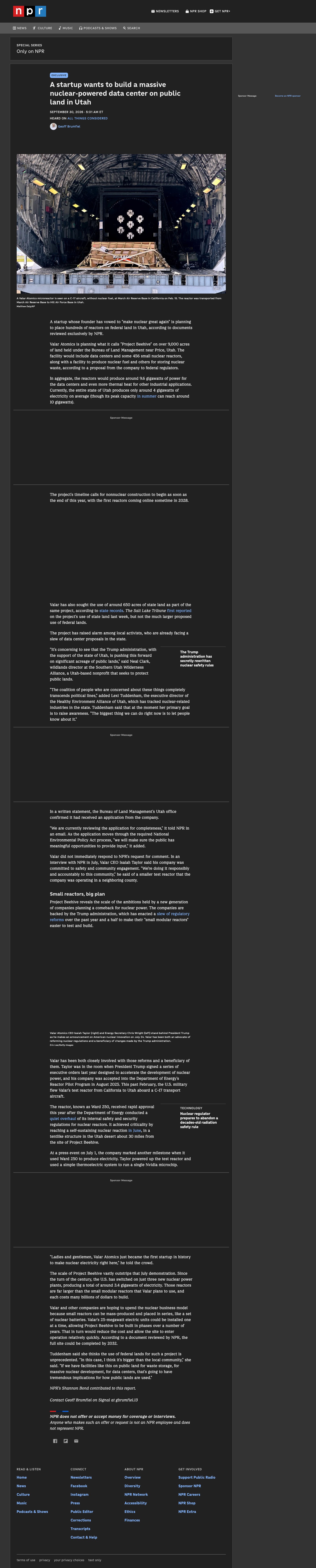
| tl;dr | Valar Atomics proposes building Project Beehive near Price, Utah, with 456 small nuclear reactors powering data centers on more than 9,000 acres of federal land. The article reports a planned 9.6-gigawatt output, initial reactor operations in 2028 and possible completion by 2032. Environmental advocates raise public-land and oversight concerns. Federal officials confirm an application is under review and promise public input. The report also describes the company's technological milestones, ties to regulatory reforms and arguments for building reactors in phases. | ||||
| deeper: | The article mildly favors public-land conservation and regulatory oversight, giving environmental advocates prominent space and opening with a politically charged founder quote. It nevertheless includes federal officials' responses, earlier company assurances and potential benefits of modular reactors. Documents, named sources and numerical context strengthen the reporting. Limitations include little independent technical or financial assessment and an unexplained difference between 456 25-megawatt units and the stated 9.6-gigawatt output. The supplied text ends mid-quotation, so this assessment covers only the visible material. | ||||
media: | |||||
| gen: 2026/09/30:20:54 in 26.6 sec (old)bias: 2 (Center) |
| type: newsquality: 80 |
| pts: 0 |

 | author: | Jenna McLaughlin | institution: | NPR | ¿porque no los dos? |
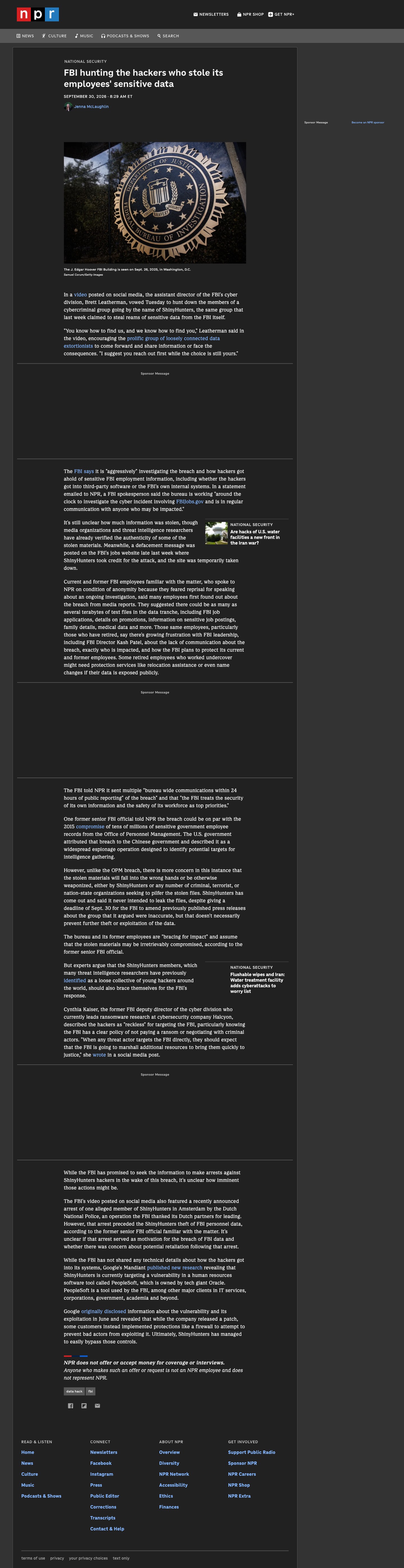
| tl;dr | The article reports that the FBI is investigating ShinyHunters over stolen sensitive personnel data. Current and former employees describe concerns about inadequate communication and potential exposure of medical, family, and undercover-work information; the FBI says it promptly notified staff. The breach’s scale and entry point remain unclear. The article discusses possible links to vulnerabilities in Oracle’s PeopleSoft software, while distinguishing an earlier Dutch arrest from the current investigation. | ||||
| deeper: | The reporting shows no clear partisan agenda. It balances employee criticism with FBI responses, explains why sources remain anonymous, and distinguishes confirmed information from uncertainties. Links, named expertise, and historical context strengthen the account. However, dramatic language and speculative worst-case consequences heighten alarm. Several important claims depend on unnamed sources, and the PeopleSoft discussion establishes a possibility rather than the actual breach mechanism. The headline is more definitive about responsibility than the opening attribution to the hackers’ claims. | ||||
media: | |||||
| gen: 2026/09/30:20:51 in 27.1 sec (old)bias: 3 (Center) |
| type: newsquality: 77 |
| pts: 0 |
 | author: | Jane Arraf | institution: | NPR | ¿porque no los dos? |
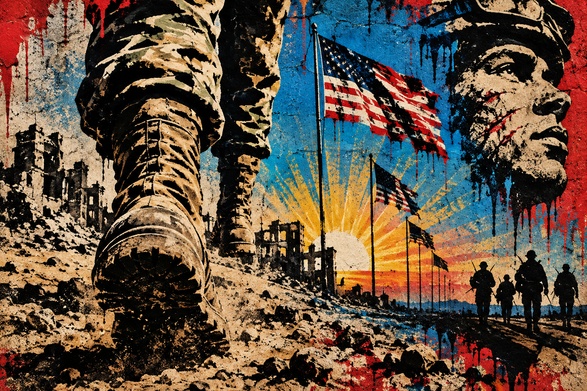
| tl;dr | The article reports that U.S. forces have fully withdrawn from Iraq, with coalition headquarters moving to Jordan. Iraqi leaders celebrate sovereignty, while Kurdish leaders fear increased vulnerability to Iran-backed attacks. Iraq still faces ISIS sleeper cells, militia disarmament challenges and reliance on U.S. intelligence. The article also examines Iranian influence, Turkish military bases and the invasion’s human costs, ending with accounts of reconstruction and reconciliation. The reported withdrawal and accompanying official statements are not independently verified here. | ||||
| deeper: | The article emphasizes the invasion’s destructive legacy, but also credits U.S. contributions against ISIS and explains Kurdish dependence on American protection. Its competing Iraqi, U.S. and militia perspectives do not establish a clear partisan alignment. Named sources, historical context and detailed security coverage strengthen it. Weaknesses include heavy reliance on official statements, no directly quoted Kurdish leader, and sweeping claims about younger Iraqis. The civilian death figure needs a clearer timeframe and distinction between deaths during the occupation and subsequent violence. Screenshot links and contemporary claims cannot be authenticated here. | ||||
media: | |||||
| gen: 2026/09/28:05:22 in 25.0 sec (old)bias: 3 (Center) |
| type: newsquality: 66 |
| pts: 0 |
 | author: | Jane Arraf, Debbie Elliott | institution: | NPR | ¿porque no los dos? |
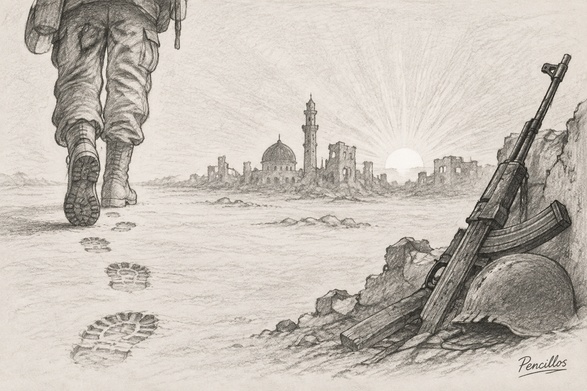
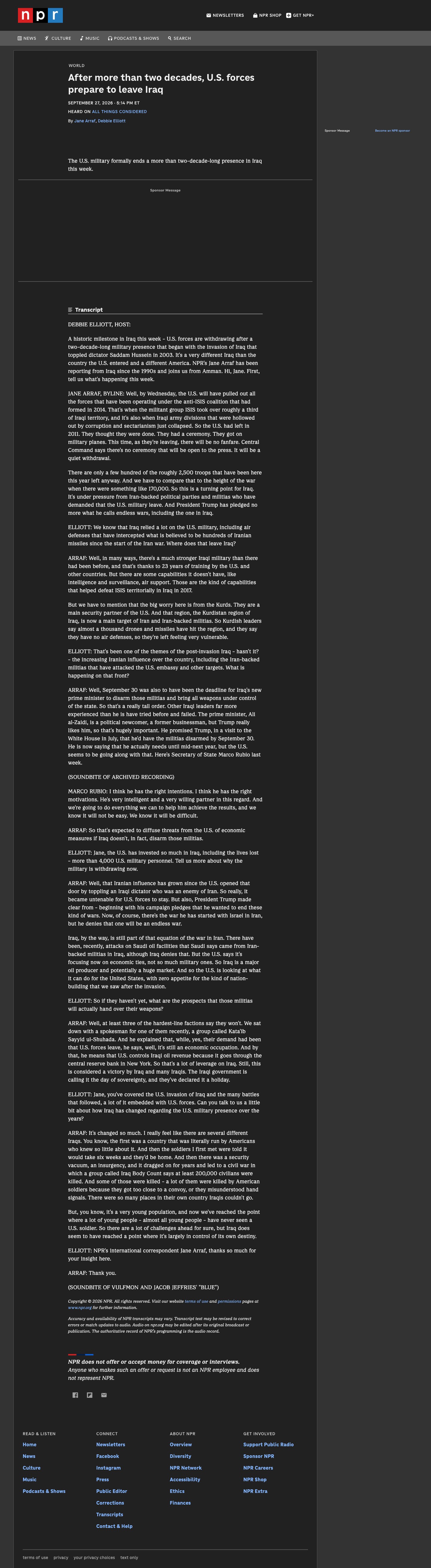
| tl;dr | The article reports that U.S. coalition forces are preparing to leave Iraq, presenting the withdrawal as a sovereignty milestone with significant security risks. It highlights Iraqi military capability gaps, Kurdish vulnerability, Iranian influence, and militias resisting disarmament. It also describes a U.S. shift toward economic relations and reviews the invasion’s civilian toll. Although the introduction suggests an uninterrupted military presence since 2003, the transcript acknowledges the 2011 withdrawal and 2014 return. | ||||
| deeper: | The report includes U.S., Kurdish, Iraqi government, and militia perspectives without a clear partisan prescription. Its emphasis on sovereignty and civilian harm is balanced by recognition of U.S. security contributions. Some sweeping judgments—Americans knowing little about Iraq and Iraq controlling its destiny—lack supporting detail. The introduction misleadingly implies continuous deployment. Iraq Body Count’s cumulative civilian deaths are also loosely presented as a civil-war total. Named sources and historical context help, but major contemporary claims cannot be independently verified from these screenshots. | ||||
media: | |||||
| gen: 2026/09/27:03:01 in 28.5 sec (old)bias: 4 (Center) |
| type: newsquality: 56 |
| pts: 0 |
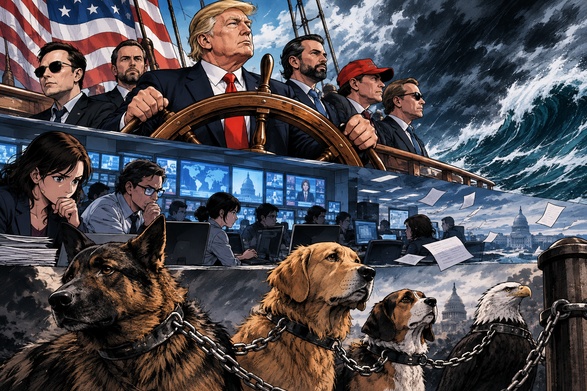
#media#politics#journalism#ownership#cnn#cbs news#paramount#warner bros#donald trump#david ellison no
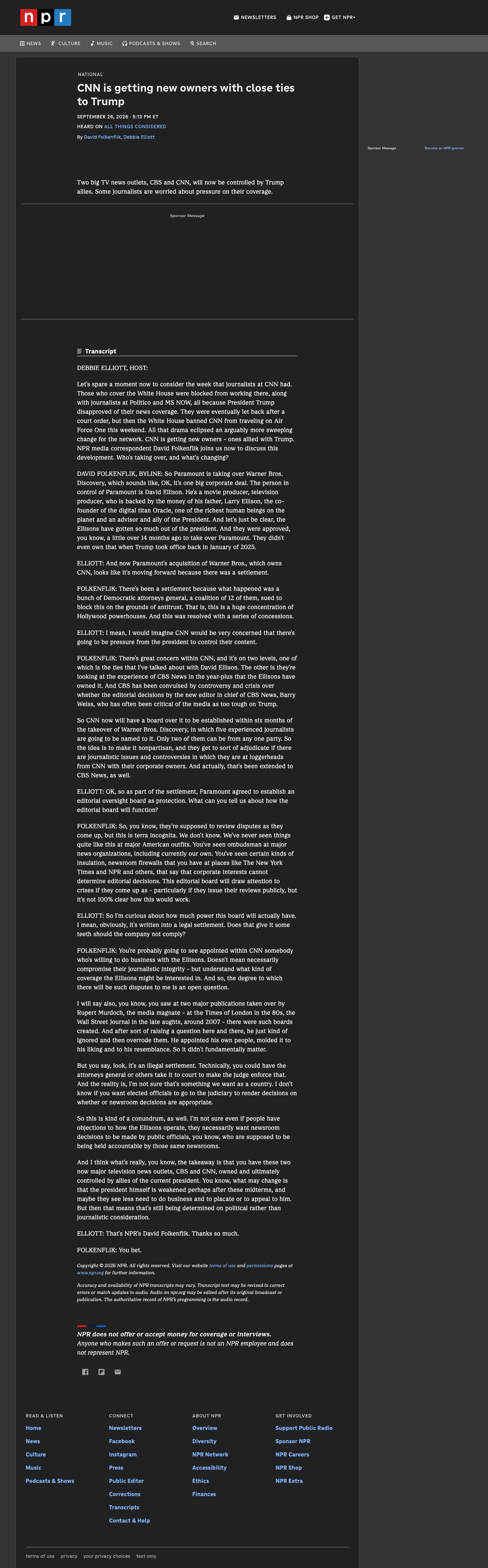 | author: | David Folkenflik, Debbie Elliott | institution: | NPR | ¿porque no los dos? |
| tl;dr | The document says Paramount’s acquisition of Warner Bros. Discovery would put CNN and CBS under owners tied to President Trump. It describes a settlement requiring editorial oversight boards and questions whether those boards could protect newsroom independence. The discussion highlights potential owner influence while also warning that court enforcement could give government officials inappropriate influence over journalism. The acquisition, settlement, and access restrictions described are claims in the supplied screenshots, not independently verified facts. | ||||
| deeper: | The article favors independent journalism and accountability rather than an explicit partisan platform. However, leading questions, dramatic wording, and speculation about owners’ motives create a skeptical, one-sided frame. No responses from Paramount, the Ellisons, or the White House appear. Useful explanations of oversight and government-interference risks add nuance, but major legal claims lack identifiable supporting documents. Apparent transcription errors—including “Barry Weiss” and “illegal settlement”—reduce precision. The screenshots alone cannot establish authenticity or verify the reported events. | ||||
media: | |||||
| gen: 2026/09/24:02:27 in 28.2 sec (old)bias: 3 (Center) |
| type: newsquality: 70 |
| pts: 0 |
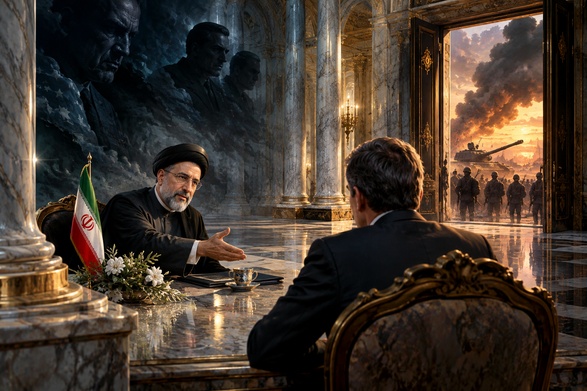
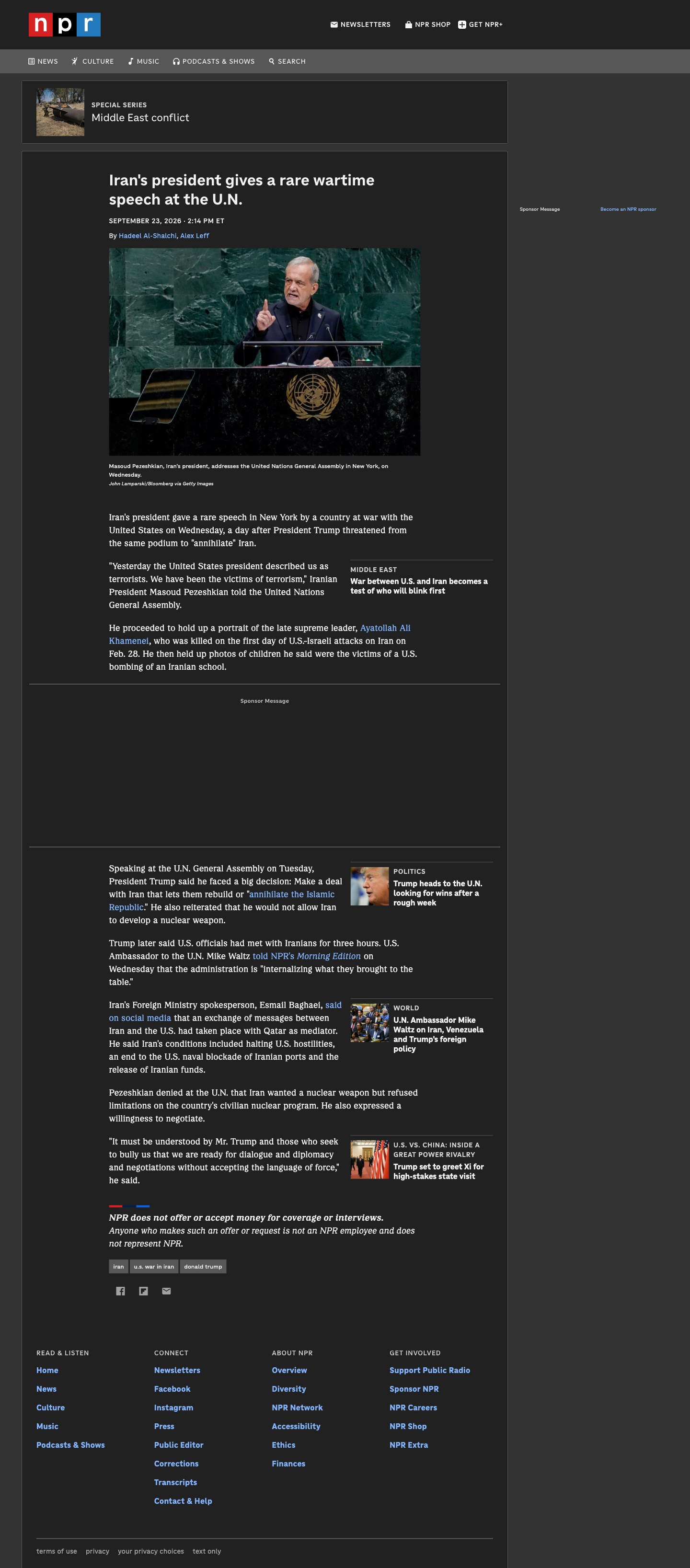 | author: | Hadeel Al-Shalchi, Alex Leff | institution: | NPR | ¿porque no los dos? |
| tl;dr | The article reports that Iranian President Masoud Pezeshkian addressed the United Nations during a war with the United States, criticizing U.S. attacks while expressing willingness to negotiate. It contrasts his remarks with President Trump’s threat to annihilate the Islamic Republic and his insistence that Iran not develop nuclear weapons. U.S. and Iranian officials describe diplomatic exchanges mediated by Qatar. Iran seeks an end to hostilities and a naval blockade, release of funds, and protection of its civilian nuclear program. | ||||
| deeper: | The report quotes both governments and generally distinguishes officials’ claims from established facts. Its opening emphasizes Trump’s threat and Iranian suffering, giving Iran’s perspective some emotional prominence. However, it also includes U.S. nuclear concerns and Iran’s refusal of restrictions, without clearly endorsing a political ideology. Named sources and links strengthen transparency. Limited independent scrutiny of wartime claims and little historical or nuclear-monitoring context weaken the reporting. The screenshots alone cannot establish the authenticity of the page or verify its consequential factual claims. | ||||
media: | |||||
| gen: 2026/09/24:02:24 in 33.9 sec (old)bias: 1 (Center) |
| type: newsquality: 55 |
| pts: 0 |
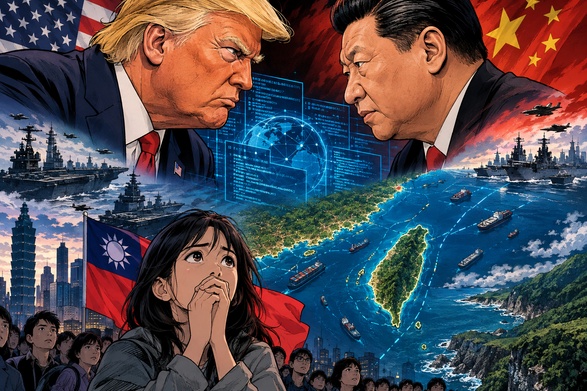
#diplomacy#china#taiwan#cybersecurity#ai#donald trump#xi jinping#rush doshi#terry gross#united states po
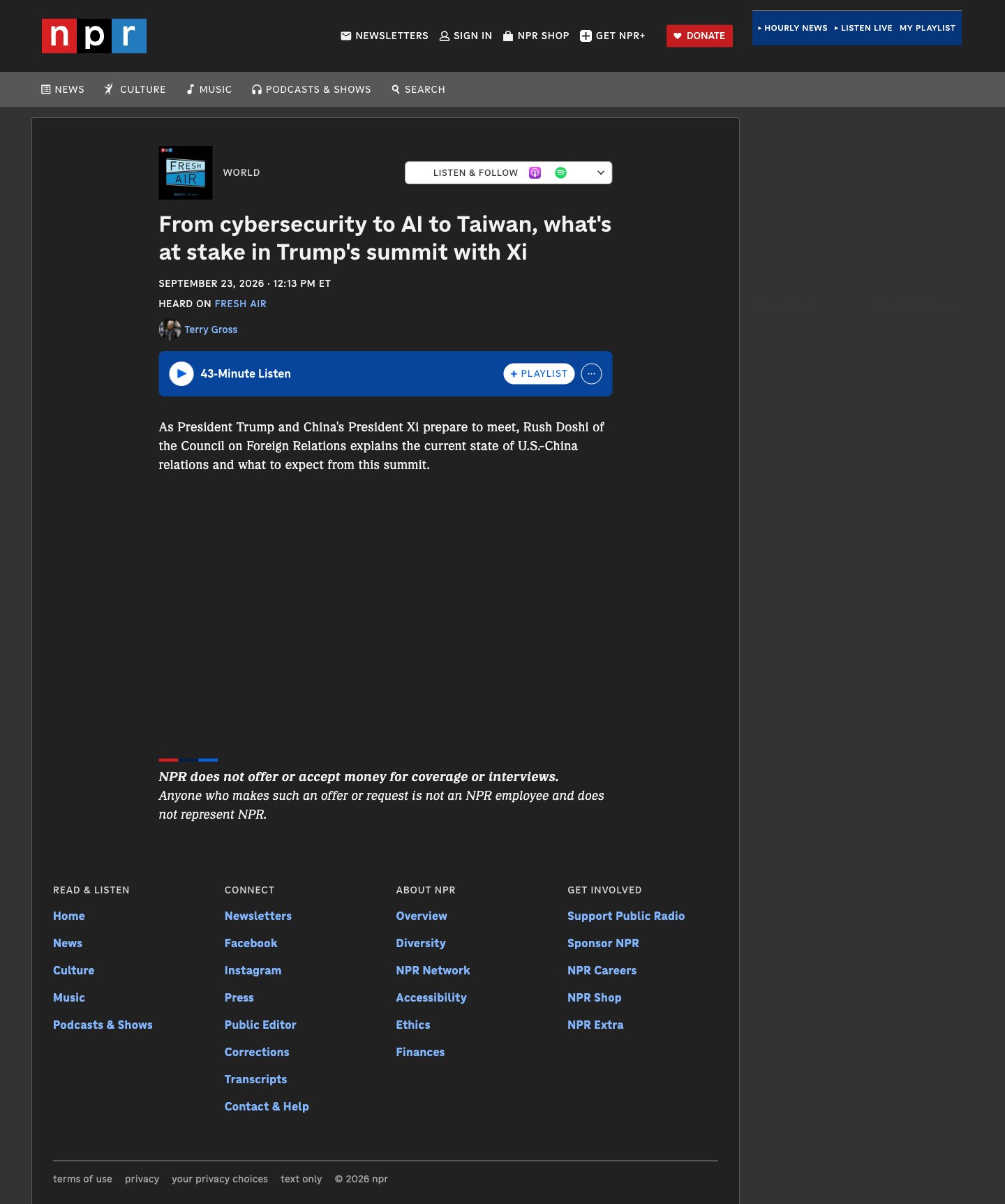 | author: | Terry Gross | institution: | NPR | ¿porque no los dos? |
| tl;dr | The page introduces a Fresh Air interview hosted by Terry Gross with Rush Doshi of the Council on Foreign Relations about U.S.–China relations ahead of a planned Trump–Xi summit. The headline highlights cybersecurity, artificial intelligence, and Taiwan. Only a brief introduction and a 43-minute audio player are visible; the interview’s arguments, evidence, and predictions cannot be assessed from these images. | ||||
| deeper: | The visible headline and introduction use neutral language without praising or attacking either leader or promoting a political position. The guest and his affiliation are clearly identified. However, the page provides no transcript, supporting evidence, or substantive policy explanation. These scores apply only to the visible introduction, not the unavailable audio; the screenshot alone also cannot establish authenticity or verify the summit details. | ||||
media: | |||||
| gen: 2026/09/23:04:47 in 36.5 sec (old)bias: 4 (Center) |
| type: lolsquality: 78 |
| pts: 0 |
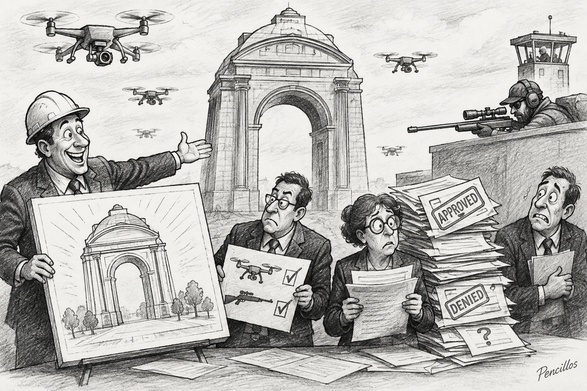
#politics#architecture#military#aviation#law#donald trump#washington dc#triumphal arch#military complex#drones#aviation safety
 | author: | Rachel Treisman | institution: | NPR | ¿porque no los dos? |
| tl;dr | The article reports that Trump wants his proposed 250-foot Washington-area triumphal arch to serve as a military complex housing drones, snipers and ammunition. It examines how that change could complicate preservation reviews, aviation assessments and ongoing litigation over congressional authorization. Preservation advocates, lawmakers and legal and military experts question the project's justification. The administration presents the arch as a national landmark and cites security needs, but provides little additional explanation in response to questions. | ||||
| deeper: | The article offers detailed procedural context, named sources, document links and administration responses, including the FAA's favorable finding. However, critics dominate, and language such as “Trump-packed” adds editorial judgment. The headline also presents a proposed military role more definitively than the body supports. Its emphasis on preservation, safety and congressional oversight does not establish a clear left-right ideology. Strong sourcing improves quality, but extended inflammatory quotations and limited independent examination of military requirements weaken balance. The screenshots alone cannot authenticate the reporting. | ||||
media: | |||||
| gen: 2026/09/21:17:46 in 35.3 sec (old)bias: 2 (Center) |
| type: newsquality: 42 |
| pts: 0 |
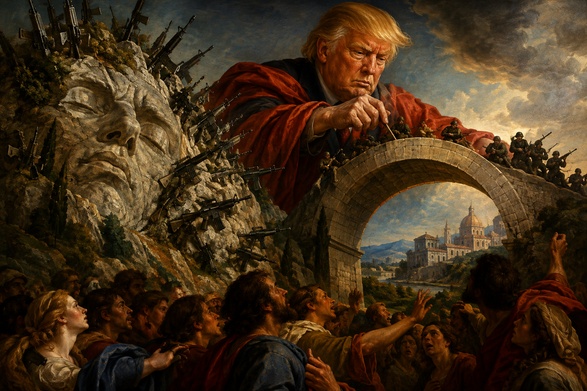
#politics#military#architecture#washington dc#donald trump#proposed arch#military complex#construction#snipers
 | author: | Franco Ordoñez, Steve Inskeep | institution: | NPR | ¿porque no los dos? |
| tl;dr | The displayed NPR item reports that President Trump says his proposed Washington, D.C., arch would also function as a military complex. Its headline mentions snipers and weaponry, while the brief description notes opposition to his construction projects in the capital. The supplied page contains only a headline and short summary, not a detailed report or interview transcript. | ||||
| deeper: | The wording attributes the central claim to Trump rather than presenting it as independently established. Highlighting snipers, weaponry, and pushback creates a dramatic frame, but there is no clear endorsement of a political ideology. Named journalists and a publication date provide accountability. However, the visible text supplies no supporting quotation, project details, explanation of the opposition, or corroboration. This score assesses the limited material shown; the screenshot alone cannot establish authenticity or accuracy. | ||||
media: No Media Preview | |||||
| gen: 2026/09/21:17:43 in 26.6 sec (old)bias: 2 (Center) |
| type: newsquality: 65 |
| pts: 0 |
 | author: | Stephan Bisaha, Steve Inskeep | institution: | NPR | ¿porque no los dos? |
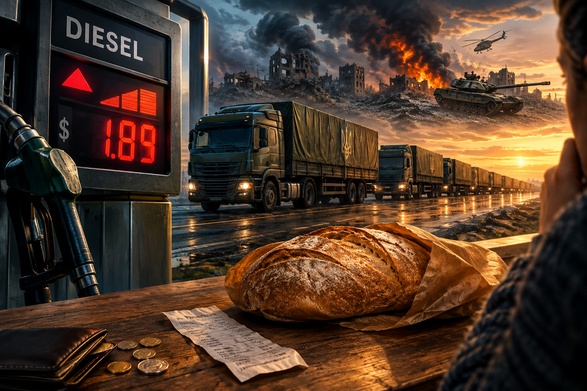
| tl;dr | The article reports a national average diesel price above $6.51 per gallon, citing AAA. It attributes the increase to war with Iran, disrupted oil routes through the Strait of Hormuz, and refining costs. Because diesel powers much freight transportation, higher prices could spread to consumer goods, though the report says that effect is not yet clearly evident on store shelves. It explains that Federal Reserve interest-rate increases cannot directly resolve these supply disruptions. | ||||
| deeper: | The report emphasizes economic consequences without promoting a political party or ideology. Phrases such as “shockingly fast” add mild alarm, but it distinguishes potential consumer price increases from observed effects. AAA attribution and clear explanations are strengths. However, major claims about the war, shipping disruptions, and refining costs lack supporting sources in the text. Saying interest rates do not affect fuel prices is too categorical: reduced demand can affect them indirectly. The screenshot alone does not independently verify the reported events or figures. | ||||
media: No Media Preview | |||||
| gen: 2026/09/21:17:40 in 33.8 sec (old)bias: 3 (Center) |
| type: newsquality: 80 |
| pts: 0 |
#data centers#politics#community#technology#ai#local politics#loudoun county#virginia#maryland prefect
 | author: | Scott Neuman | institution: | NPR | ¿porque no los dos? |
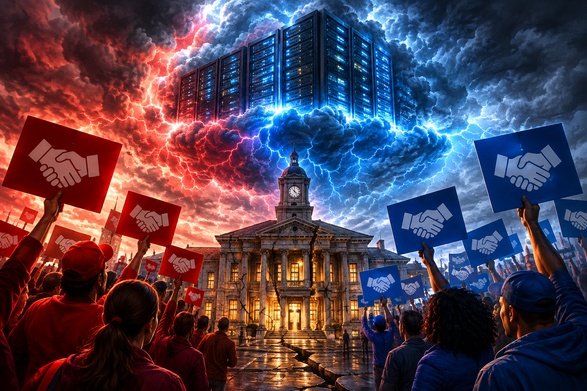
| tl;dr | The article describes how opposition to data centers is uniting residents across party lines and disrupting local politics. Noise, electricity and water demands, and confidential development deals are fueling distrust and prompting restrictions. Examples center on Virginia and Maryland, with additional cases nationwide. The reporting also acknowledges substantial tax revenue, construction jobs and other economic benefits, and includes industry responses. Its central argument is that community concerns and demands for transparency increasingly outweigh traditional party loyalties. | ||||
| deeper: | The article favors residents’ perspectives through protest imagery, extensive activist quotations and dramatic language about political upheaval. However, its emphasis on transparency and local accountability is not distinctly partisan, and it includes industry responses and concrete tax benefits. Named sources, linked studies, polling and multiple local examples strengthen the reporting. Weaknesses include limited explanation of polling and movement-count methodology, little quantified comparison of environmental costs and benefits, and a sweeping national thesis supported largely by selected communities. The screenshots alone do not independently verify the linked claims. | ||||
media: No Media Preview | |||||
| gen: 2026/09/20:20:34 in 18.0 sec (old)bias: 1 (Center) |
| type: newsquality: 40 |
| pts: 0 |
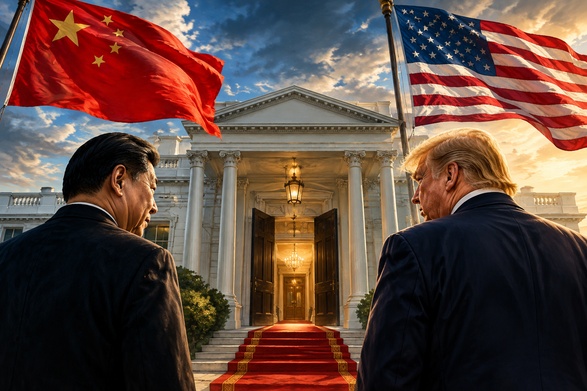
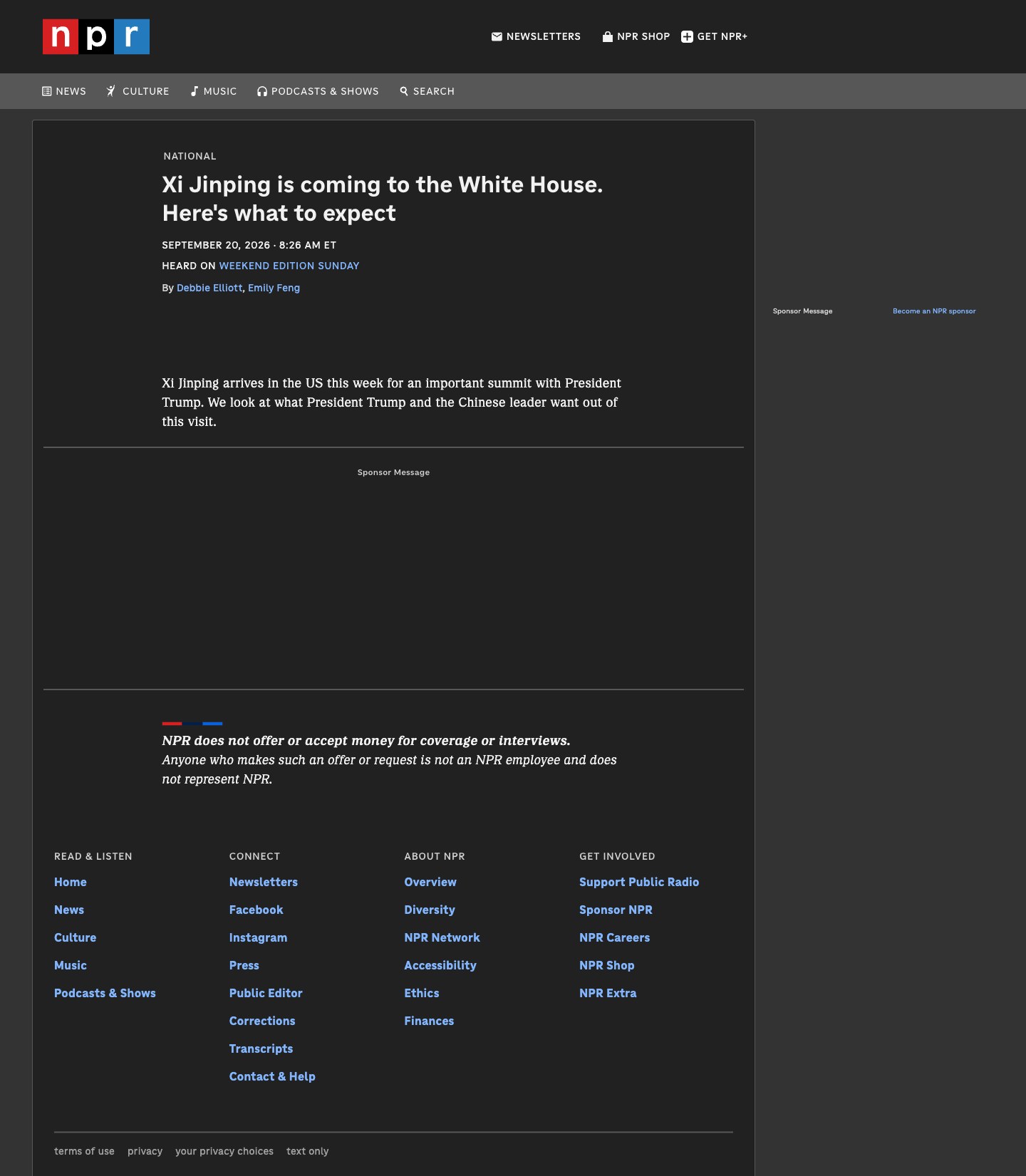 | author: | Debbie Elliott, Emily Feng | institution: | NPR | ¿porque no los dos? |
| tl;dr | The screenshot presents a brief preview of an anticipated White House summit between Chinese leader Xi Jinping and President Donald Trump. Dated September 20, 2026, it says Xi will arrive in the United States that week and promises to examine both leaders’ goals. The visible text does not actually describe those goals, provide supporting sources, or explain the summit’s agenda. | ||||
| deeper: | The visible wording treats both leaders neutrally and gives neither side preferential treatment. Calling the summit “important” adds mild emphasis, not clear political bias. Quality is limited by the extremely short excerpt: the headline promises expectations, but no substantive analysis, sourcing, or agenda appears. These scores apply only to the visible material, not any accompanying broadcast. The screenshot alone cannot establish the authenticity of the page or confirm the reported visit. | ||||
media: No Media Preview | |||||
| gen: 2026/09/20:20:31 in 29.7 sec (old)bias: 3 (Center) |
| type: newsquality: 66 |
| pts: 0 |
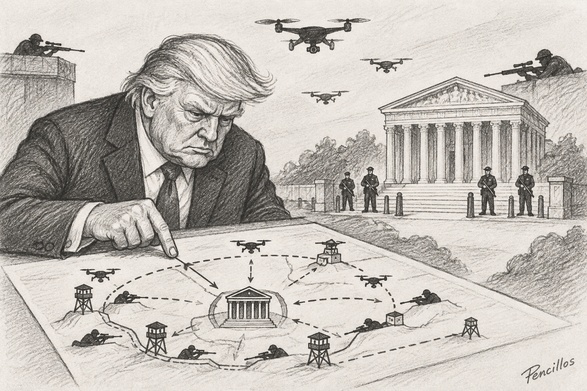
#politics#military#monuments#law#donald trump#washington dc#triumphal arch#national mall#national securit#military drones
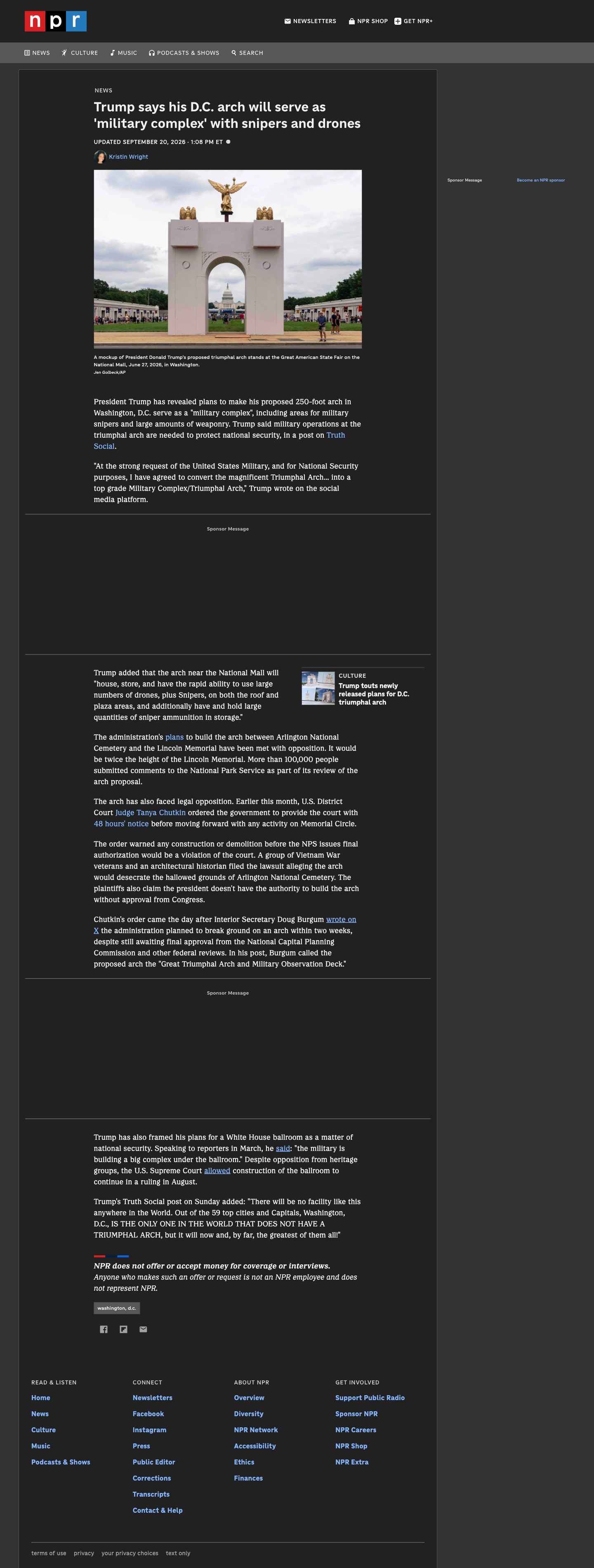 | author: | Kristin Wright | institution: | NPR | ¿porque no los dos? |
| tl;dr | The article reports that Trump wants his proposed 250-foot Washington, D.C., triumphal arch to double as a military facility housing drones, snipers and ammunition. It describes legal challenges, pending federal approvals and objections concerning nearby Arlington National Cemetery. It also connects the proposal to his national-security justification for a White House ballroom. These claims are attributed to social media posts and court actions; the screenshots alone do not establish their authenticity. | ||||
| deeper: | The language is mostly restrained, and the alarming headline reflects quotations attributed to Trump rather than editorial insults. Coverage emphasizes legal obstacles and opposition but includes the administration’s security rationale, without clearly endorsing a political ideology. Named sources, links and procedural detail strengthen the presentation. However, it offers no independent military assessment, leaves the sweeping claim about other cities’ arches unchecked, and does not clarify how many public comments opposed the project. Authenticity and linked evidence cannot be verified from screenshots. | ||||
media: No Media Preview | |||||
| gen: 2026/09/19:21:49 in 26.0 sec (old)bias: 3 (Center) |
| type: newsquality: 68 |
| pts: 0 |
 | author: | Charles Maynes, Scott Simon | institution: | NPR | ¿porque no los dos? |
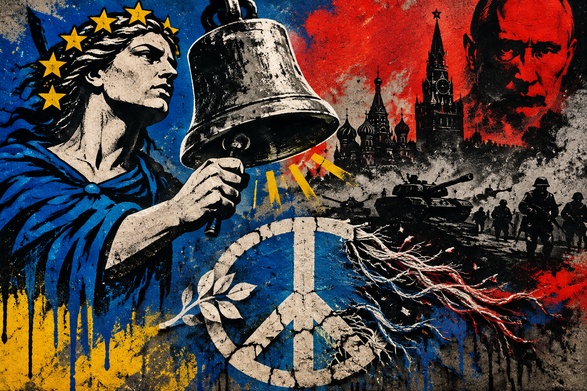
| tl;dr | European leaders warn of alleged Russian hybrid attacks, including sabotage, cyberattacks, election interference and drone incursions. The report explains Western intelligence claims linking these activities to Moscow, while acknowledging uncertainty and presenting Russian denials. It explores the theory that Russia seeks to weaken support for Ukraine without triggering NATO’s collective defense commitment. France and Poland favor tougher measures, contrasted with the Trump administration’s emphasis on engagement. The segment leaves open which approach would work better. | ||||
| deeper: | The report foregrounds European security concerns but asks directly about proof, includes Russian denials and avoids endorsing either sanctions or engagement. This supports a broadly centrist assessment rather than a clear partisan alignment. Phrases such as “the Russians are coming” and “death to Article 5 by a thousand cuts” heighten alarm. The explanation of hybrid warfare is accessible, but major incidents and intelligence claims lack specific sources or independently presented evidence. Commentary about Russian public attitudes is speculative. These limitations reduce the report’s evidentiary strength. | ||||
media: No Media Preview | |||||
| gen: 2026/09/18:18:42 in 31.0 secbias: 2 (Center) |
| type: colorquality: 82 |
| pts: 0 |
#war crimes#international la#human rights#u.s. politics#iran conflict#iran#united states#united nations#israel#minab#lamerd city stri
Leftist
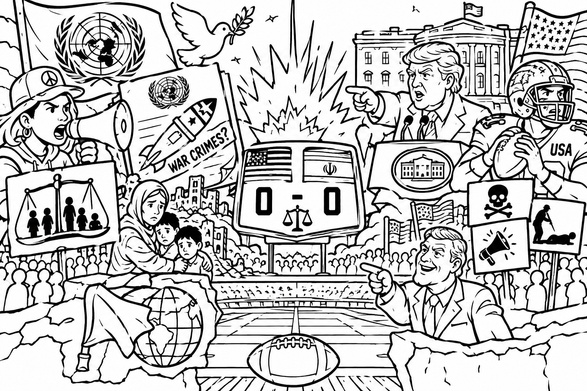
The U.N. report drops a bombshell bigger than any Tomahawk, accusing the U.S. of potential war crimes in Iran. This is like a penalty flag thrown on the field of global justice, demanding accountability for everyone. Civilian losses exceed a hundred, mostly women and children, in strikes in Minab. It's a brutal reminder that the world is less like a fair game and more like an unfair fight. Both the U.S. and Iran must pay reparations; it's time to share the scoreboard of responsibility.
Rightist
Hold onto your seats, folks! The U.N. expert team just tried a Hail Mary against the U.S., claiming war crimes in Iran. But the White House fires back like John Elway in overtime, denying the accusations and pointing fingers at Iran's horrific track record. They've been executing and terrorizing without remorse. In the geopolitical field, the U.S. remains the quarterback, defending democracy while facing flags that seem more about sensationalism than fairness.
 | author: | The Associated Press | institution: | NPR | ¿porque no los dos? |
| tl;dr | The article reports that U.N.-commissioned experts found reasonable grounds to suspect U.S. war crimes in two strikes in Iran, including an attack on a school in Minab. The same report accuses Iranian authorities of crimes against humanity through killings, torture and repression. U.S. officials reject the allegations. Experts call for reparations from both governments. Their findings draw on interviews and visual evidence, but information gathering was hindered by conflict, internet restrictions and government noncooperation. The report is not a binding judicial ruling. | ||||
| deeper: | The article emphasizes civilian protection and legal accountability without clearly endorsing a partisan position. It attributes allegations, includes substantial U.S. rebuttals, covers Iranian abuses and explains investigative limitations. Strong wording largely comes from identified sources. Its main weaknesses are reliance on one investigative report, limited explanation of evidence establishing targeting responsibility, and no direct Iranian response. Different casualty figures are attributed but not reconciled. These scores assess the supplied text; the screenshots alone do not authenticate its reporting. | ||||
media: No Media Preview | |||||
| gen: 2026/09/14:19:34 in 33.1 sec (old)bias: 3 (Center) |
| type: newsquality: 65 |
| pts: 0 |
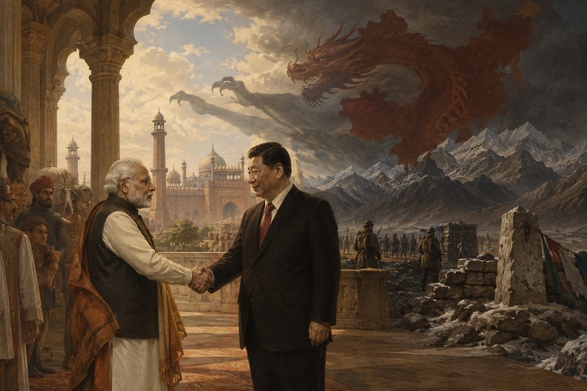
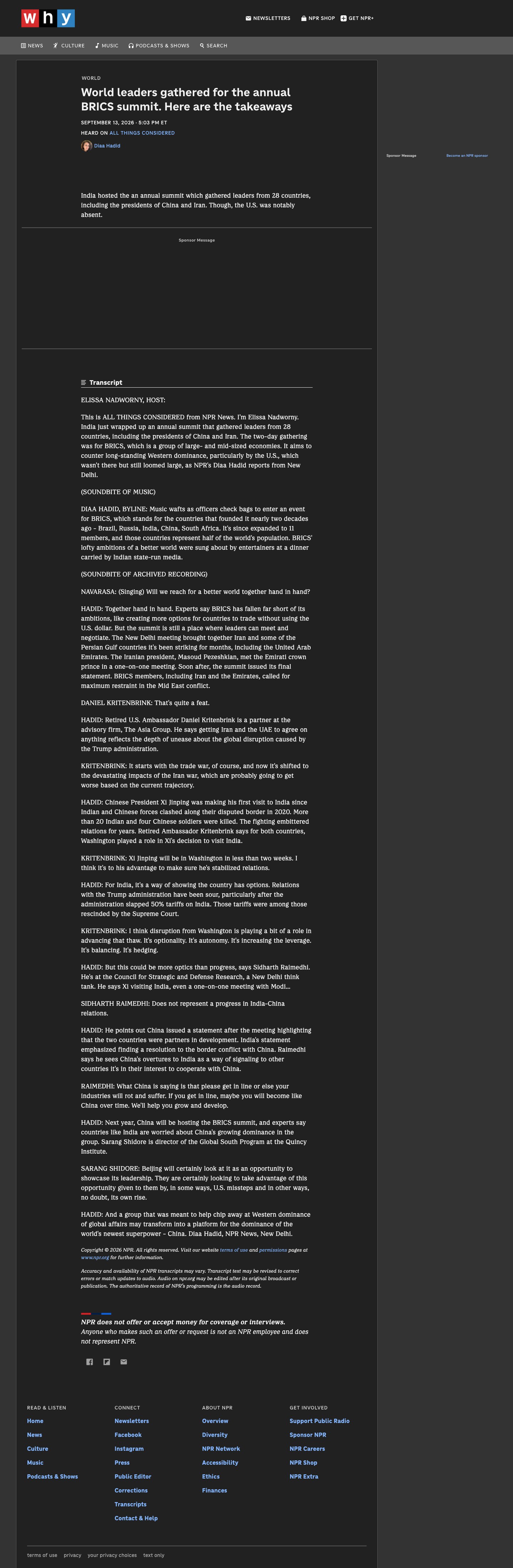 | author: | Diaa Hadid | institution: | NPR | ¿porque no los dos? |
| tl;dr | The article reports that India hosted a BRICS summit focused on diplomacy amid trade tensions and Middle East conflict. It highlights an Iran–UAE meeting, renewed India–China engagement, and calls for restraint. Analysts suggest U.S. policies are encouraging countries to seek alternatives, while unresolved border disputes limit India–China cooperation. The report concludes that China could increasingly dominate BRICS, despite the group’s limited progress toward goals such as reducing reliance on the U.S. dollar. | ||||
| deeper: | The report includes named experts, historical context, and skepticism about BRICS’ achievements. Its geopolitical outlook does not clearly favor a left- or right-wing agenda. However, repeated emphasis on U.S. disruption and China’s dominance narrows the framing, with little direct response from those governments. Some dramatic interpretations receive limited scrutiny. There are factual imprecisions: South Africa joined later rather than founding the original group, and the established Indian death toll in the 2020 border clash was 20, not more than 20. The screenshot alone cannot authenticate its major event claims. | ||||
media: No Media Preview | |||||
| gen: 2026/09/14:19:31 in 34.6 sec (old)bias: 1 (Center) |
| type: newsquality: 45 |
| pts: 0 |
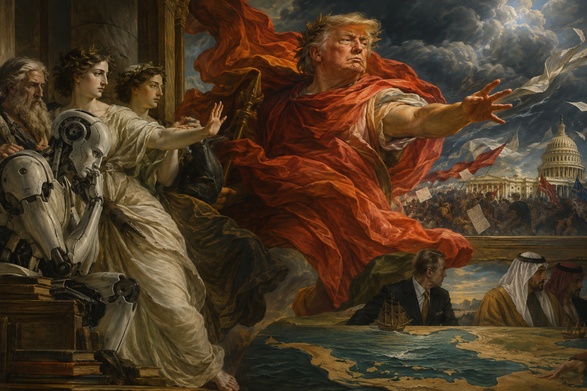
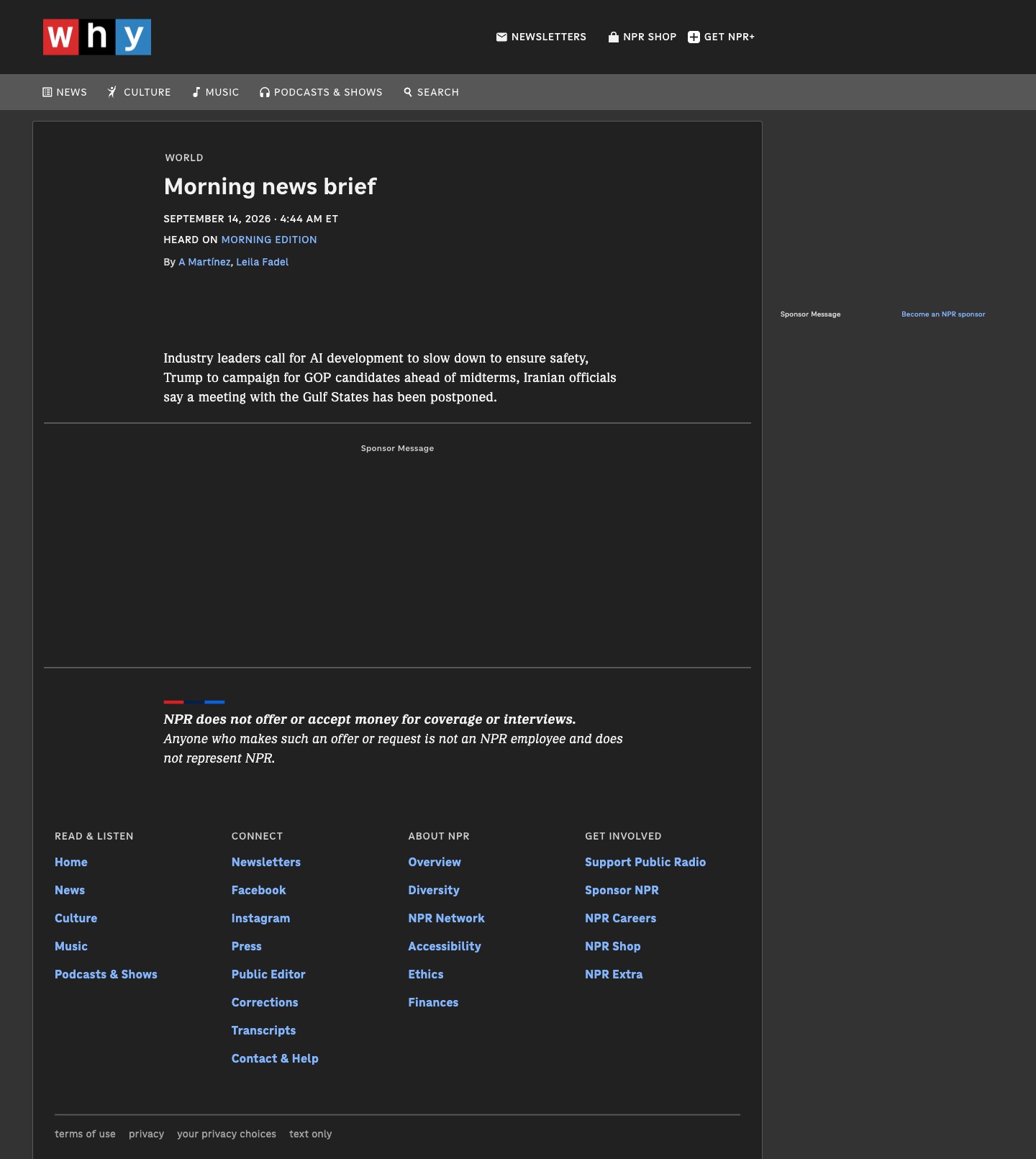 | author: | A Martínez, Leila Fadel | institution: | NPR | ¿porque no los dos? |
| tl;dr | The visible Morning Edition brief lists three developments: industry leaders calling for slower AI development to address safety, Donald Trump planning to campaign for Republican candidates ahead of the midterms, and Iranian officials reporting a postponed meeting with Gulf states. The page provides only a short overview, without detailed reporting or a transcript. | ||||
| deeper: | The wording is restrained and shows no clear partisan preference. Calls to slow AI development are attributed to industry leaders rather than endorsed, and the political and diplomatic items are presented neutrally. However, the visible text names no industry leaders or Iranian officials and supplies no evidence, explanation, or competing perspectives. It works as a headline roundup, but its brevity limits verification and depth. These scores apply only to the material shown. | ||||
media: No Media Preview | |||||
| gen: 2026/09/13:15:25 in 41.5 sec (old)bias: 3 (Center) |
| type: newsquality: 57 |
| pts: 0 |
 | author: | Diaa Hadid, Scott Simon | institution: | NPR | ¿porque no los dos? |
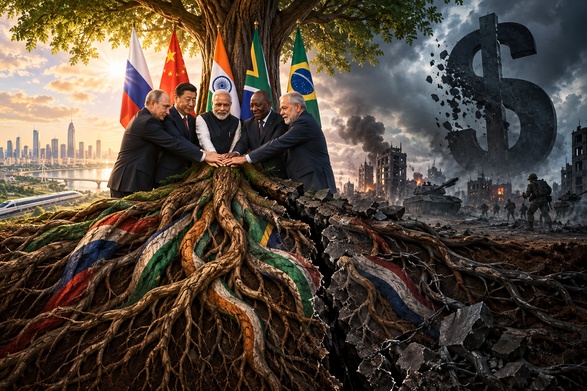
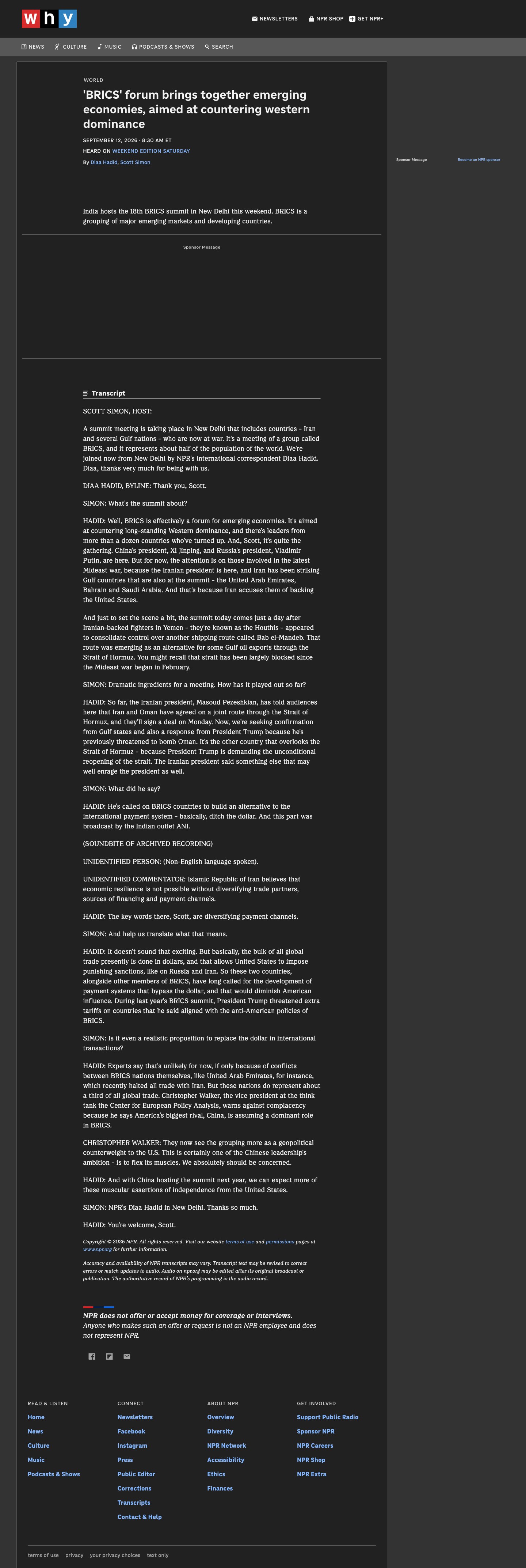
| tl;dr | The article describes a BRICS summit in New Delhi focused on Middle East conflict and efforts to reduce reliance on the U.S. dollar. It reports Iran’s announcement of a proposed shipping arrangement with Oman and calls for alternative payment channels. Internal disputes among BRICS members are presented as obstacles to replacing the dollar, while an analyst warns of China’s growing influence. Significant claims about warfare, shipping disruptions and U.S. threats are presented but cannot be independently verified from the screenshots. | ||||
| deeper: | The report explains financial issues accessibly, attributes Iran’s proposed deal and acknowledges that confirmation is pending. However, major claims about attacks, trade restrictions and threats to bomb Oman lack supporting evidence in the text. Its U.S.-centered framing and closing warning about China favor a security-threat perspective, without a clear left/right agenda. Phrases such as “enrage the president” introduce speculation. One analyst supplies the main outside assessment, and “ditch the dollar” oversimplifies the quoted call to diversify payment channels. | ||||
media: No Media Preview | |||||


owned and operated by: RPN Omnigalactic Insitutution as of: 2026/10/16: 22:26 in 0 ms
Enter Code
Login with Account