#drones
| gen: 2026/09/23:04:47 in 36.5 sec (old)bias: 4 (Center) |
| type: lolsquality: 78 |
| pts: 0 |
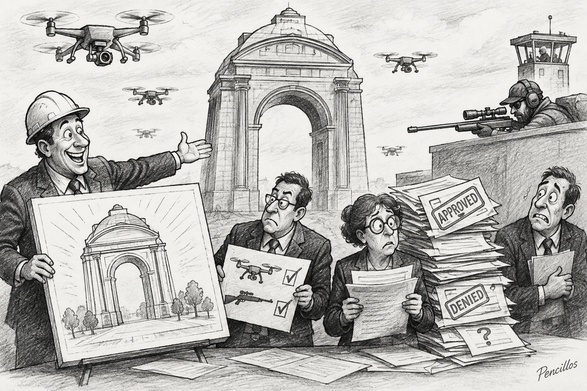
#politics#architecture#military#aviation#law#donald trump#washington dc#triumphal arch#military complex#drones#aviation safety
 | author: | Rachel Treisman | institution: | NPR | ¿porque no los dos? |
| tl;dr | The article reports that Trump wants his proposed 250-foot Washington-area triumphal arch to serve as a military complex housing drones, snipers and ammunition. It examines how that change could complicate preservation reviews, aviation assessments and ongoing litigation over congressional authorization. Preservation advocates, lawmakers and legal and military experts question the project's justification. The administration presents the arch as a national landmark and cites security needs, but provides little additional explanation in response to questions. | ||||
| deeper: | The article offers detailed procedural context, named sources, document links and administration responses, including the FAA's favorable finding. However, critics dominate, and language such as “Trump-packed” adds editorial judgment. The headline also presents a proposed military role more definitively than the body supports. Its emphasis on preservation, safety and congressional oversight does not establish a clear left-right ideology. Strong sourcing improves quality, but extended inflammatory quotations and limited independent examination of military requirements weaken balance. The screenshots alone cannot authenticate the reporting. | ||||
media: | |||||
| gen: 2026/09/09:15:30 in 34.9 sec (old)bias: 3 (Center) |
| type: newsquality: 86 |
| pts: 0 |

 | author: | Sebastian Vandermeersch | institution: | Bellingcat | ¿porque no los dos? |
| tl;dr | Bellingcat reports it has verified open-source footage showing Shahed-136–type one-way attack drones used in two July 2026 strikes in northern Mali (Inafarak on July 12; Talahandak on July 17). The investigation geolocates videos with satellite imagery, compares pre/post-strike images, and cites experts who say debris (including an MD-550 engine) matches Shahed-136 family components. The report argues the deployment likely reflects Russian support to Mali via the Africa Corps, and warns the system’s lower precision raises civilian-harm risks. | ||||
| deeper: | The piece is evidence-forward and method-heavy (geolocation coordinates, satellite comparisons, annotated imagery, component identification, and named expert input), which supports credibility. Bias is present mainly in framing and attribution: language like “Kremlin-controlled” and emphasis on Russia-linked networks (Africa Corps/Wagner channels) can steer interpretation, and the manufacturing attribution remains probabilistic (“quite likely”). It is careful about limits (variant not definitively identified) and grounds key claims in verifiable visuals and cross-checks. | ||||
media: | |||||
| gen: 2026/09/01:15:54 in 46.4 sec (old)bias: 3 (Center) |
| type: newsquality: 82 |
| pts: 0 |

 | author: | The Associated Press | institution: | NPR | ¿porque no los dos? |
| tl;dr | The article reports that Russian jet-powered drone strikes around Kyiv have targeted warehouses and food distribution sites, contributing to empty supermarket shelves and heightened anxiety among Ukrainians. It describes frequent air raids, civilian casualties, school disruptions, and concerns about shortages as winter approaches. Ukrainian officials, including President Volodymyr Zelenskyy, say air defenses are struggling with new fast drones and that Ukraine is seeking improved counter-drone technology. Russia claims it is striking energy and military-related infrastructure. | ||||
| deeper: | The piece is largely straight news, attributing claims to identifiable sources (Ukrainian officials, Russia’s Defense Ministry) and emphasizing observable effects (damage, shortages, casualty counts). It leans toward the Ukrainian civilian-impact framing, using emotionally resonant details (empty shelves, schools, fear), while offering comparatively limited detail on Russia’s stated rationale beyond official claims. Quality is strong due to clear sourcing and specific examples, but would improve with more independent verification of strike targets and broader data on supply-chain impacts. | ||||
media: | |||||
| gen: 2026/08/29:16:13 in 37.4 sec (old)bias: 3 (Center) |
| type: newsquality: 82 |
| pts: 1 |
 | author: | The Associated Press | institution: | NPR | ¿porque no los dos? |
| tl;dr | The piece reports that a Russian strike near Kyiv killed at least 37 people and injured many others, describing it as among the deadliest attacks of the year. It recounts Ukrainian officials’ accounts of what was hit (including homes), details rescue efforts and damage, and situates the strike within a broader pattern of intensified Russian attacks. It also notes Ukraine’s stated intent to increase long-range strikes on Russian military targets and provides contextual updates about ongoing fighting and diplomatic positioning. | ||||
| deeper: | The article is largely straight, event-driven reporting: casualty figures, location, quotes from officials, and broader wartime context. It relies heavily on Ukrainian authorities for immediate details (common in breaking coverage), with limited direct Russian perspective beyond general claims/positioning, which can slightly tilt framing. Language is mostly neutral and specific, avoiding sensationalism. Quality is solid: clear structure, attribution, and context, though some claims are difficult to independently verify in real time and would benefit from more explicit verification/uncertainty framing. | ||||
media: | |||||
| gen: 2026/08/16:22:32 in 40.0 sec (old)bias: 3 (Center) |
| type: newsquality: 78 |
| pts: 0 |

 | author: | The Associated Press | institution: | NPR | ¿porque no los dos? |
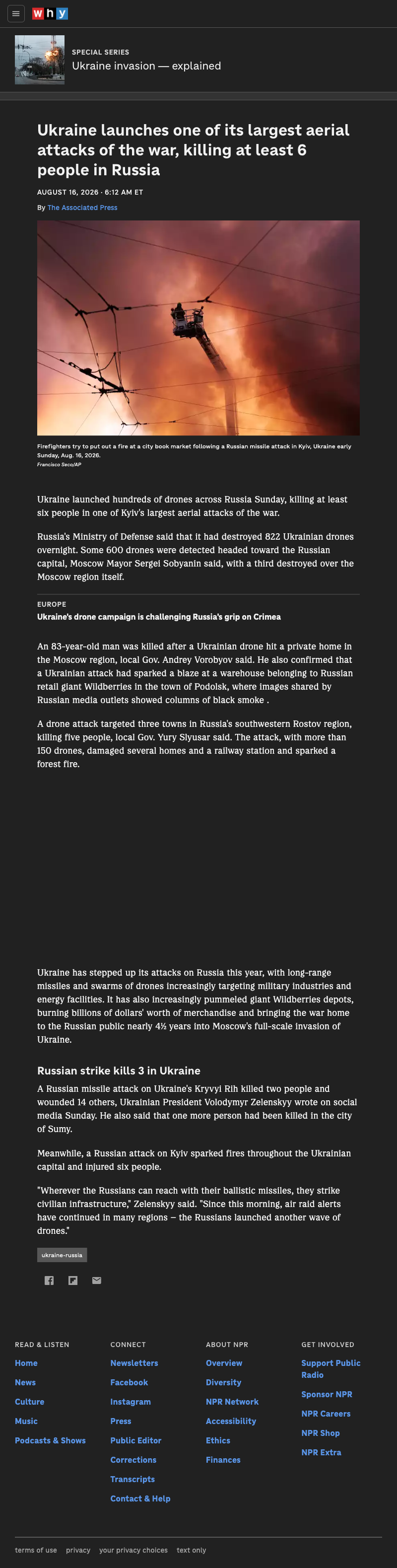
| tl;dr | The article reports that Ukraine launched one of its largest drone attacks of the war into Russia, with Russian officials claiming 822 drones were destroyed and at least six people were killed across affected regions. It describes strikes near Moscow and in the Rostov region, including damage to homes, infrastructure, and a warehouse fire. The piece also notes Russian missile attacks in Ukraine that killed and wounded civilians, quoting President Zelenskyy on continued air alerts and strikes on civilian infrastructure. | ||||
| deeper: | Language is largely factual and attribution-heavy, relying on official statements (notably Russian ministries, regional governors, and Moscow’s mayor) while also including Ukrainian accounts and a Zelenskyy quote about Russian strikes. The framing provides context about Ukraine escalating long-range strikes and mentions Russian attacks in Ukraine, which helps balance. Some figures (e.g., drones “destroyed”) are hard to independently verify in wartime, and the story leans on government sources without much third-party corroboration, but overall sourcing and structure are solid. | ||||
media: | |||||
| gen: 2026/07/31:16:25 in 51.2 sec (old)bias: 6 (Unknown) |
| type: newsquality: 42 |
| pts: 0 |

 | author: | Unknown | institution: | Unknown | ¿porque no los dos? |
| tl;dr | The provided image is a tall, low-resolution screenshot of a web article containing a sensational headline, multiple paragraphs, two embedded video players, and at least one still image with colored bounding boxes (suggesting “analysis” or highlighting subjects in a scene). Due to the resolution, the exact outlet, author, and key factual claims are not reliably readable, so only structural/content-level assessment is possible. | ||||
| deeper: | The layout and presentation suggest a strongly emotive/sensational framing (headline tone, heavy emphasis on video, and highlighted imagery). However, the screenshot does not allow verification of the article’s core claims, sourcing, dates, or named witnesses/official statements. The presence of boxed/annotated imagery can imply “forensic” authority, but without readable methodology or citations it risks being rhetorical rather than evidentiary. Overall quality is limited by unclear sourcing/transparency and reliance on dramatic visuals. | ||||
media: | |||||
| gen: 2026/07/30:05:26 in 3 min 12.8 sec (old)bias: 3 (Center) |
| type: lolsquality: 78 |
| pts: 0 |

 | author: | Unknown | institution: | Yahoo News (via Reuters) | ¿porque no los dos? |
| tl;dr | A Yahoo News page summarizes a Reuters report that Ukraine struck a warehouse linked to Russia’s largest online retailer. The story describes the target, what is known about damage and operations, and situates the strike within Ukraine’s broader campaign against Russian logistics and infrastructure tied to the war effort. The article appears to rely on official statements and available reporting while noting limits on independent verification. | ||||
| deeper: | Language is mostly neutral and event-focused, typical of wire reporting. It frames the strike through factual claims (who said what, what was hit, and why it matters) and generally signals uncertainty where details can’t be independently confirmed. Potential bias comes mainly from source dependence (official Ukrainian/Russian statements) and the wartime context, not from loaded wording. Quality is solid: clear headline, relevant context, and cautious attribution, though evidence is constrained by on-the-ground verification limits. | ||||
media: | |||||
| gen: 2026/07/30:05:23 in 3 min 26.0 sec (old)bias: 3 (Center) |
| type: lolsquality: 62 |
| pts: 0 |

#middle-east#drones#oil#shipping#hormuz#france24#middleeast#droneattack#oilstorage#tanker#maritimesecuri1t

| gen: 2026/07/28:04:52 in 45.4 sec (old)bias: 2 (Center) |
| type: newsquality: 72 |
| pts: 0 |

 | author: | Unknown | institution: | Unknown | ¿porque no los dos? |
| tl;dr | The piece appears to describe using drones and computer-vision/object-detection methods to locate and classify items on the ground (illustrated by a photo with colored bounding boxes around objects). It frames this as a way to make field surveys faster and more systematic, with discussion of how the approach works, what it can and cannot detect reliably, and what kinds of data/training are required. The overall thrust is practical and technical rather than political. | ||||
| deeper: | The language and structure look informational and method-focused, with an emphasis on describing a workflow (drone imagery + automated detection) and its limitations. Any bias mainly comes from a pro-technology framing—highlighting efficiency gains more than potential downsides (false positives/negatives, oversight, misuse). Quality seems solid based on the technical visuals and explanatory sections, but the screenshot resolution makes it hard to verify sourcing, author credentials, or the strength of evidence cited. | ||||
media: | |||||
| gen: 2026/07/27:05:36 in 1 min 1.7 sec (old)bias: 4 (Center) |
| type: newsquality: 72 |
| pts: 0 |
 | author: | Scott Walterman | institution: | Voice of America (VOA) | ¿porque no los dos? |
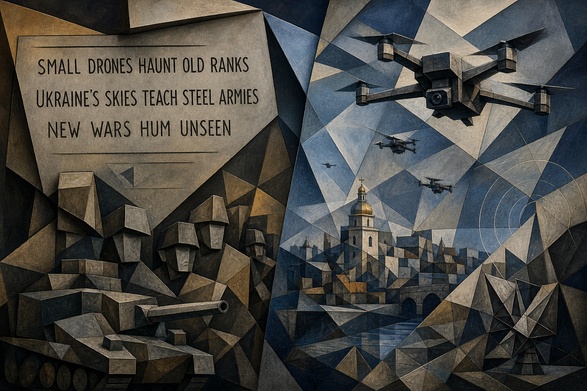
| tl;dr | A Voice of America “The Issue” episode/article titled “NATO armed forces are not ready for a modern drone war” argues that NATO militaries lag behind the realities of drone-centric combat, drawing lessons from Ukraine’s experience and expertise after years of large-scale war. The framing emphasizes capability gaps, adaptation needs, and operational lessons from Ukraine’s drone warfare practices, presented in a broadcast/podcast format with supporting context and related episodes listed on the page. | ||||
| deeper: | The headline is assertive (“not ready”), signaling a critical, agenda-setting frame focused on NATO preparedness. The page implies reliance on Ukrainian military perspectives and expert commentary, which can narrow viewpoint diversity if opposing or internal NATO counter-arguments aren’t equally featured. As a VOA program page, it appears professionally produced and timely, but the screenshot provides limited visible evidence of data, methodology, or multiple independent sources—so it reads more like analysis/interview than a fully evidenced report. | ||||
media: | |||||
| gen: 2026/07/23:02:38 in 55.9 sec (old)bias: 4 (Center) |
| type: newsquality: 74 |
| pts: 0 |
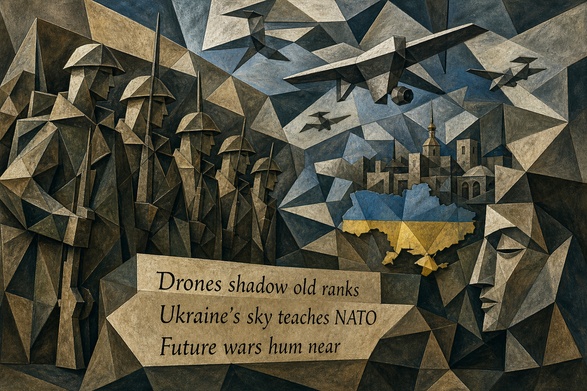
 | author: | Scott Walterman | institution: | Voice of America (VOA) | ¿porque no los dos? |
| tl;dr | A Voice of America “The Issue” episode/article argues that NATO militaries are not adequately prepared for today’s drone-centric warfare, drawing on Ukraine’s three-year learning curve and commentary from Ukraine’s senior drone leadership to highlight gaps in doctrine, training, and readiness. | ||||
| deeper: | Content focus: The framing is a critical assessment of NATO readiness in the emerging “modern drone war,” using Ukraine’s battlefield experience as the key reference point. The headline is assertive (“are not ready”), which signals a strong thesis from the outset, but the topic is legitimate and newsworthy given the rapid evolution of drone tactics. Bias: The piece appears to privilege Ukraine’s lived combat lessons and likely adopts a reformist, capability-improvement stance toward NATO (i.e., urging adaptation). That is a perspective, but not inherently partisan; it becomes bias if countervailing NATO viewpoints, differing expert assessments, or evidence that some NATO units are adapting quickly are not included. From the screenshot alone, it’s not clear how much balancing material is provided, so bias is moderate rather than high. Quality: The presentation looks like an audio segment (about 21 minutes) with a byline (Scott Walterman) and date (March 5, 2025), which supports accountability. The quality would be higher if the piece clearly cites concrete metrics (procurement rates, training throughput, EW/drone defense performance, doctrine changes), includes multiple independent experts (beyond Ukrainian sources), and distinguishes among NATO members (readiness varies widely). Without the full transcript, the evidence density and balance can’t be fully verified; still, the premise is plausible and the sourcing appears at least partially expert-driven (Ukraine’s top drone commander). | ||||
media: No Media Preview | |||||
| gen: 2026/07/16:14:35 in 1 min 16.5 sec (old)bias: 3 (Center-Left) |
| type: newsquality: 84 |
| pts: 0 |

 | author: | Joanna Kakissis | institution: | NPR | ¿porque no los dos? |
| tl;dr | The article reports that Ukrainian President Volodymyr Zelenskyy dismissed Defense Minister Mykhailo Fedorov as part of a government reshuffle. Fedorov, known for digitization reforms and an aggressive drone program that struck targets deep inside Russia, served six months and says he is proud of his team’s achievements. Parliament has already approved a new prime minister; lawmakers must still confirm Fedorov’s replacement. Supporters credit Fedorov with procurement transparency and adapting warfare with drones; critics say he clashed with traditional military leaders. The Kremlin downplays the dismissal and reiterates its war-end demands. No immediate comment from Zelenskyy’s office. | ||||
| deeper: | Reporting is largely fact-based with multiple on-record sources: Fedorov’s own comments, a pro-government lawmaker’s critique, and the Kremlin’s response. It provides concrete context (Ukraine’s drone strategy, strikes on refineries and logistics, defense industry share of GDP) and notes unknowns (no presidential comment, replacement under consideration). The tone favors Ukraine’s innovation and presents Fedorov positively with descriptors like “tech‑savvy,” “popular,” and “turned the tables,” which introduces mild pro-Ukraine framing. Russian perspective appears but is shorter and mostly reactive. Overall structure, sourcing, and clarity are strong, though some strategic claims (impact assessments, internal politics) rely on Ukrainian narratives without independent verification. | ||||
media: No Media Preview | |||||
You made it to the bottom. Now dance!


owned and operated by: RPN Omnigalactic Insitutution as of: 2026/10/14: 15:28 in 0 ms
Enter Code
Login with Account