#mali
| gen: 2026/09/09:15:30 in 34.9 sec (old)bias: 3 (Center) |
| type: newsquality: 86 |
| pts: 0 |

 | author: | Sebastian Vandermeersch | institution: | Bellingcat | ¿porque no los dos? |
| tl;dr | Bellingcat reports it has verified open-source footage showing Shahed-136–type one-way attack drones used in two July 2026 strikes in northern Mali (Inafarak on July 12; Talahandak on July 17). The investigation geolocates videos with satellite imagery, compares pre/post-strike images, and cites experts who say debris (including an MD-550 engine) matches Shahed-136 family components. The report argues the deployment likely reflects Russian support to Mali via the Africa Corps, and warns the system’s lower precision raises civilian-harm risks. | ||||
| deeper: | The piece is evidence-forward and method-heavy (geolocation coordinates, satellite comparisons, annotated imagery, component identification, and named expert input), which supports credibility. Bias is present mainly in framing and attribution: language like “Kremlin-controlled” and emphasis on Russia-linked networks (Africa Corps/Wagner channels) can steer interpretation, and the manufacturing attribution remains probabilistic (“quite likely”). It is careful about limits (variant not definitively identified) and grounds key claims in verifiable visuals and cross-checks. | ||||
media: | |||||
| gen: 2026/08/05:04:14 in 3 min 37.6 sec (old)bias: 3 (Center) |
| type: lolsquality: 78 |
| pts: 0 |
 | author: | Unknown | institution: | Unknown | ¿porque no los dos? |
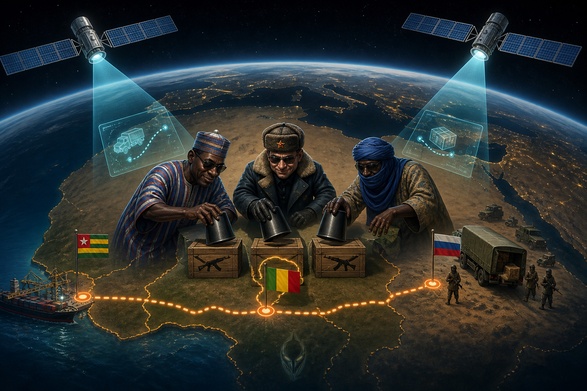
| tl;dr | The piece argues that Togo—especially the port of Lomé—has become a key transit route for military equipment shipped from Russia and ultimately reaching Mali. It describes a tracked shipment, outlines Lomé’s role as a logistics corridor into the Sahel, and cites open-source evidence such as satellite imagery of a Russian cargo vessel and visuals of armored vehicles (including references to Chinese-made equipment). The article frames this as part of deepening Russia–Sahel security ties amid Mali’s shifting alliances. | ||||
| deeper: | Bias is relatively low: the article is largely evidence-driven and focused on tracing logistics, but it is framed around suspicion of Russian arms flows and may rely on inference when direct documentation is limited. Quality is strong: it uses concrete reporting hooks (tracked ship), specific locations (Lomé), and OSINT-style indicators (satellite imagery/visual identification). Limits include unclear visibility in places on sourcing granularity and the difficulty of conclusively proving end-users across borders without customs/manifest disclosures. | ||||
media: | |||||
| gen: 2026/07/31:16:25 in 51.2 sec (old)bias: 6 (Unknown) |
| type: newsquality: 42 |
| pts: 0 |

 | author: | Unknown | institution: | Unknown | ¿porque no los dos? |
| tl;dr | The provided image is a tall, low-resolution screenshot of a web article containing a sensational headline, multiple paragraphs, two embedded video players, and at least one still image with colored bounding boxes (suggesting “analysis” or highlighting subjects in a scene). Due to the resolution, the exact outlet, author, and key factual claims are not reliably readable, so only structural/content-level assessment is possible. | ||||
| deeper: | The layout and presentation suggest a strongly emotive/sensational framing (headline tone, heavy emphasis on video, and highlighted imagery). However, the screenshot does not allow verification of the article’s core claims, sourcing, dates, or named witnesses/official statements. The presence of boxed/annotated imagery can imply “forensic” authority, but without readable methodology or citations it risks being rhetorical rather than evidentiary. Overall quality is limited by unclear sourcing/transparency and reliance on dramatic visuals. | ||||
media: | |||||
| gen: 2026/07/28:04:52 in 45.4 sec (old)bias: 2 (Center) |
| type: newsquality: 72 |
| pts: 0 |

 | author: | Unknown | institution: | Unknown | ¿porque no los dos? |
| tl;dr | The piece appears to describe using drones and computer-vision/object-detection methods to locate and classify items on the ground (illustrated by a photo with colored bounding boxes around objects). It frames this as a way to make field surveys faster and more systematic, with discussion of how the approach works, what it can and cannot detect reliably, and what kinds of data/training are required. The overall thrust is practical and technical rather than political. | ||||
| deeper: | The language and structure look informational and method-focused, with an emphasis on describing a workflow (drone imagery + automated detection) and its limitations. Any bias mainly comes from a pro-technology framing—highlighting efficiency gains more than potential downsides (false positives/negatives, oversight, misuse). Quality seems solid based on the technical visuals and explanatory sections, but the screenshot resolution makes it hard to verify sourcing, author credentials, or the strength of evidence cited. | ||||
media: | |||||
You made it to the bottom. Now dance!


owned and operated by: RPN Omnigalactic Insitutution as of: 2026/10/16: 16:47 in 0 ms
Enter Code
Login with Account