#russia
| gen: 2026/10/12:02:48 in 23.7 sec (-3d)bias: 3 (Center) |
| type: newsquality: 68 |
| pts: 0 |

 | author: | Luke Harding | institution: | The Guardian | ¿porque no los dos? |
| tl;dr | The article reports that WHO wants more information from Russia about the death of a 28-year-old laboratory worker in Irkutsk amid suspicions of plague. Russian authorities attribute her death to pneumonia of unknown cause and deny an outbreak risk. WHO says incomplete information prevents a full risk assessment and seeks clarification about a possible second illness. The report contrasts official reassurances with reported quarantine and disinfection measures, while including relatives’ objections to the workplace-accident theory. Plague remains unconfirmed. | ||||
| deeper: | The report clearly labels plague as suspected and includes WHO statements, Russian denials, and relatives’ perspectives. Its emphasis on transparency and public health does not establish a partisan position. However, phrases such as “downplay” and “brushed aside,” plus a dramatic closing anecdote, encourage suspicion of Russian officials. Several important claims rely on secondhand reports without independent confirmation. Medical context is thin, and the reference to a “viral disease” is confusing because plague is bacterial. The screenshot alone cannot authenticate the reporting. | ||||
media: | |||||
| gen: 2026/10/06:04:05 in 25.2 sec (old)bias: 3 (Center) |
| type: newsquality: 85 |
| pts: 0 |

| gen: 2026/09/28:05:19 in 24.2 sec (old)bias: 3 (Center) |
| type: newsquality: 82 |
| pts: 0 |


| gen: 2026/09/20:20:37 in 24.4 sec (old)bias: 3 (Center) |
| type: newsquality: 77 |
| pts: 0 |
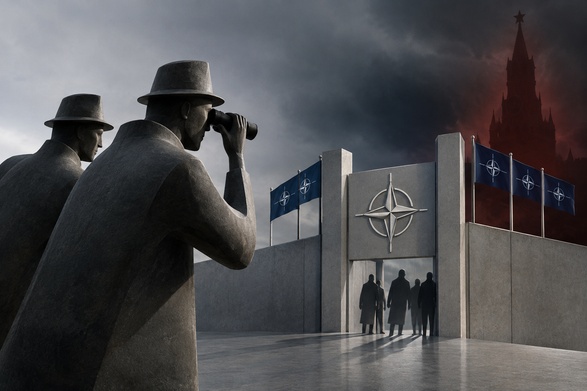
 | author: | Shaun Walker | institution: | The Guardian | ¿porque no los dos? |
| tl;dr | European intelligence chiefs warn that Russia could intensify sabotage and potentially test Nato with limited military action within months. Baltic officials, however, report no signs of an imminent attack and caution that alarmist messaging could serve Moscow’s efforts to spread fear. Officials describe increasing threats to transport, defence industries and infrastructure supporting Ukraine. Russia denies planning an attack on Nato. The article also reports European doubts about Moscow’s commitment to peace negotiations, while acknowledging that the intelligence behind the warnings has not been disclosed. | ||||
| deeper: | The article prioritizes European security officials’ perspectives, but includes substantial disagreement, warnings against panic and Russia’s denial. Its framing does not clearly map onto left-right politics. Named interviews, direct quotations and historical context strengthen the reporting. However, the headline sounds more certain than the underlying assessments, and undisclosed intelligence prevents readers from testing the central claims. Some sweeping assertions, notably about destruction of Russian oil infrastructure, lack supporting figures. These scores assess the supplied text; the screenshot’s authenticity and reported events are not independently verified. | ||||
media: | |||||
| gen: 2026/09/19:21:49 in 26.0 sec (old)bias: 3 (Center) |
| type: newsquality: 68 |
| pts: 0 |

 | author: | Charles Maynes, Scott Simon | institution: | NPR | ¿porque no los dos? |
| tl;dr | European leaders warn of alleged Russian hybrid attacks, including sabotage, cyberattacks, election interference and drone incursions. The report explains Western intelligence claims linking these activities to Moscow, while acknowledging uncertainty and presenting Russian denials. It explores the theory that Russia seeks to weaken support for Ukraine without triggering NATO’s collective defense commitment. France and Poland favor tougher measures, contrasted with the Trump administration’s emphasis on engagement. The segment leaves open which approach would work better. | ||||
| deeper: | The report foregrounds European security concerns but asks directly about proof, includes Russian denials and avoids endorsing either sanctions or engagement. This supports a broadly centrist assessment rather than a clear partisan alignment. Phrases such as “the Russians are coming” and “death to Article 5 by a thousand cuts” heighten alarm. The explanation of hybrid warfare is accessible, but major incidents and intelligence claims lack specific sources or independently presented evidence. Commentary about Russian public attitudes is speculative. These limitations reduce the report’s evidentiary strength. | ||||
media: | |||||
| gen: 2026/09/13:15:19 in 31.6 sec (old)bias: 3 (Center) |
| type: newsquality: 77 |
| pts: 0 |

 | author: | DPA | institution: | dpa international | ¿porque no los dos? |
| tl;dr | The article reports a Russian strike on a Kyiv–Warsaw passenger train at Ukraine’s Yahodyn border station. Ukrainian Railways said passengers were evacuated without injuries; the train later continued with a delay exceeding six hours. Nearby strikes prompted Polish security monitoring and a crisis meeting, though Polish airspace was not violated. Ukrainian officials urged stronger consequences for Moscow. Russia’s Defence Ministry acknowledged attacks on western Ukrainian rail infrastructure, claiming it supported military shipments. | ||||
| deeper: | The report emphasizes Polish and Ukrainian concerns, including inflammatory but clearly attributed quotations. It also includes Russia’s stated military rationale and important limiting facts: nobody was injured and Polish airspace was not breached. There is no clear left–right political advocacy. Named officials and railway operators provide useful sourcing, but independent verification is absent. Russia’s acknowledgment of broader railway strikes does not specifically confirm the passenger-train attack, a distinction the headline could convey more carefully. | ||||
media: | |||||
| gen: 2026/09/09:15:27 in 44.7 sec (old)bias: 4 (Center-Left) |
| type: newsquality: 78 |
| pts: 0 |

#russia#north korea#infrastructure#geopolitics#war#northkorea#tumenriver#khasan#tumangang#bridgeopening1st

| gen: 2026/09/07:05:27 in 30.1 sec (old)bias: 3 (Center) |
| type: newsquality: 78 |
| pts: 0 |

 | author: | Joanna Kakissis, Joel Rose | institution: | NPR | ¿porque no los dos? |
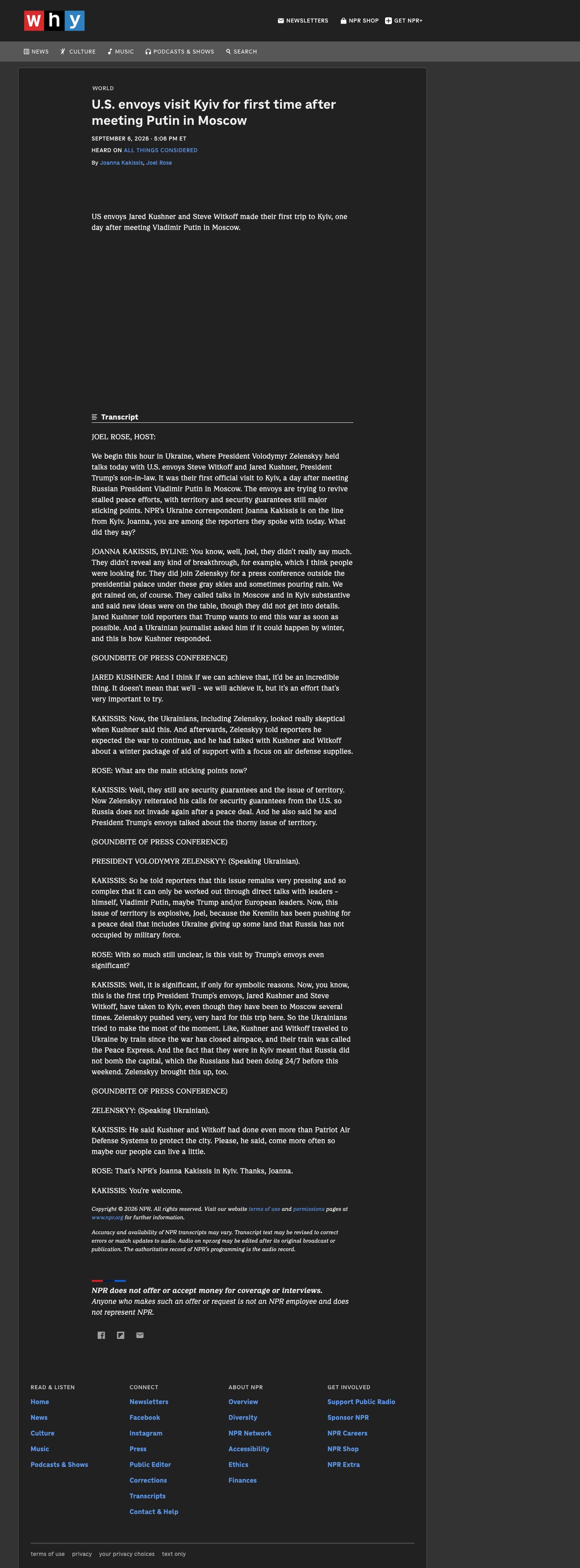
| tl;dr | An NPR segment reports that U.S. envoys Jared Kushner and Steve Witkoff visited Kyiv for the first time, one day after meeting Vladimir Putin in Moscow, and held talks with President Volodymyr Zelenskyy. The envoys offered few specifics publicly, saying only that talks were “substantive” and that new ideas existed. Zelenskyy emphasized unresolved sticking points: U.S.-backed security guarantees to deter future Russian attacks and the territorial question, including claims Russia wants Ukraine to cede land beyond areas it controls. The visit is framed as symbolically important. | ||||
| deeper: | The piece is mostly straight reporting in transcript form, distinguishing between what was said publicly and what was not (“they didn’t really say much”). It includes direct quotes and clearly labels soundbites. Potential bias comes from limited space and sourcing: it leans heavily on the NPR correspondent’s on-scene interpretation and Ukrainian framing (skepticism, security needs) with little comparable Russian perspective or independent verification for claims like “bombing 24/7.” Overall quality is solid for a brief radio segment but lacks deeper context, data, and countervailing detail. | ||||
media: | |||||
| gen: 2026/09/01:15:54 in 46.4 sec (old)bias: 3 (Center) |
| type: newsquality: 82 |
| pts: 0 |

 | author: | The Associated Press | institution: | NPR | ¿porque no los dos? |
| tl;dr | The article reports that Russian jet-powered drone strikes around Kyiv have targeted warehouses and food distribution sites, contributing to empty supermarket shelves and heightened anxiety among Ukrainians. It describes frequent air raids, civilian casualties, school disruptions, and concerns about shortages as winter approaches. Ukrainian officials, including President Volodymyr Zelenskyy, say air defenses are struggling with new fast drones and that Ukraine is seeking improved counter-drone technology. Russia claims it is striking energy and military-related infrastructure. | ||||
| deeper: | The piece is largely straight news, attributing claims to identifiable sources (Ukrainian officials, Russia’s Defense Ministry) and emphasizing observable effects (damage, shortages, casualty counts). It leans toward the Ukrainian civilian-impact framing, using emotionally resonant details (empty shelves, schools, fear), while offering comparatively limited detail on Russia’s stated rationale beyond official claims. Quality is strong due to clear sourcing and specific examples, but would improve with more independent verification of strike targets and broader data on supply-chain impacts. | ||||
media: | |||||
| gen: 2026/09/01:15:48 in 35.5 sec (old)bias: 2 (Center) |
| type: newsquality: 65 |
| pts: 0 |

 | author: | Scott Horsley, A Martínez | institution: | NPR | ¿porque no los dos? |
| tl;dr | An NPR World/Morning Edition item reports that the U.S. is hosting G-20 finance ministers in North Carolina. The brief text highlights that Russia’s top economic official attended in person, drawing attention. The screenshot contains only the headline, bylines, timestamp, and a short two-sentence lede, so details on agenda items, policy disputes, or outcomes are not visible here. | ||||
| deeper: | The language shown is straightforward and largely descriptive, with minimal loaded wording; “made a stir” is mildly interpretive but common for summarizing diplomatic reactions. Because the screenshot only includes a headline and lede, the piece can’t be fully assessed for sourcing depth, data, countervailing views, or precision on what the “stir” was—so quality is limited by missing context rather than evident poor reporting. | ||||
media: | |||||
| gen: 2026/08/29:16:13 in 37.4 sec (old)bias: 3 (Center) |
| type: newsquality: 82 |
| pts: 1 |
 | author: | The Associated Press | institution: | NPR | ¿porque no los dos? |
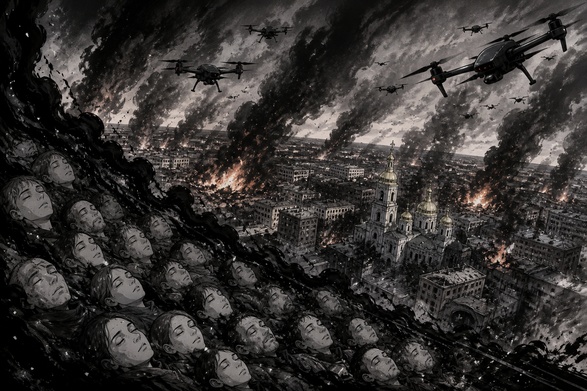
| tl;dr | The piece reports that a Russian strike near Kyiv killed at least 37 people and injured many others, describing it as among the deadliest attacks of the year. It recounts Ukrainian officials’ accounts of what was hit (including homes), details rescue efforts and damage, and situates the strike within a broader pattern of intensified Russian attacks. It also notes Ukraine’s stated intent to increase long-range strikes on Russian military targets and provides contextual updates about ongoing fighting and diplomatic positioning. | ||||
| deeper: | The article is largely straight, event-driven reporting: casualty figures, location, quotes from officials, and broader wartime context. It relies heavily on Ukrainian authorities for immediate details (common in breaking coverage), with limited direct Russian perspective beyond general claims/positioning, which can slightly tilt framing. Language is mostly neutral and specific, avoiding sensationalism. Quality is solid: clear structure, attribution, and context, though some claims are difficult to independently verify in real time and would benefit from more explicit verification/uncertainty framing. | ||||
media: | |||||
| gen: 2026/08/16:22:32 in 40.0 sec (old)bias: 3 (Center) |
| type: newsquality: 78 |
| pts: 0 |

 | author: | The Associated Press | institution: | NPR | ¿porque no los dos? |
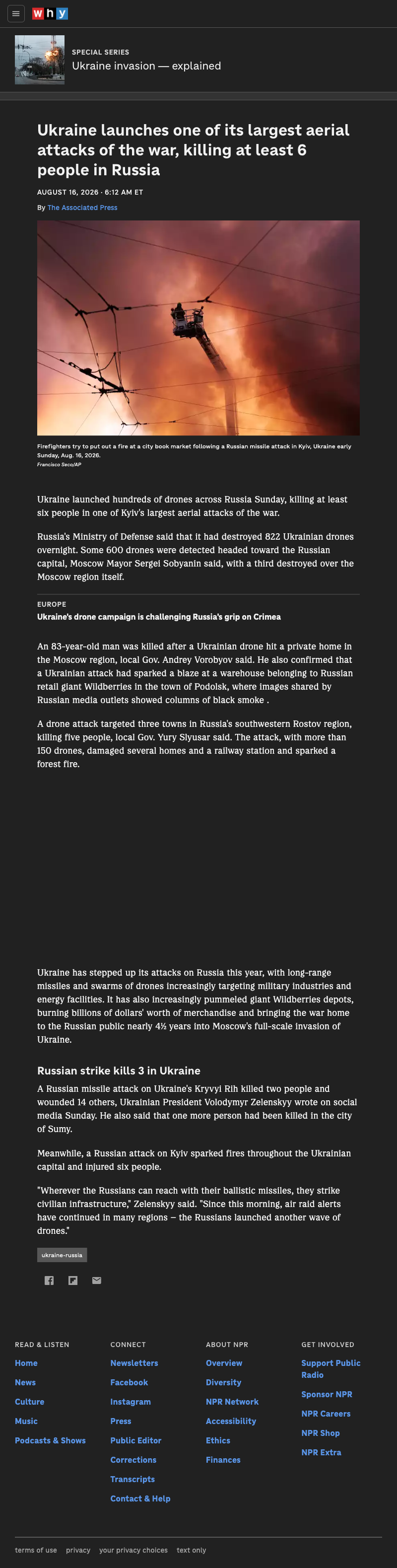
| tl;dr | The article reports that Ukraine launched one of its largest drone attacks of the war into Russia, with Russian officials claiming 822 drones were destroyed and at least six people were killed across affected regions. It describes strikes near Moscow and in the Rostov region, including damage to homes, infrastructure, and a warehouse fire. The piece also notes Russian missile attacks in Ukraine that killed and wounded civilians, quoting President Zelenskyy on continued air alerts and strikes on civilian infrastructure. | ||||
| deeper: | Language is largely factual and attribution-heavy, relying on official statements (notably Russian ministries, regional governors, and Moscow’s mayor) while also including Ukrainian accounts and a Zelenskyy quote about Russian strikes. The framing provides context about Ukraine escalating long-range strikes and mentions Russian attacks in Ukraine, which helps balance. Some figures (e.g., drones “destroyed”) are hard to independently verify in wartime, and the story leans on government sources without much third-party corroboration, but overall sourcing and structure are solid. | ||||
media: No Media Preview | |||||
| gen: 2026/08/13:04:37 in 2 min 51.8 sec (old)bias: 4 (Center) |
| type: lolsquality: 60 |
| pts: 0 |


| gen: 2026/08/13:04:31 in 2 min 30.8 sec (old)bias: 3 (Center) |
| type: lolsquality: 78 |
| pts: 0 |

 | author: | Unknown | institution: | Yahoo News | ¿porque no los dos? |
| tl;dr | A Yahoo News article (sourced from a wire service) reports that a major Russian grain export terminal was struck in a Ukrainian Black Sea port attack. The piece frames the event within the wider Russia–Ukraine war context, highlighting damage and disruption implications for grain exports and shipping. It relies on official/attributed statements and situational reporting rather than analysis or commentary. | ||||
| deeper: | The story is largely straight, event-driven reporting with a neutral news tone and attribution (typical of wire copy). Potential bias comes mainly from wartime information constraints and reliance on official claims that may be difficult to independently verify in real time. Quality is solid: clear headline, relevant context (war, ports, grain exports), and focus on verifiable elements (location, target, impact). It appears light on independent corroboration and on-the-ground detail, which is common for fast-moving conflict coverage. | ||||
media: No Media Preview | |||||
| gen: 2026/08/09:13:29 in 39.6 sec (old)bias: 3 (Center) |
| type: newsquality: 82 |
| pts: 0 |


| gen: 2026/08/05:04:14 in 3 min 37.6 sec (old)bias: 3 (Center) |
| type: lolsquality: 78 |
| pts: 0 |
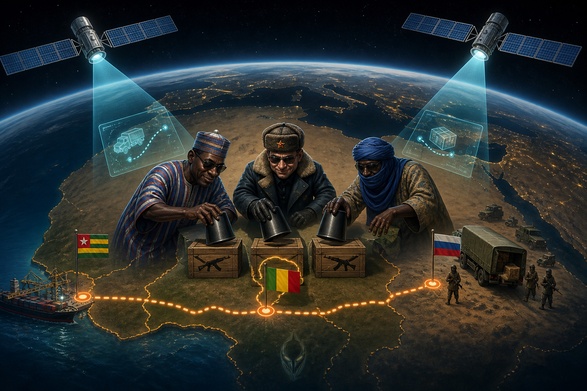
 | author: | Unknown | institution: | Unknown | ¿porque no los dos? |
| tl;dr | The piece argues that Togo—especially the port of Lomé—has become a key transit route for military equipment shipped from Russia and ultimately reaching Mali. It describes a tracked shipment, outlines Lomé’s role as a logistics corridor into the Sahel, and cites open-source evidence such as satellite imagery of a Russian cargo vessel and visuals of armored vehicles (including references to Chinese-made equipment). The article frames this as part of deepening Russia–Sahel security ties amid Mali’s shifting alliances. | ||||
| deeper: | Bias is relatively low: the article is largely evidence-driven and focused on tracing logistics, but it is framed around suspicion of Russian arms flows and may rely on inference when direct documentation is limited. Quality is strong: it uses concrete reporting hooks (tracked ship), specific locations (Lomé), and OSINT-style indicators (satellite imagery/visual identification). Limits include unclear visibility in places on sourcing granularity and the difficulty of conclusively proving end-users across borders without customs/manifest disclosures. | ||||
media: No Media Preview | |||||
| gen: 2026/08/01:20:08 in 2 min 22.8 sec (old)bias: 2 (Center) |
| type: lolsquality: 78 |
| pts: 0 |

 | author: | Unknown | institution: | France 24 (with Reuters) | ¿porque no los dos? |
| tl;dr | The article reports Russia’s claim that it struck fuel storage facilities in Ukraine’s Odesa port and hit a tugboat used by the Ukrainian military in Mykolaiv. It situates the strikes within intensified attacks on Black Sea shipping routes, noting impacts on global grain markets (e.g., higher wheat prices). The report emphasizes attribution (“Russia said”) and includes a key caveat that battlefield details could not be independently verified. | ||||
| deeper: | The piece is largely straight-news and attribution-heavy, repeatedly framing key assertions as Russian claims and adding the important limitation that reports couldn’t be independently verified. Language is restrained and focused on observable consequences (shipping disruption, grain prices). Potential bias is low but present via reliance on one side’s official statements in a fast-moving conflict; it doesn’t add much Ukrainian or independent detail beyond the verification caveat. Overall quality is solid, typical of wire reporting: clear, cautious, and contextual but thin on sourcing depth. | ||||
media: No Media Preview | |||||
| gen: 2026/07/31:16:25 in 51.2 sec (old)bias: 6 (Unknown) |
| type: newsquality: 42 |
| pts: 0 |

 | author: | Unknown | institution: | Unknown | ¿porque no los dos? |
| tl;dr | The provided image is a tall, low-resolution screenshot of a web article containing a sensational headline, multiple paragraphs, two embedded video players, and at least one still image with colored bounding boxes (suggesting “analysis” or highlighting subjects in a scene). Due to the resolution, the exact outlet, author, and key factual claims are not reliably readable, so only structural/content-level assessment is possible. | ||||
| deeper: | The layout and presentation suggest a strongly emotive/sensational framing (headline tone, heavy emphasis on video, and highlighted imagery). However, the screenshot does not allow verification of the article’s core claims, sourcing, dates, or named witnesses/official statements. The presence of boxed/annotated imagery can imply “forensic” authority, but without readable methodology or citations it risks being rhetorical rather than evidentiary. Overall quality is limited by unclear sourcing/transparency and reliance on dramatic visuals. | ||||
| gen: 2026/07/30:05:26 in 3 min 12.8 sec (old)bias: 3 (Center) |
| type: lolsquality: 78 |
| pts: 0 |

 | author: | Unknown | institution: | Yahoo News (via Reuters) | ¿porque no los dos? |
| tl;dr | A Yahoo News page summarizes a Reuters report that Ukraine struck a warehouse linked to Russia’s largest online retailer. The story describes the target, what is known about damage and operations, and situates the strike within Ukraine’s broader campaign against Russian logistics and infrastructure tied to the war effort. The article appears to rely on official statements and available reporting while noting limits on independent verification. | ||||
| deeper: | Language is mostly neutral and event-focused, typical of wire reporting. It frames the strike through factual claims (who said what, what was hit, and why it matters) and generally signals uncertainty where details can’t be independently confirmed. Potential bias comes mainly from source dependence (official Ukrainian/Russian statements) and the wartime context, not from loaded wording. Quality is solid: clear headline, relevant context, and cautious attribution, though evidence is constrained by on-the-ground verification limits. | ||||
| gen: 2026/07/28:04:52 in 45.4 sec (old)bias: 2 (Center) |
| type: newsquality: 72 |
| pts: 0 |

 | author: | Unknown | institution: | Unknown | ¿porque no los dos? |
| tl;dr | The piece appears to describe using drones and computer-vision/object-detection methods to locate and classify items on the ground (illustrated by a photo with colored bounding boxes around objects). It frames this as a way to make field surveys faster and more systematic, with discussion of how the approach works, what it can and cannot detect reliably, and what kinds of data/training are required. The overall thrust is practical and technical rather than political. | ||||
| deeper: | The language and structure look informational and method-focused, with an emphasis on describing a workflow (drone imagery + automated detection) and its limitations. Any bias mainly comes from a pro-technology framing—highlighting efficiency gains more than potential downsides (false positives/negatives, oversight, misuse). Quality seems solid based on the technical visuals and explanatory sections, but the screenshot resolution makes it hard to verify sourcing, author credentials, or the strength of evidence cited. | ||||


owned and operated by: RPN Omnigalactic Insitutution as of: 2026/10/14: 20:32 in 0 ms
Enter Code
Login with Account