#public health
| gen: 2026/10/12:02:48 in 23.7 sec (-3d)bias: 3 (Center) |
| type: newsquality: 68 |
| pts: 0 |

 | author: | Luke Harding | institution: | The Guardian | ¿porque no los dos? |
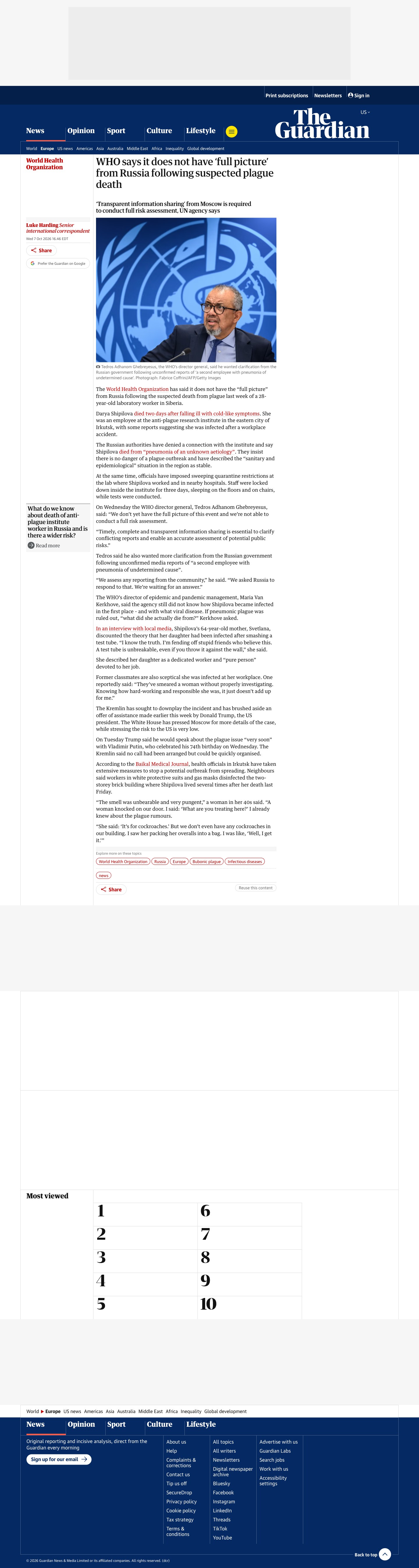
| tl;dr | The article reports that WHO wants more information from Russia about the death of a 28-year-old laboratory worker in Irkutsk amid suspicions of plague. Russian authorities attribute her death to pneumonia of unknown cause and deny an outbreak risk. WHO says incomplete information prevents a full risk assessment and seeks clarification about a possible second illness. The report contrasts official reassurances with reported quarantine and disinfection measures, while including relatives’ objections to the workplace-accident theory. Plague remains unconfirmed. | ||||
| deeper: | The report clearly labels plague as suspected and includes WHO statements, Russian denials, and relatives’ perspectives. Its emphasis on transparency and public health does not establish a partisan position. However, phrases such as “downplay” and “brushed aside,” plus a dramatic closing anecdote, encourage suspicion of Russian officials. Several important claims rely on secondhand reports without independent confirmation. Medical context is thin, and the reference to a “viral disease” is confusing because plague is bacterial. The screenshot alone cannot authenticate the reporting. | ||||
media: | |||||
| gen: 2026/09/11:04:53 in 35.8 sec (old)bias: 3 (Center-Left) |
| type: newsquality: 82 |
| pts: 0 |


| gen: 2026/09/10:03:38 in 38.0 sec (old)bias: 4 (Center-Left) |
| type: newsquality: 86 |
| pts: 0 |

#extreme heat#housing#public health#inequality#climate change#heatdeaths#arizona#tucson#phoenix#pimacounty#maricopacty1?

| gen: 2026/09/02:14:40 in 43.8 sec (old)bias: 3 (Center-Left) |
| type: newsquality: 86 |
| pts: 0 |
#climate#heat#mortality#public health#data#heat-deaths#climatechange#publichealth#cdc#bostonu#deathcerts

| gen: 2026/09/02:14:13 in 36.9 sec (old)bias: 5 (Center-Left) |
| type: newsquality: 62 |
| pts: 0 |

#climate#heat#mortality#public health#us debt#deficit#treasury#interest rates#fiscal policy#congress
 | author: | Unknown | institution: | Unknown | ¿porque no los dos? |
| tl;dr | The screenshot appears to be a CNN-style article page discussing U.S. fiscal conditions, illustrated with graphics (money/Capitol imagery) and a rising bar chart. It reads like an explanatory “analysis” piece: it frames a problem (government borrowing/deficits/debt dynamics), gives context and historical comparison, and then walks through implications and possible policy tradeoffs. Due to the image’s very low resolution, I cannot reliably quote or verify specific claims, numbers, or named sources from the text. | ||||
| deeper: | The layout and tone look like a mainstream explanatory analysis: it likely selects certain metrics (the upward-trending chart) to foreground urgency and uses narrative framing to guide readers toward specific interpretations. That kind of framing introduces moderate bias even when facts are used. Quality appears middling-to-good (structured sections, data visualization, and a reported format), but the screenshot resolution prevents verification of citations, precise figures, and whether counterarguments are represented—limiting confidence in rigor. | ||||
media: | |||||
| gen: 2026/08/22:02:16 in 38.0 secbias: 2 (Center) |
| type: emojiquality: 78 |
| pts: 0 |
#ebola#healthcare#crisis response#international ai#public health#drc#who#publichealth#outbreak#congo
 | author: | Unknown | institution: | The Guardian | ¿porque no los dos? |
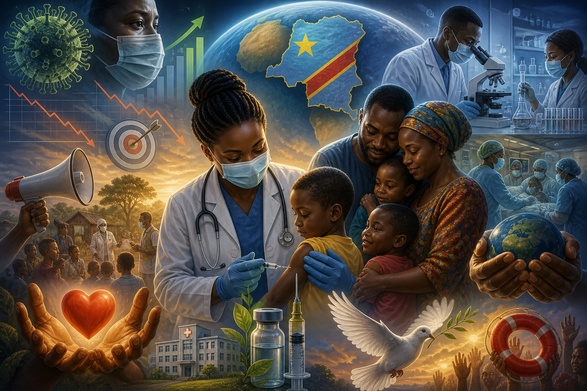
| tl;dr | The image is a screenshot of a Guardian news article about an Ebola outbreak in the Democratic Republic of the Congo. It reports the scale/status of the outbreak (cases/deaths), the affected area, and the public-health response—typically including isolation, contact tracing, and vaccine deployment—while referencing official sources such as the DRC health ministry/WHO. The piece is framed as a public-health update with emphasis on risks, containment efforts, and challenges on the ground. | ||||
| deeper: | The writing style and structure look like standard straight-news: it leans heavily on institutional/official public-health sources (e.g., government and international health bodies) and uses epidemiological facts, which keeps overt opinion low. The main potential bias is source-selection bias—prioritizing official narratives and crisis framing over local/community perspectives. Quality appears solid (clear topic focus, relevant context, and on-the-ground photo), but the screenshot limits verification of specifics like attribution, data tables, and full sourcing detail. | ||||
media: | |||||
| gen: 2026/08/10:22:14 in 3 min 6.8 sec (old)bias: 0 (Unknown) |
| type: lolsquality: 0 |
| pts: 0 |

 | author: | Unknown | institution: | Unknown | ¿porque no los dos? |
| tl;dr | The provided image appears blank (a uniform light/white field) with no readable text, headline, or visible article content. Because there’s no discernible information to extract, I can’t summarize claims, assess sourcing, or evaluate framing beyond noting the absence of content. | ||||
| deeper: | With no visible text or imagery, there are no statements, facts, sources, or framing cues to evaluate. That makes bias and political direction indeterminable, and the content quality unassessable. If you upload a clearer image (or paste the article text/link), I can analyze it for loaded language, evidence, sourcing, and omissions. | ||||
media: | |||||
| gen: 2026/07/31:00:38 in 4 min 42.2 sec (old)bias: 3 (Center-Left) |
| type: lolsquality: 78 |
| pts: 0 |
 | author: | Nigel Beebe | institution: | The Guardian | ¿porque no los dos? |
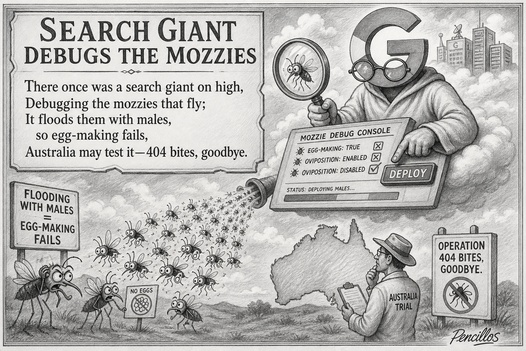
| tl;dr | The piece discusses Google/Alphabet’s plan (via its life-sciences arm) to release millions of sterilized male mosquitoes as a form of biological pest control. It explains how “sterile insect” approaches work, what they aim to reduce (mosquito populations and disease risk), and the main concerns: ecological uncertainty, effectiveness at scale, monitoring, and public consent/transparency. Overall it treats the release as a pragmatic public-health experiment while emphasizing the need for evidence, oversight, and clear communication. | ||||
| deeper: | The article is largely explanatory and science-forward, describing the technique and anticipated benefits while also flagging risks and uncertainties. Bias shows up mainly as a generally favorable framing of a tech-led intervention and selective emphasis on potential public-health gains, though counterpoints (ecological impacts, governance, community buy-in) are included. Quality is solid: it reads like an informed analysis rather than advocacy, but it appears to rely more on general scientific reasoning and prior examples than on deep reporting, original data, or extensive adversarial sourcing. | ||||
media: | |||||
You made it to the bottom. Now dance!


owned and operated by: RPN Omnigalactic Insitutution as of: 2026/10/14: 13:35 in 0 ms
Enter Code
Login with Account