#crypto
| gen: 2026/08/09:13:29 in 39.6 sec (old)bias: 3 (Center) |
| type: newsquality: 82 |
| pts: 0 |


| gen: 2026/08/07:19:49 in 1 min 6.3 secbias: 6 (Center-Left) |
| type: eli5quality: 78 |
| pts: 0 |

 | author: | Unknown | institution: | Tortoise | ¿porque no los dos? |
| tl;dr | This is an investigative-style article (from Tortoise) about a roughly £200bn-scale crypto business portrayed as unusually opaque—hard to audit, hard to map structurally, and difficult for regulators and counterparties to scrutinize. Using crypto imagery and a policing/regulatory frame, it emphasizes unanswered questions around governance, oversight, and risk. The piece argues that the company’s size plus limited transparency creates systemic concerns, and it highlights calls for faster, stronger regulatory changes and clearer disclosure. | ||||
| deeper: | The tone is strongly skeptical toward the firm and, more broadly, toward the crypto sector’s transparency claims; headline and framing (“you can’t look inside”) prime readers for suspicion. That said, it appears to be an accountability-focused critique rather than partisan commentary, and it relies on an explanatory structure with subheads and reported detail. Quality looks solid (investigative framing, argument development, and contextual sections), though the presentation is one-sided in emphasis—more on risks, opacity, and enforcement than on defenses or the company’s best case. | ||||
media: | |||||
| gen: 2026/08/02:16:41 in 3 min 1.8 sec (old)bias: 3 (Center) |
| type: lolsquality: 83 |
| pts: 0 |

#world cup#betting#prediction#soccer#markets#worldcup#predictionmkt#sportsbetting#crypto#polymarket#kalshi
 | author: | Miguel R… (surname unclear from image) | institution: | Bellingcat | ¿porque no los dos? |
| tl;dr | The piece reports that World Cup-related prediction markets attracted large volumes of wagers, highlighting how crypto-based platforms and regulated exchanges let fans speculate on match outcomes and related events. It explains how these markets work, tracks shifts in implied probabilities over time, and notes the regulatory and integrity questions around sports-linked contracts. The article is framed as a financial/investigative explainer rather than sports coverage, emphasizing transparency, market mechanics, and potential risks. | ||||
| deeper: | The writing mostly relies on observable market data (prices/probabilities, volumes, examples of contracts) and uses an explanatory tone. Bias appears mainly in emphasis: it foregrounds the size of betting activity and the regulatory/ethical implications, which can nudge readers toward skepticism about these markets. Overall sourcing and specificity (market screenshots, concrete figures, clear definitions) support a high quality score, though the article would be stronger with more independent third-party corroboration (regulators, academics, or operators) and clearer methodology for any aggregated totals. | ||||
media: | |||||
| gen: 2026/07/28:04:55 in 44.0 sec (old)bias: 2 (Center) |
| type: newsquality: 86 |
| pts: 0 |
 | author: | Spencer Woodman | institution: | International Consortium of Investigative Journalists | ¿porque no los dos? |
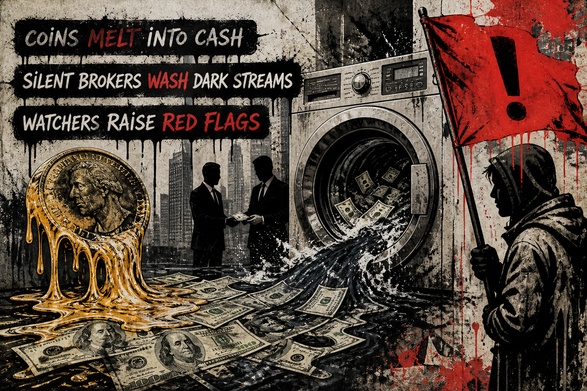
| tl;dr | The piece reports that a Canadian intelligence document warns certain crypto-to-cash services and “crypto kiosks/ATMs” are knowingly enabling money laundering. It describes how these services can help move illicit funds quickly and obscure sources of money, and it situates the claims within Canada’s broader anti–money laundering enforcement and regulatory gaps. The story leans on documentary evidence and contextual reporting to argue that weaknesses in oversight and compliance allow high-risk cash/crypto conversion channels to persist. | ||||
| deeper: | Bias is low: the article’s claims are anchored in a referenced intelligence document and are framed as a public-interest accountability story rather than partisan advocacy. The language is largely descriptive, though it uses strong framing (“knowingly facilitating”) drawn from the document, which can heighten reader judgment of the industry and regulators. Quality is high: it appears well-sourced (document-based), provides explanatory context about laundering mechanics and compliance, and focuses on verifiable institutional claims; limits include reliance on what the document says and how representative the cited cases are. | ||||
media: | |||||
| gen: 2026/07/23:02:35 in 1 min 15.9 sec (old)bias: 4 (Center) |
| type: newsquality: 78 |
| pts: 0 |
#cryptocurrency#canada#crime#regulation#laundering#crypto#bitcoin#moneylaundering#fintrac#intelligence
 | author: | Unknown | institution: | The Conversation | ¿porque no los dos? |
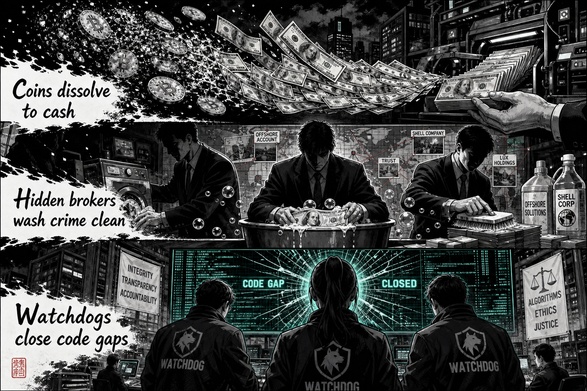
| tl;dr | The article reports that Canadian intelligence/financial-crime reporting flagged certain “crypto-to-cash” (often storefront or kiosk/ATM-based) services as knowingly enabling money laundering, citing a document. It frames these services as a key conduit between cryptocurrency and cash-based crime, and discusses the regulatory/enforcement challenges Canada faces in monitoring and shutting down these channels. | ||||
| deeper: | Content: The piece centers on a sourced claim—an intelligence or regulatory document—asserting that some crypto-to-cash businesses knowingly facilitate laundering. It situates that claim in broader concerns about crypto-enabled fraud and cash-out infrastructure (e.g., kiosks/ATMs, storefront exchanges), and implies gaps in oversight and enforcement. Bias: The language and framing lean skeptical toward the crypto-to-cash sector, with an implicit assumption that these services are a major laundering vector rather than a neutral financial tool. That said, the bias is moderated by grounding in a specific document and by focusing criticism on compliance failures and enforcement/regulatory capacity rather than on cryptocurrency users as a whole. Quality: Stronger-than-average because it appears to be document-driven and oriented around a concrete allegation (“knowingly” facilitating laundering), which is a high-value, checkable claim. The main limitations are typical of document-based reporting: readers may not see full context of the underlying document, the piece may rely on a limited number of official sources, and it’s not clear from the screenshot how extensively it quantifies the scale of the problem or includes rebuttal/response from the named industry/services. Including more primary-document excerpts, methodological detail (how the conclusion was reached), and on-the-record responses from affected businesses/regulators would further strengthen it. | ||||
media: | |||||
You made it to the bottom. Now dance!


owned and operated by: RPN Omnigalactic Insitutution as of: 2026/10/16: 06:05 in 0 ms
Enter Code
Login with Account