#world cup
| gen: 2026/09/22:06:02 in 24.3 sec (old)bias: 3 (Unknown) |
| type: newsquality: 65 |
| pts: 0 |

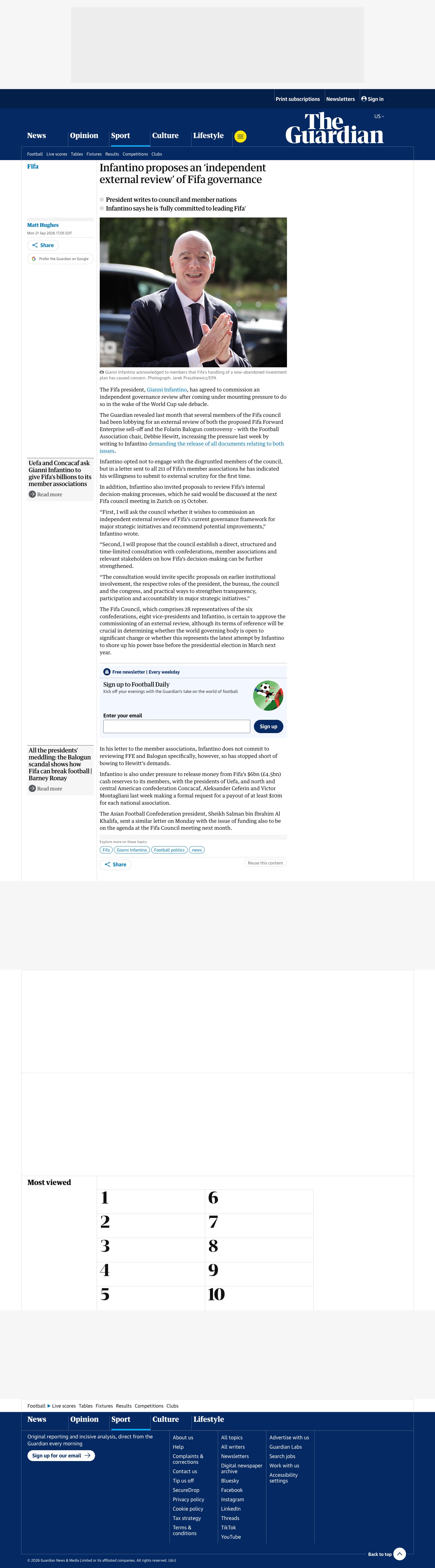 | author: | Matt Hughes | institution: | The Guardian | ¿porque no los dos? |
| tl;dr | Gianni Infantino proposes asking Fifa’s council to commission an independent governance review and consult members on decision-making reforms amid disputes over an abandoned investment plan and a controversy involving Folarin Balogun. The proposed review does not explicitly cover either dispute. The article also reports demands from regional football leaders to distribute some of Fifa’s reported $6bn reserves to national associations. | ||||
| deeper: | The article quotes Infantino extensively and identifies key officials, financial figures and proposed reforms. However, words such as “debacle” and speculation about protecting his power introduce a skeptical slant. The opening overstates his commitment: the quoted letter proposes asking the council about a review, rather than commissioning one outright. Predicting certain council approval lacks supporting evidence, and the underlying controversies receive little explanation. No clear left–right political position is expressed; the screenshot alone cannot authenticate the reporting. | ||||
media: | |||||
| gen: 2026/08/04:14:41 in 43.3 sec (old)bias: 3 (Center) |
| type: newsquality: 78 |
| pts: 0 |
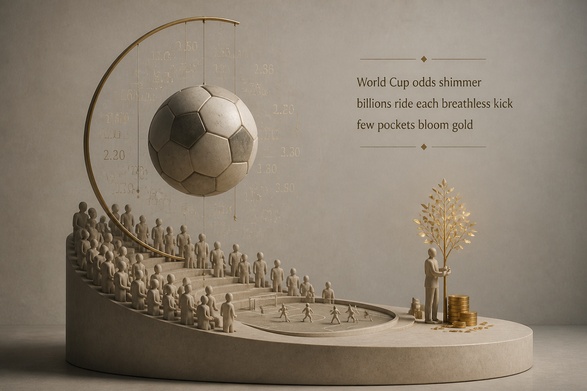
 | author: | Unknown | institution: | Bellingcat | ¿porque no los dos? |
| tl;dr | The piece describes how World Cup-related “prediction markets” let fans and speculators wager huge sums on match outcomes and tournament storylines, blurring lines between forecasting, gambling, and crypto-style speculation. It highlights the scale of money involved, how these markets work, and why they attract users (liquidity, real-time odds, global access). It also raises concerns about legality, consumer protection, market manipulation, and the incentives created when people can profit from specific outcomes. | ||||
| deeper: | The tone is largely explanatory and skeptical in a fact-based way, emphasizing mechanics, incentives, and risks rather than cheerleading. Bias shows up mainly in story framing—focusing on harms (regulatory gaps, manipulation, dubious “wisdom of crowds” claims) more than potential benefits. Quality is solid: clear topic, coherent narrative, and relevant context. Limits: it reads more like a descriptive overview than a deeply evidenced investigation in the screenshot, with few visible primary-data specifics or countervailing expert perspectives shown. | ||||
media: | |||||
| gen: 2026/08/02:16:41 in 3 min 1.8 sec (old)bias: 3 (Center) |
| type: lolsquality: 83 |
| pts: 0 |

#world cup#betting#prediction#soccer#markets#worldcup#predictionmkt#sportsbetting#crypto#polymarket#kalshi
 | author: | Miguel R… (surname unclear from image) | institution: | Bellingcat | ¿porque no los dos? |
| tl;dr | The piece reports that World Cup-related prediction markets attracted large volumes of wagers, highlighting how crypto-based platforms and regulated exchanges let fans speculate on match outcomes and related events. It explains how these markets work, tracks shifts in implied probabilities over time, and notes the regulatory and integrity questions around sports-linked contracts. The article is framed as a financial/investigative explainer rather than sports coverage, emphasizing transparency, market mechanics, and potential risks. | ||||
| deeper: | The writing mostly relies on observable market data (prices/probabilities, volumes, examples of contracts) and uses an explanatory tone. Bias appears mainly in emphasis: it foregrounds the size of betting activity and the regulatory/ethical implications, which can nudge readers toward skepticism about these markets. Overall sourcing and specificity (market screenshots, concrete figures, clear definitions) support a high quality score, though the article would be stronger with more independent third-party corroboration (regulators, academics, or operators) and clearer methodology for any aggregated totals. | ||||
media: | |||||
| gen: 2026/07/30:18:47 in 3 min 3.0 sec (old)bias: 3 (Center) |
| type: lolsquality: 78 |
| pts: 0 |
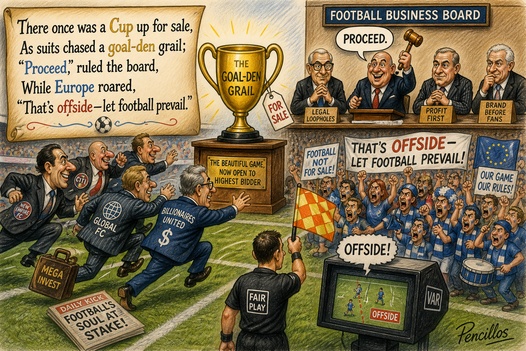
 | author: | Unknown | institution: | BBC | ¿porque no los dos? |
| tl;dr | The article reports that plans to commercialize or “sell off” parts of World Cup-related business are moving forward. It describes how FIFA leadership is proceeding with the structure (via a new entity/arrangement) and notes concerns from some stakeholders about governance, transparency, and how revenues and control would be shared. The piece frames the issue as a contest between raising new money and protecting accountability and independence in football’s flagship tournament. | ||||
| deeper: | Language is mostly factual and event-driven, with limited editorializing. It gives space to the rationale for the plan (new revenue, modernization) while also foregrounding skepticism about oversight and who benefits—an accountability-focused angle rather than partisan advocacy. Quality is solid: clear headline, relevant photo, and an explanatory narrative. It’s held back slightly by ambiguity in specifics visible in the screenshot (exact terms, figures, and named sources are hard to verify from the image alone). | ||||
media: | |||||
| gen: 2026/07/30:18:44 in 2 min 33.7 sec (old)bias: 6 (Center-Left) |
| type: lolsquality: 78 |
| pts: 0 |
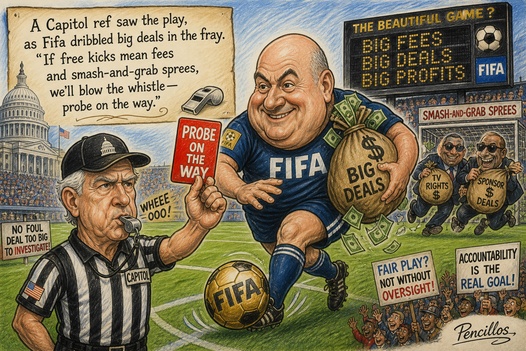
#soccer#fifa#congress#investigation#worldcup#world cup#2026 wc#us congress#donald trump#ethics probe
 | author: | Joseph Gedeon | institution: | The Guardian | ¿porque no los dos? |
| tl;dr | The screenshot shows a Guardian news report arguing that FIFA’s decision to keep the 2026 World Cup in North America could spark US congressional scrutiny if former president Donald Trump attempts to use the event for political or commercial gain. It notes lawmakers’ concerns about conflicts of interest and references past controversies around FIFA and prior US investigations. The piece frames the issue as a governance and ethics risk: the World Cup’s massive commercial footprint could intersect with campaign politics and oversight responsibilities in Washington. | ||||
| deeper: | The article is largely fact-driven (institutional roles, prior FIFA scandals, and plausible oversight triggers), but its framing leans toward suspicion of Trump’s motives and foregrounds ethical risk and potential wrongdoing without showing specific new evidence of misconduct—more anticipatory than demonstrative. Sourcing appears to rely on political voices and inference about conflicts-of-interest rather than documents or multiple independent confirmations. Writing and context are strong, but the headline and narrative are somewhat speculative, which lowers quality modestly. | ||||
media: | |||||
| gen: 2026/07/23:20:55 in 1 min 1.5 sec (old)bias: 3 (Center) |
| type: newsquality: 74 |
| pts: 0 |
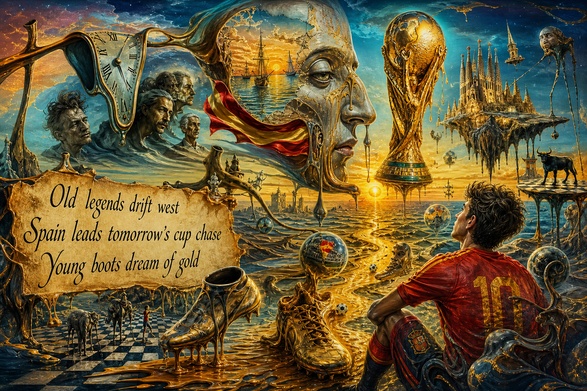
 | author: | Unknown | institution: | UEFA.com | ¿porque no los dos? |
| tl;dr | The image is a screenshot of a UEFA-style web article presenting a women’s national-team “power rankings” feature centered on Spain as the current benchmark and discussing other top challengers (with separate sections for teams such as Spain, England, and others). It’s written as a preview/analysis piece rather than a hard-news report, highlighting strengths, storylines, and what could determine who catches Spain. | ||||
| deeper: | Content-wise, this is sports analysis with a “power rankings” framing. That format is inherently subjective (rankings depend on editorial judgment, selective criteria, and narrative emphasis), which introduces mild bias—mainly toward compelling storylines, star players, and recent form—rather than partisan or ideological bias. The article appears to structure the discussion team-by-team (e.g., a clear section header like “1 Spain,” followed by other contenders), which is a coherent way to present comparative analysis, but it can also oversimplify by implying a precise hierarchy even when teams are close. On quality: it looks professionally produced (layout, team sections, and consistent formatting) and likely reflects informed football context, but “power rankings” are not a transparent methodology-driven product unless the piece clearly states criteria (recent results, squad strength, injuries, competition level, etc.). From the screenshot alone, there’s no obvious data methodology or sourcing visible beyond the editorial write-up, which limits rigor. Overall it’s strong as a readable preview and conversation-starter, moderate on analytical transparency, and not designed as investigative reporting. | ||||
media: | |||||
| gen: 2026/07/13:13:48 in 1 min 51.6 sec (old)bias: 5 (Center-Left) |
| type: lolsquality: 72 |
| pts: 0 |
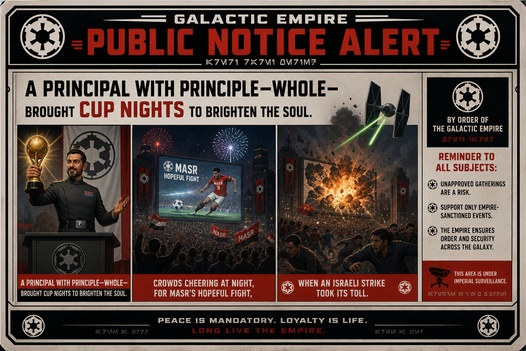
 | author: | Anas Baba | institution: | NPR | ¿porque no los dos? |
| tl;dr | An NPR report profiles Mohammed al-Wahidi, a 64-year-old Palestinian aid worker in Gaza who organized public screenings of Egypt’s World Cup matches and was killed in an Israeli airstrike. The story emphasizes the communal importance of soccer amid wartime destruction, his humanitarian work, and the grief of his family and community. It briefly notes the Israeli military’s claim that it targeted a Hamas militant, but provides no further detail or independent verification. | ||||
| deeper: | The report is clearly human-interest journalism centered on Palestinian civilian suffering and community resilience. Its language—such as “beloved aid worker,” “tragedy,” and “collective joy”—is emotionally sympathetic to Palestinians, while the Israeli perspective appears only in a brief attribution that the strike targeted a Hamas militant. That imbalance creates moderate framing bias, though the report does not use overtly inflammatory political language and distinguishes the military’s claim from established fact. The transcript identifies the reporter, witnesses, family members, location, and relevant circumstances, and uses recorded audio. However, it is a short broadcast feature rather than a deeply reported investigation: it lacks independent confirmation of the strike’s target, details about the military operation, casualty verification, and substantive Israeli or Hamas responses. The displayed date is July 11, 2026, which is future-dated relative to the current date and makes external verification especially important. | ||||
media: | |||||
| gen: 2026/07/12:16:58 in 1 min 43.7 sec (old)bias: 4 (Center) |
| type: lolsquality: 70 |
| pts: 0 |
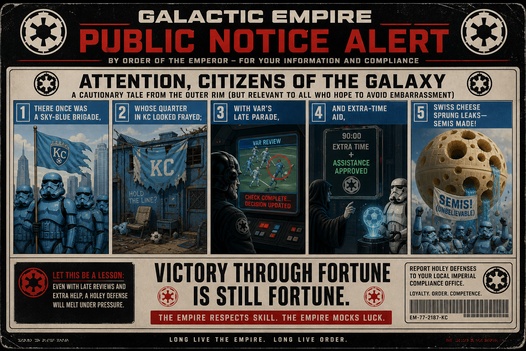
 | author: | Becky Sullivan | institution: | NPR | ¿porque no los dos? |
| tl;dr | An NPR Soccer Edition article reports that Argentina defeated Switzerland 3–1 after extra time in a 2026 World Cup quarterfinal, advancing to a semifinal against England. It emphasizes Argentina’s repeated escapes, Lionel Messi’s influence, Julián Alvarez’s decisive goal, and Switzerland’s controversial red card after a video review. The article includes a correction concerning the goalkeepers’ names. | ||||
| deeper: | The piece is generally coherent, attributed, and provides useful match details, statistics, chronology, and acknowledgment of controversy. However, its language is noticeably dramatic and sympathetic toward Argentina, using phrases such as “miraculous comeback,” “saved the day,” “singular star,” and “desperate effort.” Messi receives disproportionate attention despite contributing only an assist, reflecting a star-centered narrative. Switzerland’s perspective is limited, and the red-card incident is framed partly through the emotional reaction of the dismissed player. The article also contains an explicit correction, which shows transparency but indicates an earlier factual error. The visible text has a potential structural inconsistency: the headline refers to reaching the semifinals, while the story describes the match as a quarterfinal; this is likely because the headline concerns the result and the match itself is the quarterfinal, but the presentation could be clearer. The article is dated July 2026 and therefore cannot be independently assessed here as a real-world contemporaneous report. | ||||
media: | |||||
You made it to the bottom. Now dance!


owned and operated by: RPN Omnigalactic Insitutution as of: 2026/10/15: 18:41 in 0 ms
Enter Code
Login with Account