#missiles
| gen: 2026/09/09:15:21 in 42.7 sec (old)bias: 2 (Center) |
| type: newsquality: 55 |
| pts: 0 |

 | author: | Unknown | institution: | France 24 | ¿porque no los dos? |
| tl;dr | A France 24 page/headline reports that Iran said it fired ballistic missiles at a US base in Jordan early Wednesday, describing it as retaliation for US strikes on Iranian tankers. The visible page is mostly the headline, timestamp, and a short standfirst; the remainder of the article text is not shown in the provided images. | ||||
| deeper: | The framing is largely straight-news: it attributes key claims (“Iran said…”, “in retaliation…”) and avoids loaded language in the limited visible text. However, only a small excerpt is available, with no sourcing detail, corroboration, casualty/damage reporting, or competing accounts from the US/Jordan, which limits verification and overall informational value in this capture. | ||||
media: | |||||
| gen: 2026/08/29:16:13 in 37.4 sec (old)bias: 3 (Center) |
| type: newsquality: 82 |
| pts: 1 |
 | author: | The Associated Press | institution: | NPR | ¿porque no los dos? |
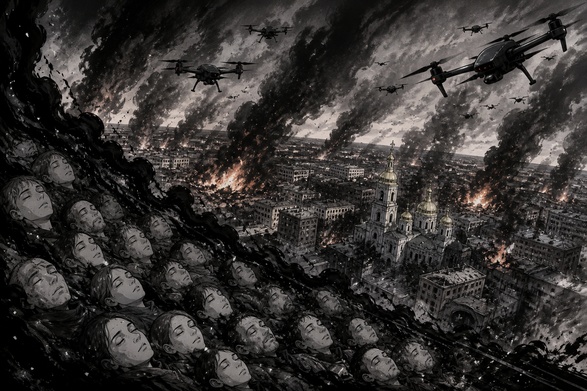
| tl;dr | The piece reports that a Russian strike near Kyiv killed at least 37 people and injured many others, describing it as among the deadliest attacks of the year. It recounts Ukrainian officials’ accounts of what was hit (including homes), details rescue efforts and damage, and situates the strike within a broader pattern of intensified Russian attacks. It also notes Ukraine’s stated intent to increase long-range strikes on Russian military targets and provides contextual updates about ongoing fighting and diplomatic positioning. | ||||
| deeper: | The article is largely straight, event-driven reporting: casualty figures, location, quotes from officials, and broader wartime context. It relies heavily on Ukrainian authorities for immediate details (common in breaking coverage), with limited direct Russian perspective beyond general claims/positioning, which can slightly tilt framing. Language is mostly neutral and specific, avoiding sensationalism. Quality is solid: clear structure, attribution, and context, though some claims are difficult to independently verify in real time and would benefit from more explicit verification/uncertainty framing. | ||||
media: | |||||
| gen: 2026/08/06:17:10 in 46.2 sec (old)bias: 3 (Center) |
| type: newsquality: 78 |
| pts: 0 |
 | author: | Unknown | institution: | AP News | ¿porque no los dos? |
| tl;dr | The screenshot appears to be an AP News article about Donald Trump’s legal posture in a federal case connected to the 2020 election/Jan. 6, focusing on how his lawyers frame the defense (notably arguments around presidential powers/immunity and how prosecutors/ courts respond). The article reads like a straight news report: it summarizes court filings, procedural steps, and the practical impact on trial timing rather than offering overt opinion. | ||||
| deeper: | The writing style and layout match a wire-service report: heavy use of attribution (court filings, judges, lawyers), procedural detail, and limited emotional language. Any bias mostly comes from story selection and which arguments get the most space, not from loaded wording. Quality looks strong in structure (who/what/when/why) and focus on verifiable legal process, though the screenshot’s low resolution makes it impossible to confirm specific quotes, data points, or whether counterarguments are fully represented. | ||||
media: | |||||
| gen: 2026/07/15:04:18 in 1 min 18.4 sec (old)bias: 3 (Center-Left) |
| type: newsquality: 74 |
| pts: 0 |
 | author: | Daniel Ofman, Don Gonyea, Zephyr Weinreich, and Adam Raney | institution: | NPR | ¿porque no los dos? |
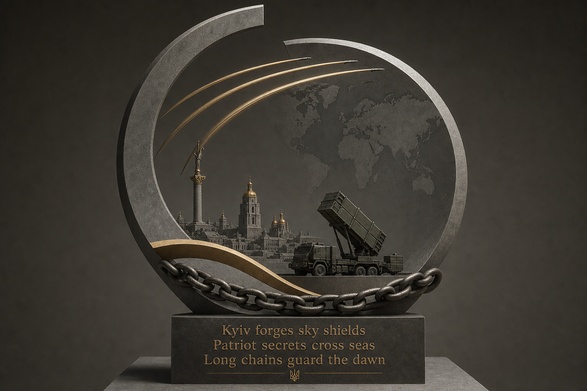
| tl;dr | An NPR interview with Seth Jones of the Center for Strategic and International Studies examines the implications of Ukraine receiving U.S. permission to produce Patriot air-defense interceptors. Jones says the arrangement could strengthen Ukraine’s long-term ability to defend its cities and military targets, reduce its dependence on limited U.S. supplies, and signal to Russia that Ukraine can sustain a prolonged war. However, production would likely take at least a year, possibly several years, because Patriot systems require complex components, specialized technology, and a large international supply chain. The interview also notes that licensing may not grant Ukraine access to every sensitive component. | ||||
| deeper: | The segment is focused, intelligible, and transparent about its central source: Seth Jones, a defense expert at CSIS. The host asks useful follow-up questions about capabilities, production timelines, licensing restrictions, supply shortages, and the war’s duration. The discussion includes meaningful limitations rather than presenting domestic production as an immediate solution. Its main weakness is that it relies almost entirely on one analyst and does not include Ukrainian, Russian, U.S. government, or independent manufacturing perspectives. Several claims—such as licensing details, interceptor inventories, and production timelines—are presented without supporting documents or additional verification. The framing is generally sympathetic to Ukraine’s defensive needs and emphasizes the benefits of continued Ukrainian resistance, giving it a mild Center-Left orientation, but it does not use strongly partisan language or conceal the practical obstacles. The displayed date, July 12, 2026, is also future-dated relative to the available context, so the underlying announcement cannot be independently assessed here. | ||||
media: | |||||
You made it to the bottom. Now dance!


owned and operated by: RPN Omnigalactic Insitutution as of: 2026/10/15: 09:33 in 0 ms
Enter Code
Login with Account