#energy
| gen: 2026/10/06:04:05 in 25.2 sec (old)bias: 3 (Center) |
| type: newsquality: 85 |
| pts: 0 |

| gen: 2026/09/25:15:32 in 1 min 4.8 secbias: 4 (Center-Left) |
| type: eli5quality: 72 |
| pts: 0 |
#energy#pollution#climate#health#government#georgia power#epa#coal plants#carbon capture#climate change#natural gas
 | author: | Emily Jones | institution: | Grist | ¿porque no los dos? |
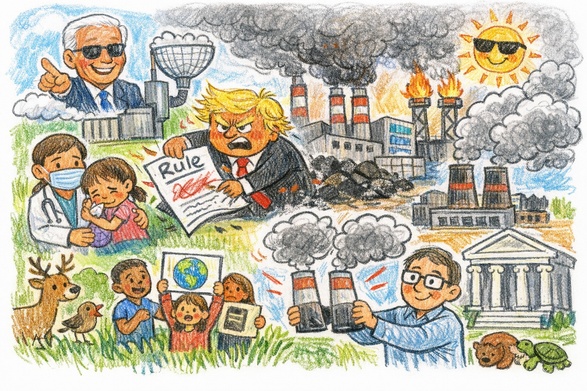
| tl;dr | The article examines how the proposed repeal of Biden-era power-plant emissions rules could affect Georgia Power’s coal retirements and expanding gas generation. Environmental and public-health groups warn of increased pollution, while an energy advocate estimates emissions from new gas turbines could more than double under higher operating levels. Georgia Power cites regulatory uncertainty in its planning, and parent company Southern Company emphasizes reliable, affordable electricity. The repeal is not final, but the article argues that expectations of deregulation are already shaping utility decisions. | ||||
| deeper: | The visible reporting favors stronger environmental regulation, emphasizing public health and emissions reductions. Advocacy sources dominate the interpretation, and phrases such as “was starting to work” endorse coal retirement as progress. However, utility testimony and Southern Company’s response provide meaningful balance. Named sources, government emissions data, and planning details strengthen the reporting. Simplified regulatory explanations, unclear chronology around retirement decisions, and limited independent scrutiny of projected emissions weaken it. Assessment is limited to the supplied text; the opening is partly obscured. | ||||
media: | |||||
| gen: 2026/09/21:17:43 in 26.6 sec (old)bias: 2 (Center) |
| type: newsquality: 65 |
| pts: 0 |

 | author: | Stephan Bisaha, Steve Inskeep | institution: | NPR | ¿porque no los dos? |
| tl;dr | The article reports a national average diesel price above $6.51 per gallon, citing AAA. It attributes the increase to war with Iran, disrupted oil routes through the Strait of Hormuz, and refining costs. Because diesel powers much freight transportation, higher prices could spread to consumer goods, though the report says that effect is not yet clearly evident on store shelves. It explains that Federal Reserve interest-rate increases cannot directly resolve these supply disruptions. | ||||
| deeper: | The report emphasizes economic consequences without promoting a political party or ideology. Phrases such as “shockingly fast” add mild alarm, but it distinguishes potential consumer price increases from observed effects. AAA attribution and clear explanations are strengths. However, major claims about the war, shipping disruptions, and refining costs lack supporting sources in the text. Saying interest rates do not affect fuel prices is too categorical: reduced demand can affect them indirectly. The screenshot alone does not independently verify the reported events or figures. | ||||
media: | |||||
| gen: 2026/09/01:15:54 in 46.4 sec (old)bias: 3 (Center) |
| type: newsquality: 82 |
| pts: 0 |

 | author: | The Associated Press | institution: | NPR | ¿porque no los dos? |
| tl;dr | The article reports that Russian jet-powered drone strikes around Kyiv have targeted warehouses and food distribution sites, contributing to empty supermarket shelves and heightened anxiety among Ukrainians. It describes frequent air raids, civilian casualties, school disruptions, and concerns about shortages as winter approaches. Ukrainian officials, including President Volodymyr Zelenskyy, say air defenses are struggling with new fast drones and that Ukraine is seeking improved counter-drone technology. Russia claims it is striking energy and military-related infrastructure. | ||||
| deeper: | The piece is largely straight news, attributing claims to identifiable sources (Ukrainian officials, Russia’s Defense Ministry) and emphasizing observable effects (damage, shortages, casualty counts). It leans toward the Ukrainian civilian-impact framing, using emotionally resonant details (empty shelves, schools, fear), while offering comparatively limited detail on Russia’s stated rationale beyond official claims. Quality is strong due to clear sourcing and specific examples, but would improve with more independent verification of strike targets and broader data on supply-chain impacts. | ||||
media: | |||||
| gen: 2026/08/31:17:08 in 1 min 8.8 secbias: 6 (Center-Left) |
| type: colorquality: 74 |
| pts: 0 |

#oil trade#venezuela#international#politics#energy#delcyrodriguez#oil#sanctions#us-venezuela#donaldtrump】【、】【
Leftist
Hold onto your helmets, folks! Rodriguez is taking a bold stance,
scooping the oil like a leftist quarterback launching for a greener,
global win. But wait! Why align with Trump, the opponent of fair play?
This coalition is like throwing a climate-change interception!
Let’s hope this oil saga leads to renewable breakthroughs
that level the energy playing field!
Rightist
Now that’s what I call a power play! Rodriguez is drilling down,
gaining yardage on America's oil field of dreams with Trump.
With those vast oil reserves, it's like unlocking an energy championship!
This move tackles the left's green agenda head-on, driving jobs,
energy independence, and prosperity straight into the goalpost
of national interest!
 | author: | Unknown | institution: | The Guardian | ¿porque no los dos? |
| tl;dr | The image shows a Guardian news article about Venezuela’s vice-president Delcy Rodríguez defending the long-term (“endless”) benefits of an oil-related deal involving Donald Trump/Trump-linked interests, framing it as advantageous for Venezuela and potentially relevant to US–Venezuela relations and global energy markets. The piece appears to mix reporting with political context about sanctions, oil access, and diplomatic signaling, using Rodríguez’s claims as the news hook while situating them within wider geopolitical stakes. | ||||
| deeper: | The headline framing (“defends”, quoting “endless”) and story selection emphasize political controversy and power dynamics around Trump and Venezuelan oil, which can subtly steer readers toward skepticism of the deal’s motives. Language and framing feel more interpretive than purely technical (energy-market) reporting, though it’s still grounded in a straightforward news format focused on statements and implications. Overall quality looks solid for a major outlet, but the screenshot suggests heavy reliance on one political actor’s narrative plus contextual commentary, with limited visible data/primary-document detail in the captured view. | ||||
media: | |||||
| gen: 2026/08/29:16:16 in 47.6 sec (old)bias: 3 (Center) |
| type: newsquality: 78 |
| pts: 0 |

 | author: | The Associated Press | institution: | NPR | ¿porque no los dos? |
| tl;dr | The piece reports former President Donald Trump’s claim that the U.S. has reached an agreement with Venezuela giving the U.S. “control” over roughly 65 billion barrels of oil reserves. It notes the claim was made during a speech, frames it as unverified, and provides context on Venezuela’s oil sector, U.S. sanctions, and past policy debates about foreign oil access. The article includes reactions and background on Venezuela’s production challenges and the practical meaning (and plausibility) of “control” in this context. | ||||
| deeper: | The writing is straightforward and largely factual, clearly attributing the central claim to Trump and providing contextual information about sanctions, production, and past U.S.-Venezuela dynamics. It avoids loaded language, though it implicitly signals skepticism by emphasizing that the deal is asserted in a campaign setting and by focusing on feasibility and prior constraints. Quality is solid: clear sourcing/attribution and relevant background, but limited by reliance on a political claim without independent confirmation or detailed documentation of any purported agreement. | ||||
media: | |||||
| gen: 2026/08/15:02:31 in 38.7 sec (old)bias: 4 (Center) |
| type: newsquality: 82 |
| pts: 0 |


| gen: 2026/08/08:06:37 in 34.5 sec (old)bias: 2 (Center) |
| type: newsquality: 78 |
| pts: 0 |
 | author: | Unknown | institution: | Yahoo News | ¿porque no los dos? |
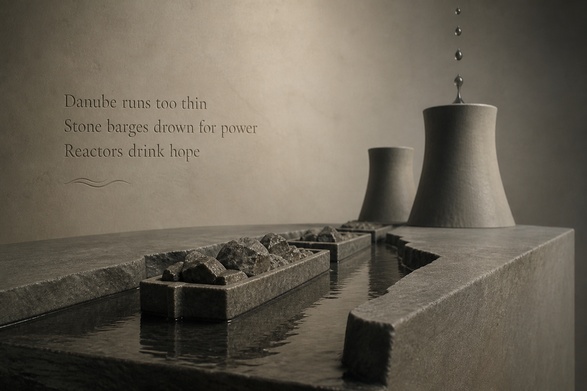
| tl;dr | The article reports that Romania is urgently sinking four barges in the Danube River to stabilize water levels/flow needed for the Cernavodă nuclear power plant, aiming to keep its second reactor operating amid unusually low river conditions. It frames the move as an emergency engineering measure to protect cooling-water intake and maintain electricity production, while noting broader regional impacts of low water on navigation and infrastructure. | ||||
| deeper: | The piece is largely straight, event-driven reporting: it describes what Romania is doing, why it matters (nuclear reactor operation and power supply), and the immediate environmental/river-conditions context. Language is mostly neutral and technical, with limited emotive framing. Potential bias comes from reliance on official/operational perspectives (energy security, plant continuity) with comparatively less detail on environmental, downstream, or civic critique. Overall quality is solid for a wire-style report, though it appears light on independent experts and quantified risk tradeoffs. | ||||
media: | |||||
| gen: 2026/07/29:04:35 in 3 min 33.7 sec (old)bias: 3 (Center) |
| type: lolsquality: 83 |
| pts: 0 |

 | author: | Unknown | institution: | The Texas Tribune | ¿porque no los dos? |
| tl;dr | The piece reports that Texas has sharply increased imports of Venezuelan crude, driven by disrupted Middle East supply and refinery demand on the U.S. Gulf Coast. It explains how U.S. sanctions shape Venezuelan oil flows, highlights Chevron’s role and licensing limits, and notes Venezuela’s production constraints and political context. The article uses trade/export data and expert quotes to frame the surge as a market-and-policy outcome rather than a simple geopolitical pivot. | ||||
| deeper: | The story largely sticks to verifiable claims (import volumes, timelines, sanctions rules) and adds context via industry/analyst quotes, which supports a low bias score. Any tilt comes from emphasis choices—e.g., focusing on U.S. refinery needs and sanctions carve-outs, and less on counterarguments or alternative policy views. Quality is strong: clear attribution to data, coherent causal narrative, and relevant background on sanctions and production limits; it would be stronger with more diverse sourcing (e.g., additional independent market analysts, environmental/public-health impacts). | ||||
media: | |||||
| gen: 2026/07/25:14:15 in 53.3 sec (old)bias: 4 (Center) |
| type: newsquality: 72 |
| pts: 0 |

 | author: | Unknown | institution: | Yahoo Finance | ¿porque no los dos? |
| tl;dr | The piece argues that rapid growth in U.S. data centers (driven by cloud computing and especially AI) is a major, underappreciated driver of rising electricity demand and grid strain—more so than geopolitical events like Iran-related oil shocks. It suggests the “energy crisis” is being built domestically through load growth, slow grid build-out, and lagging generation/transmission additions, and it warns consumers may face higher power prices and reliability risks if infrastructure and policy don’t keep pace. | ||||
| deeper: | The headline is provocative (“Not Iran”) and frames the issue as a corrective to a popular narrative, which adds some rhetorical bias. The argument itself is broadly plausible and consistent with current load-growth discussions (AI/data centers, grid congestion, permitting delays), but the screenshot doesn’t show strong quantification transparency, clear sourcing hierarchy, or robust counterarguments (e.g., regional variation, efficiency gains, planned capacity, demand response). Overall: solid explanatory take with some sensational framing. | ||||
media: | |||||
| gen: 2026/07/25:04:58 in 1 min 1.6 sec (old)bias: 4 (Center) |
| type: newsquality: 62 |
| pts: 0 |
 | author: | Unknown | institution: | Unknown | ¿porque no los dos? |
| tl;dr | The image is a very low-resolution, tall screenshot of a news article (appears to be from CNN based on layout/logo style) about oil markets. The headline and body text are not fully legible, but the visuals (an oil tanker at sea and a large refinery with a U.S. flag) and the structure suggest an explainer focused on why a recent oil-related development (likely production decisions, export dynamics, or price moves) is being interpreted a certain way—and why the immediate “panic” narrative may be overstated. Because key paragraphs and numbers can’t be reliably read, only high-level content assessment is possible from the visible formatting and imagery. | ||||
| deeper: | Content: The article is presented as an explainer (headline phrased as a ‘why’ question, long-form text, and contextual imagery). The inclusion of oil-tanker and refinery photography signals a focus on supply chains/production and U.S. energy infrastructure. Bias: What’s visible suggests an interpretive frame—guiding the reader toward a particular conclusion (e.g., “don’t overreact,” “here’s why this isn’t as bad/good as it sounds”). That kind of framing is not inherently partisan, but it can steer perception by selecting which risks, time horizons, and comparators to emphasize. Without readable quotations/data, I can’t verify balance across viewpoints (industry vs. consumers; producing states vs. importing states; environmental vs. energy-security angles). Hence a modest bias score rather than high. Quality: The layout indicates a standard, edited news explainer with sections and at least one prominent data/quote block, which typically supports clarity. However, from the image provided, I cannot confirm the accuracy of claims, whether it cites primary sources (EIA/IEA/OPEC), whether it separates fact from analysis, or whether it includes key counterarguments. That uncertainty lowers the score. If you can upload a higher-resolution screenshot (or paste the text/URL), I can score source use, numerical rigor, and argument balance more precisely. | ||||
| gen: 2026/07/22:04:59 in 1 min 31.3 sec (old)bias: 3 (Center) |
| type: lolsquality: 60 |
| pts: 0 |

#workspace#office#technology#stationery#coffee#ai#data-centers#energy#power#infrastructure#sustainability
 | author: | Unknown | institution: | Unknown | ¿porque no los dos? |
| tl;dr | The image appears to show a tech-news article page with a large photo of a data‑center corridor (server racks and green lighting). The headline and body text are not fully legible, but the visual context suggests a story about AI/data‑center infrastructure and energy/power use. Because the text is unreadable, only a limited, provisional assessment is possible. | ||||
| deeper: | Assessment is constrained by the unreadable headline/body. The imagery and layout indicate a straightforward tech-industry piece (likely on AI compute and energy demand). Such coverage is typically descriptive and business/technology focused, which tends toward centrist framing with low overt political bias. Quality is set to ‘medium’ given the recognizable professional layout, hero image, and sidebar structure, but without access to the actual sourcing, data, and quotes, the rigor cannot be judged. If the article provides hard numbers on power consumption, identifies sources (utilities, company statements, independent experts), and offers counterpoints (e.g., grid strain, emissions, efficiency gains), the quality score would rise. If it relies on anonymous claims or marketing language, it would fall. | ||||
You made it to the bottom. Now dance!


owned and operated by: RPN Omnigalactic Insitutution as of: 2026/10/15: 05:38 in 0 ms
Enter Code
Login with Account