#oil
| gen: 2026/09/14:19:37 in 39.8 sec (old)bias: 3 (Center) |
| type: newsquality: 63 |
| pts: 0 |
 | author: | Eromo Egbejule and agencies | institution: | The Guardian | ¿porque no los dos? |
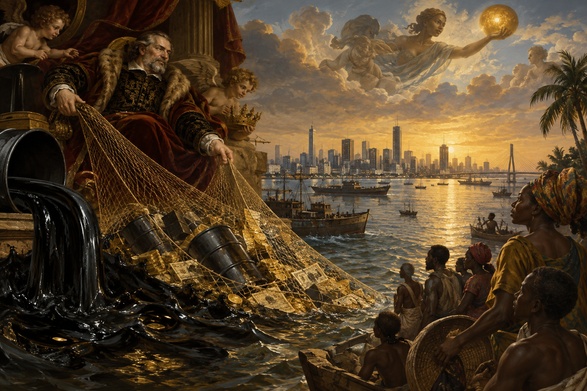
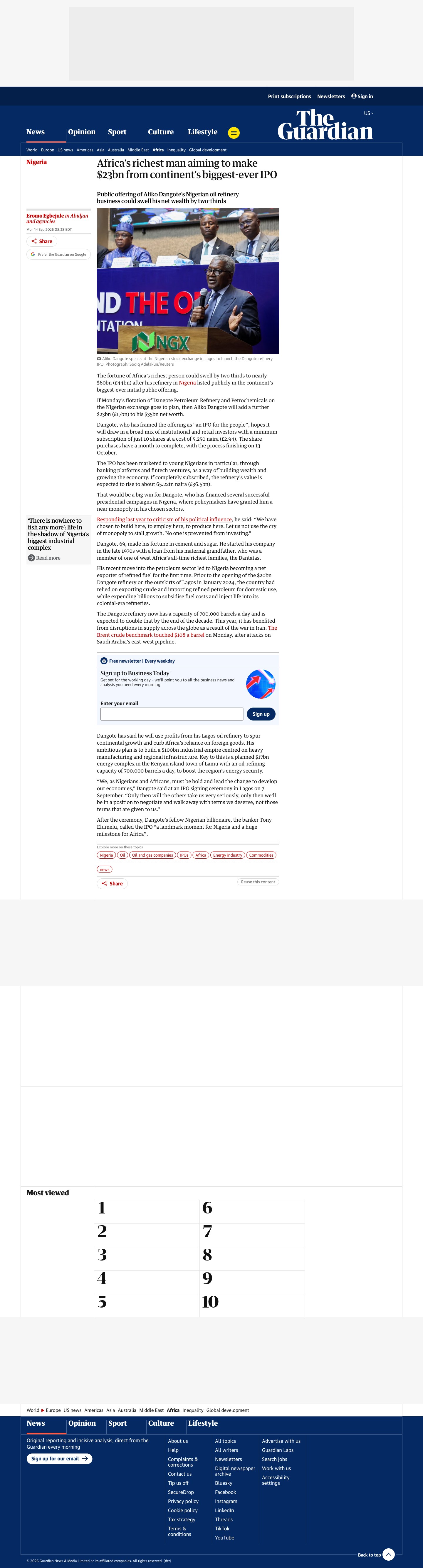
| tl;dr | The article reports that Aliko Dangote’s Nigerian refinery IPO could increase his estimated wealth by $23bn to nearly $60bn. It describes low minimum share purchases intended to attract ordinary investors and outlines the refinery’s role in African fuel production. It also examines Dangote’s political connections and monopoly concerns, includes his response, and details proposed industrial expansion into Kenya. The projected gains depend on the offering’s success. | ||||
| deeper: | The article balances economic benefits with scrutiny of political influence and includes Dangote’s defense, without a clear partisan position. However, quotations come from Dangote and a supportive billionaire, with no independent financial analysis. The headline’s claim that he could “make $23bn” blurs increased estimated wealth with cash proceeds. Major valuation projections lack a transparent calculation, and claims about political favors receive limited supporting detail. Clear writing and useful context help, but investor risks and the offering’s structure deserve greater scrutiny. | ||||
media: | |||||
| gen: 2026/09/13:15:22 in 30.8 sec (old)bias: 2 (Center) |
| type: newsquality: 73 |
| pts: 0 |
 | author: | The Associated Press | institution: | NPR | ¿porque no los dos? |
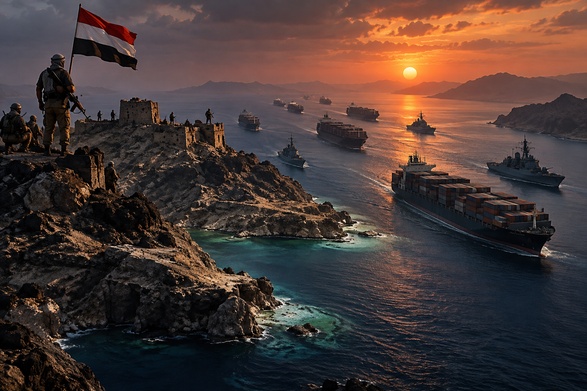
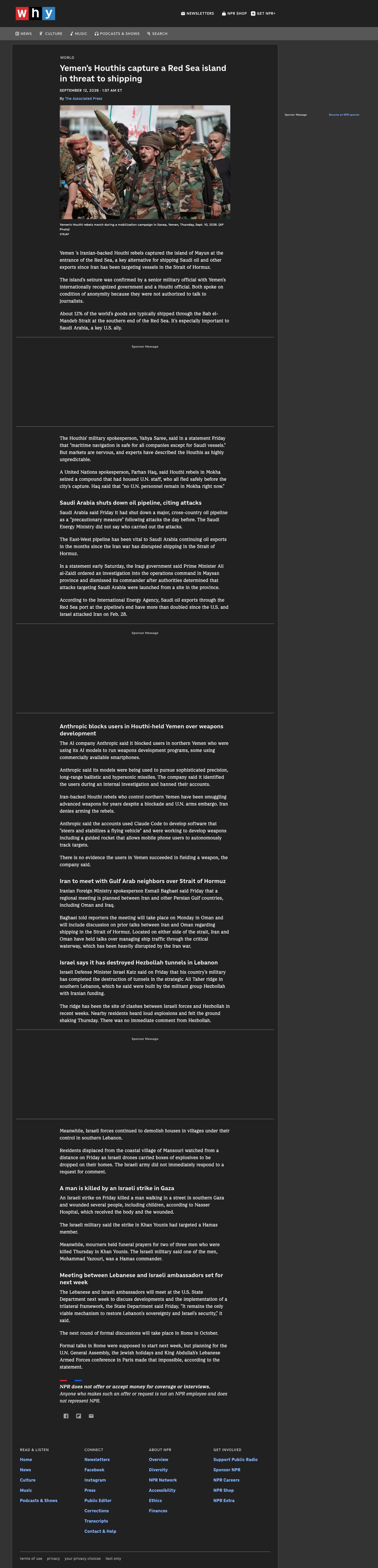
| tl;dr | The article reports that Yemen’s Houthis seized Mayun island, threatening a major Red Sea shipping route as conflict disrupts the Strait of Hormuz. It also covers a Saudi oil pipeline shutdown, Anthropic’s allegations of weapons-related AI misuse in Yemen, and planned regional shipping talks. Additional updates describe Israeli operations in Lebanon and Gaza and upcoming Israeli-Lebanese diplomacy. The central island-capture claim is attributed to anonymous officials from opposing sides; the screenshots alone do not independently establish the reported events. | ||||
| deeper: | The article largely uses restrained language, attributes contested claims, and includes Houthi, Iranian, Israeli, and civilian perspectives without promoting a clear political ideology. Its emphasis on shipping security frames the opening around economic risks. Calling the Houthis “highly unpredictable” through unnamed experts adds an unsupported judgment. Strengths include opposing-side confirmation and the caveat that AI-assisted weapons were not proven operational. Weaknesses include heavy reliance on official statements, limited independent evidence, and an unsourced shipping statistic. The screenshots establish what is reported, not its authenticity or accuracy. | ||||
media: | |||||
| gen: 2026/09/07:05:22 in 41.5 sec (old)bias: 4 (Center) |
| type: newsquality: 74 |
| pts: 0 |
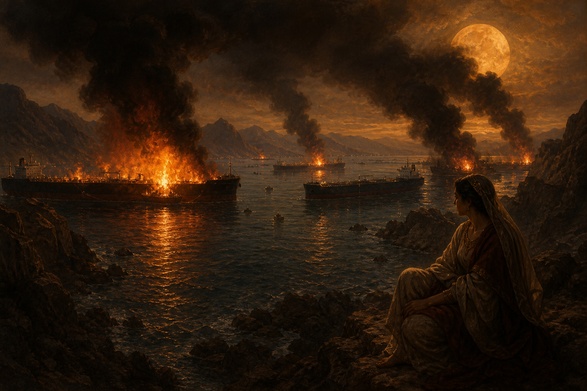
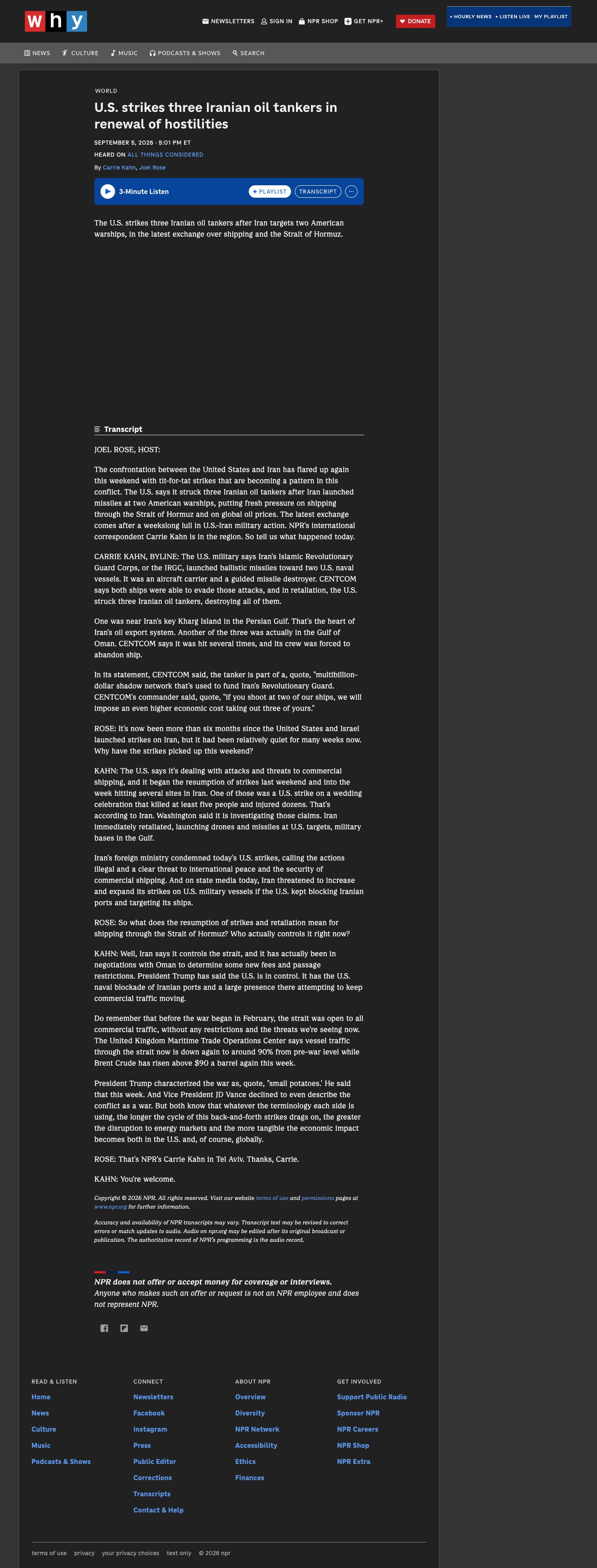
| gen: 2026/08/31:17:08 in 1 min 8.8 secbias: 6 (Center-Left) |
| type: colorquality: 74 |
| pts: 0 |
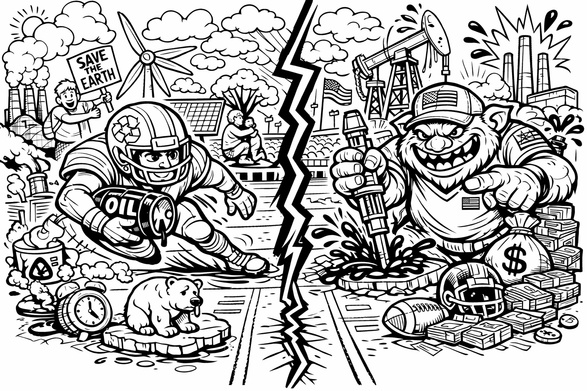
#oil trade#venezuela#international#politics#energy#delcyrodriguez#oil#sanctions#us-venezuela#donaldtrump】【、】【
Leftist
Hold onto your helmets, folks! Rodriguez is taking a bold stance,
scooping the oil like a leftist quarterback launching for a greener,
global win. But wait! Why align with Trump, the opponent of fair play?
This coalition is like throwing a climate-change interception!
Let’s hope this oil saga leads to renewable breakthroughs
that level the energy playing field!
Rightist
Now that’s what I call a power play! Rodriguez is drilling down,
gaining yardage on America's oil field of dreams with Trump.
With those vast oil reserves, it's like unlocking an energy championship!
This move tackles the left's green agenda head-on, driving jobs,
energy independence, and prosperity straight into the goalpost
of national interest!
 | author: | Unknown | institution: | The Guardian | ¿porque no los dos? |
| tl;dr | The image shows a Guardian news article about Venezuela’s vice-president Delcy Rodríguez defending the long-term (“endless”) benefits of an oil-related deal involving Donald Trump/Trump-linked interests, framing it as advantageous for Venezuela and potentially relevant to US–Venezuela relations and global energy markets. The piece appears to mix reporting with political context about sanctions, oil access, and diplomatic signaling, using Rodríguez’s claims as the news hook while situating them within wider geopolitical stakes. | ||||
| deeper: | The headline framing (“defends”, quoting “endless”) and story selection emphasize political controversy and power dynamics around Trump and Venezuelan oil, which can subtly steer readers toward skepticism of the deal’s motives. Language and framing feel more interpretive than purely technical (energy-market) reporting, though it’s still grounded in a straightforward news format focused on statements and implications. Overall quality looks solid for a major outlet, but the screenshot suggests heavy reliance on one political actor’s narrative plus contextual commentary, with limited visible data/primary-document detail in the captured view. | ||||
media: | |||||
| gen: 2026/08/29:16:16 in 47.6 sec (old)bias: 3 (Center) |
| type: newsquality: 78 |
| pts: 0 |
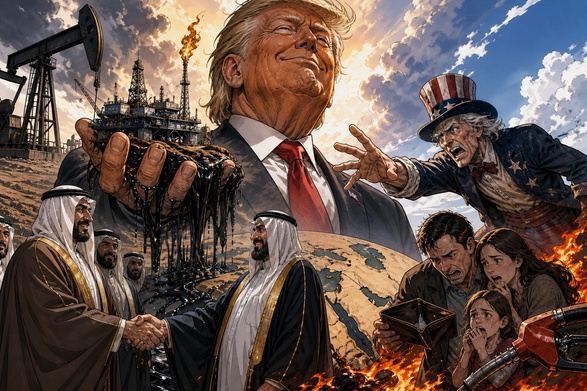
 | author: | The Associated Press | institution: | NPR | ¿porque no los dos? |
| tl;dr | The piece reports former President Donald Trump’s claim that the U.S. has reached an agreement with Venezuela giving the U.S. “control” over roughly 65 billion barrels of oil reserves. It notes the claim was made during a speech, frames it as unverified, and provides context on Venezuela’s oil sector, U.S. sanctions, and past policy debates about foreign oil access. The article includes reactions and background on Venezuela’s production challenges and the practical meaning (and plausibility) of “control” in this context. | ||||
| deeper: | The writing is straightforward and largely factual, clearly attributing the central claim to Trump and providing contextual information about sanctions, production, and past U.S.-Venezuela dynamics. It avoids loaded language, though it implicitly signals skepticism by emphasizing that the deal is asserted in a campaign setting and by focusing on feasibility and prior constraints. Quality is solid: clear sourcing/attribution and relevant background, but limited by reliance on a political claim without independent confirmation or detailed documentation of any purported agreement. | ||||
media: | |||||
| gen: 2026/08/15:02:31 in 38.7 sec (old)bias: 4 (Center) |
| type: newsquality: 82 |
| pts: 0 |


| gen: 2026/08/01:04:47 in 32.4 sec (old)bias: 2 (Center) |
| type: newsquality: 83 |
| pts: 0 |
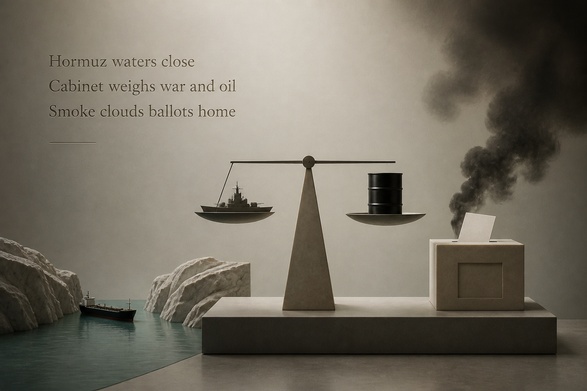
 | author: | Unknown | institution: | Unknown | ¿porque no los dos? |
| tl;dr | The image shows a Reuters-style news page reporting that President Donald Trump convened his cabinet/national security team amid rising tensions tied to the Strait of Hormuz, with discussion centered on the risk of conflict and how the U.S. might respond. The piece appears framed around regional security, shipping threats, and diplomatic/military options, using official statements and on-the-record sourcing typical of wire reporting. | ||||
| deeper: | Language and structure are largely straight-news: event-driven, attribution-heavy, and focused on what officials said and did. Any tilt mainly comes from source selection (government and security officials tend to dominate) and the inherent framing of crises through U.S. decision-making. It avoids overt loaded wording and reads as a factual recap, though it likely offers limited perspective from Iranian actors or independent investigators, which slightly narrows context. | ||||
media: | |||||
| gen: 2026/07/30:05:23 in 3 min 26.0 sec (old)bias: 3 (Center) |
| type: lolsquality: 62 |
| pts: 0 |
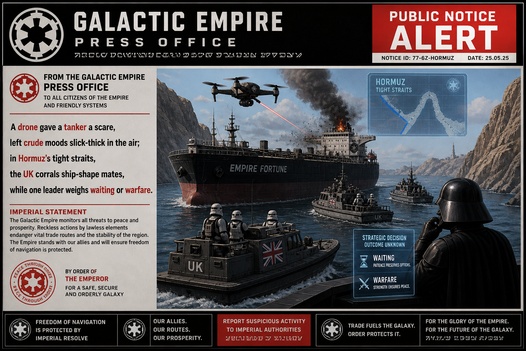
#middle-east#drones#oil#shipping#hormuz#france24#middleeast#droneattack#oilstorage#tanker#maritimesecuri1t
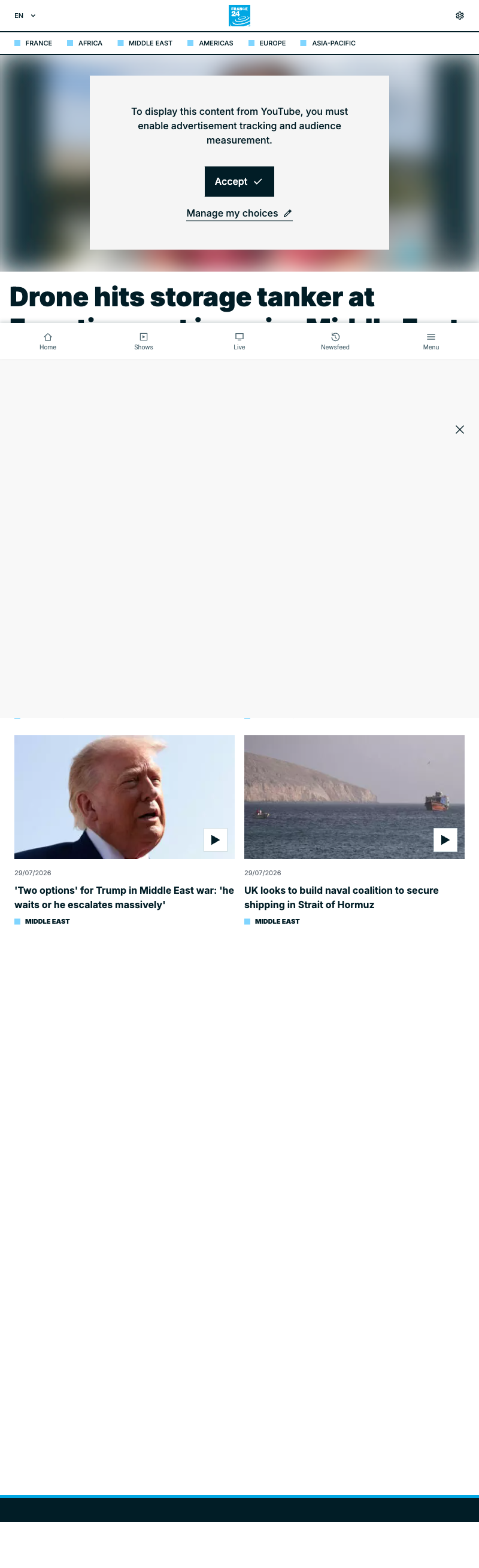
| gen: 2026/07/29:04:35 in 3 min 33.7 sec (old)bias: 3 (Center) |
| type: lolsquality: 83 |
| pts: 0 |
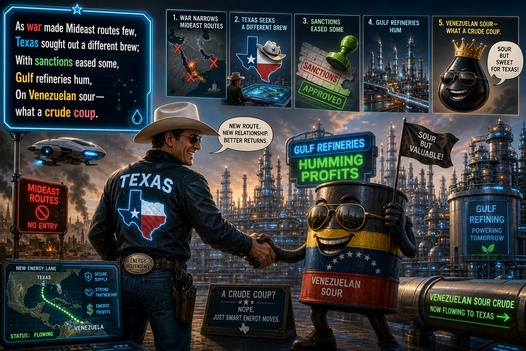
 | author: | Unknown | institution: | The Texas Tribune | ¿porque no los dos? |
| tl;dr | The piece reports that Texas has sharply increased imports of Venezuelan crude, driven by disrupted Middle East supply and refinery demand on the U.S. Gulf Coast. It explains how U.S. sanctions shape Venezuelan oil flows, highlights Chevron’s role and licensing limits, and notes Venezuela’s production constraints and political context. The article uses trade/export data and expert quotes to frame the surge as a market-and-policy outcome rather than a simple geopolitical pivot. | ||||
| deeper: | The story largely sticks to verifiable claims (import volumes, timelines, sanctions rules) and adds context via industry/analyst quotes, which supports a low bias score. Any tilt comes from emphasis choices—e.g., focusing on U.S. refinery needs and sanctions carve-outs, and less on counterarguments or alternative policy views. Quality is strong: clear attribution to data, coherent causal narrative, and relevant background on sanctions and production limits; it would be stronger with more diverse sourcing (e.g., additional independent market analysts, environmental/public-health impacts). | ||||
media: | |||||
| gen: 2026/07/25:04:58 in 1 min 1.6 sec (old)bias: 4 (Center) |
| type: newsquality: 62 |
| pts: 0 |
 | author: | Unknown | institution: | Unknown | ¿porque no los dos? |
| tl;dr | The image is a very low-resolution, tall screenshot of a news article (appears to be from CNN based on layout/logo style) about oil markets. The headline and body text are not fully legible, but the visuals (an oil tanker at sea and a large refinery with a U.S. flag) and the structure suggest an explainer focused on why a recent oil-related development (likely production decisions, export dynamics, or price moves) is being interpreted a certain way—and why the immediate “panic” narrative may be overstated. Because key paragraphs and numbers can’t be reliably read, only high-level content assessment is possible from the visible formatting and imagery. | ||||
| deeper: | Content: The article is presented as an explainer (headline phrased as a ‘why’ question, long-form text, and contextual imagery). The inclusion of oil-tanker and refinery photography signals a focus on supply chains/production and U.S. energy infrastructure. Bias: What’s visible suggests an interpretive frame—guiding the reader toward a particular conclusion (e.g., “don’t overreact,” “here’s why this isn’t as bad/good as it sounds”). That kind of framing is not inherently partisan, but it can steer perception by selecting which risks, time horizons, and comparators to emphasize. Without readable quotations/data, I can’t verify balance across viewpoints (industry vs. consumers; producing states vs. importing states; environmental vs. energy-security angles). Hence a modest bias score rather than high. Quality: The layout indicates a standard, edited news explainer with sections and at least one prominent data/quote block, which typically supports clarity. However, from the image provided, I cannot confirm the accuracy of claims, whether it cites primary sources (EIA/IEA/OPEC), whether it separates fact from analysis, or whether it includes key counterarguments. That uncertainty lowers the score. If you can upload a higher-resolution screenshot (or paste the text/URL), I can score source use, numerical rigor, and argument balance more precisely. | ||||
media: | |||||
| gen: 2026/07/15:04:15 in 1 min 4.4 sec (old)bias: 3 (Center) |
| type: newsquality: 63 |
| pts: 0 |
#middle east#conflict#iran#oil#united states#strait of hormuz#donald trump#military strikes#naval blockade
 | author: | NPR Staff; reporting by Hadeel Al-Shalchi, with contributions from Emily Feng and Alex Leff | institution: | NPR | ¿porque no los dos? |
| tl;dr | NPR reports that the United States conducted additional strikes against Iran after President Trump announced a renewed blockade of Iranian shipping through the Strait of Hormuz and a 20% toll on other commercial vessels using the route. The article describes Iranian and U.S. exchanges of attacks, disputed claims over control of the strait and alleged violations of a prior memorandum, statements by Iran’s new supreme leader, international calls for de-escalation, and resulting increases in oil prices and shipping disruptions. The screenshot is dated July 13, 2026, and presents the report as a developing story. | ||||
| deeper: | The article is relatively restrained and attributes major claims to identifiable sources, including U.S. Central Command, President Trump, Iranian officials, the United Nations and market-data providers. It includes statements from both the U.S. and Iran and notes disputed claims rather than presenting every assertion as established fact. Its main framing emphasizes escalation, risks to civilians and commercial shipping, diplomatic uncertainty, and economic consequences, which gives the report a cautious anti-war tone without strongly advocating a political position. Quality is reduced because the article is heavily dependent on official statements, offers little independent verification of battlefield claims, provides no casualty figures or detailed legal analysis of the blockade and strikes, and gives limited historical or strategic context. The future-dated 2026 report and extraordinary claims—such as a new Iranian supreme leader and a renewed U.S. war—also cannot be independently validated from the image alone. | ||||
media: No Media Preview | |||||
You made it to the bottom. Now dance!


owned and operated by: RPN Omnigalactic Insitutution as of: 2026/10/14: 00:22 in 0 ms
Enter Code
Login with Account