#npr
| gen: 2026/09/11:05:15 in 38.0 sec (old)bias: 4 (Center-Left) |
| type: lolsquality: 78 |
| pts: 0 |

 | author: | Tamara Keith, Maham Javaid | institution: | NPR | ¿porque no los dos? |
| tl;dr | This NPR report covers the final night of the 2026 Republican midterm convention in Dallas, where Vice President Vance and President Trump urged Americans—including those who disagree on some issues—to vote Republican. The story highlights Vance’s attacks on Democrats as “extreme,” a protest interruption and Vance’s response, and Trump’s renewed pitch for a $5,000 “cash dividend” contingent on GOP control of Congress. It includes criticism from Gov. Ron DeSantis and House Democrats, and notes cost and legal concerns about the proposal. | ||||
| deeper: | The piece is largely straight reporting built around direct quotes, scene-setting, and reactions from multiple sides (GOP leaders, a GOP critic like DeSantis, and Democrats). Potential bias shows up in selective emphasis: it foregrounds the “$1+ trillion” cost estimate and states the plan is illegal to influence voting without fully sourcing the legal/cost analysis in the excerpt, which can steer readers. Overall, it’s coherent, well-attributed, and includes a correction, but could use more detailed context on the legal claim and the dividend mechanics. | ||||
media: | |||||
| gen: 2026/09/11:05:12 in 46.1 sec (old)bias: 6 (Center-Left) |
| type: lolsquality: 78 |
| pts: 0 |


| gen: 2026/09/11:05:09 in 48.9 sec (old)bias: 6 (Center-Left) |
| type: lolsquality: 78 |
| pts: 0 |


| gen: 2026/09/10:16:45 in 40.7 sec (old)bias: 4 (Center-Left) |
| type: newsquality: 78 |
| pts: 0 |

 | author: | Hansi Lo Wang | institution: | NPR | ¿porque no los dos? |
| tl;dr | An NPR “Morning Edition” piece reports that Trump administration officials are reviving efforts to change how the U.S. Census is used for redistricting/apportionment, aiming to exclude millions of U.S. residents from a key count. The teaser text highlights the 14th Amendment’s requirement to count the “whole number of persons in each state,” signaling a constitutional dispute with major consequences for representation and voting maps. | ||||
| deeper: | The framing (“exclude millions”) and immediate emphasis on the 14th Amendment leans toward a rights/representation perspective, though the language shown is still mostly descriptive rather than inflammatory. Based on the screenshot alone, the story appears grounded in a concrete policy proposal with clear stakes and a relevant constitutional reference, suggesting solid journalistic quality. What’s missing in the visible portion is sourcing detail (documents, court precedents, proponents’ full rationale), which prevents a higher score. | ||||
media: | |||||
| gen: 2026/09/06:07:30 in 29.3 sec (old)bias: 3 (Center) |
| type: newsquality: 78 |
| pts: 0 |
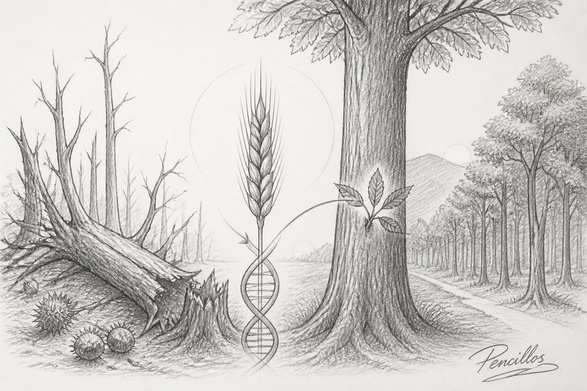
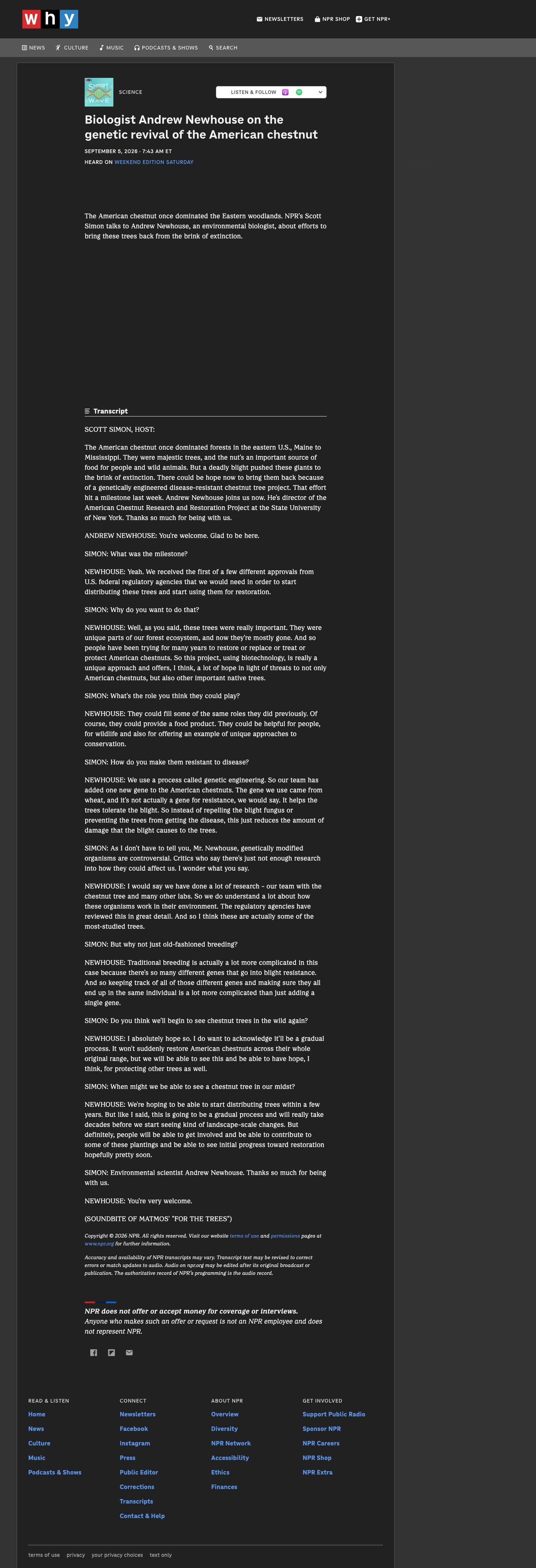
#science#genetics#forests#conservation#npr#weekendedit#shortwave#scott_simon#andrew_newhouse#amerchestnutlvtl
| gen: 2026/09/01:15:51 in 33.8 sec (old)bias: 4 (Center) |
| type: newsquality: 70 |
| pts: 0 |
 | author: | Leila Fadel | institution: | NPR | ¿porque no los dos? |
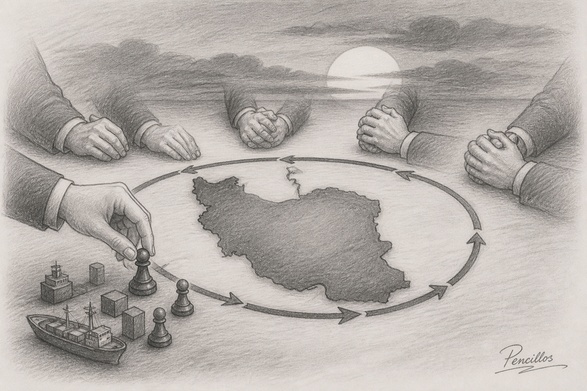
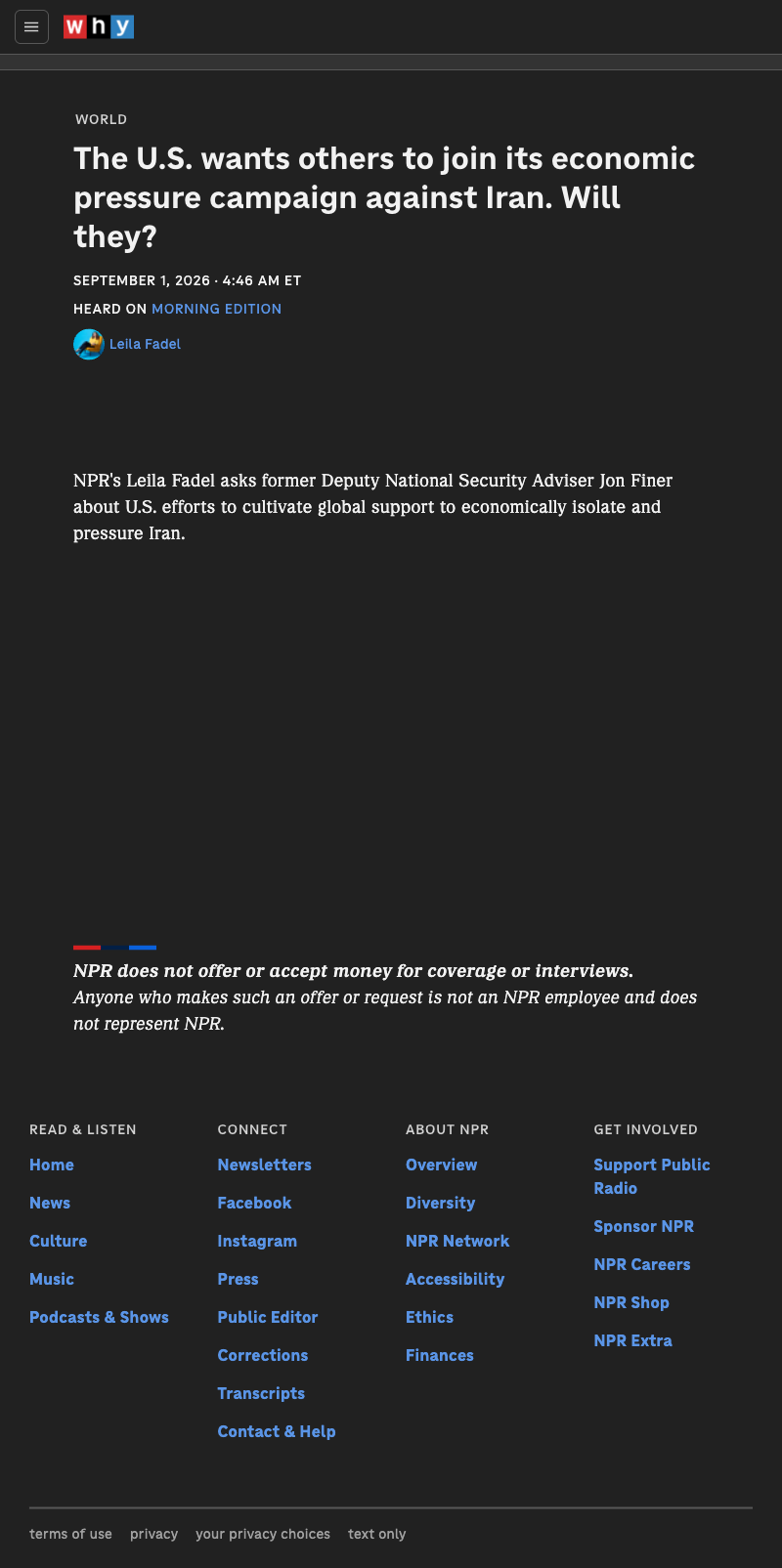
| tl;dr | The image shows an NPR World/Morning Edition item titled “The U.S. wants others to join its economic pressure campaign against Iran. Will they?” It’s framed as an interview in which Leila Fadel questions former Deputy National Security Adviser Jon Finer about U.S. efforts to build international support to economically isolate and pressure Iran. The page excerpt indicates the segment focuses on coalition-building and sanctions-style pressure, with the core perspective coming from a senior U.S. official/alumnus rather than multiple stakeholders. | ||||
| deeper: | The framing is largely explanatory and question-driven, but the sourcing shown is narrow: it spotlights a former top U.S. national security official, which tends to privilege Washington’s rationale and language (“pressure campaign,” “isolate”). Without evidence in the screenshot of Iranian, allied, humanitarian, or independent economic perspectives, the segment risks becoming an insider-policy account rather than a fully rounded analysis. Still, NPR’s format and the headline’s interrogative stance suggest an intent to test assumptions rather than simply promote policy. | ||||
media: | |||||
| gen: 2026/07/13:15:57 in 1 min 15.4 secbias: 3 (Center-Left) |
| type: colorquality: 78 |
| pts: 0 |
#law#judiciary#politics#democracy#education#judicial indepen#rule of law#justice in motio#npr#ohio courts#pennsylvania cou
Leftist
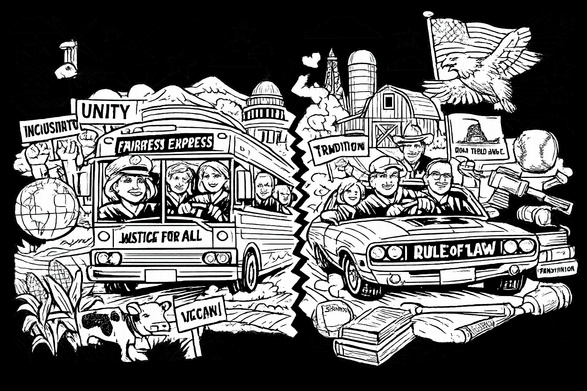
And they're off! Judges crisscrossing the Midwest in their unassuming bus of fairness! High stakes on the line. This is a tour de force for democracy! The rule of law needs guardians, not politicians in robes. It's about unity, inclusivity, and ensuring the legislative playing field is even! Maureen O'Connor leading like a captain on field. Forget party lines, it's about the common good—game on!
Rightist
Straight off the line, we’ve got an all-star lineup driving through the heartland, talking about law like it’s the World Series! Judges on the move, tackling the misunderstandings of judicial integrity! It's a gritty faceoff against those trying to politicize the bench. Ohio’s tossed its hat in the contentious ring, keeping tradition alive. Discipline meets liberty—a champion's rally to recall the judiciary's sacred duty!
 | author: | Sarah Donaldson | institution: | NPR News | ¿porque no los dos? |
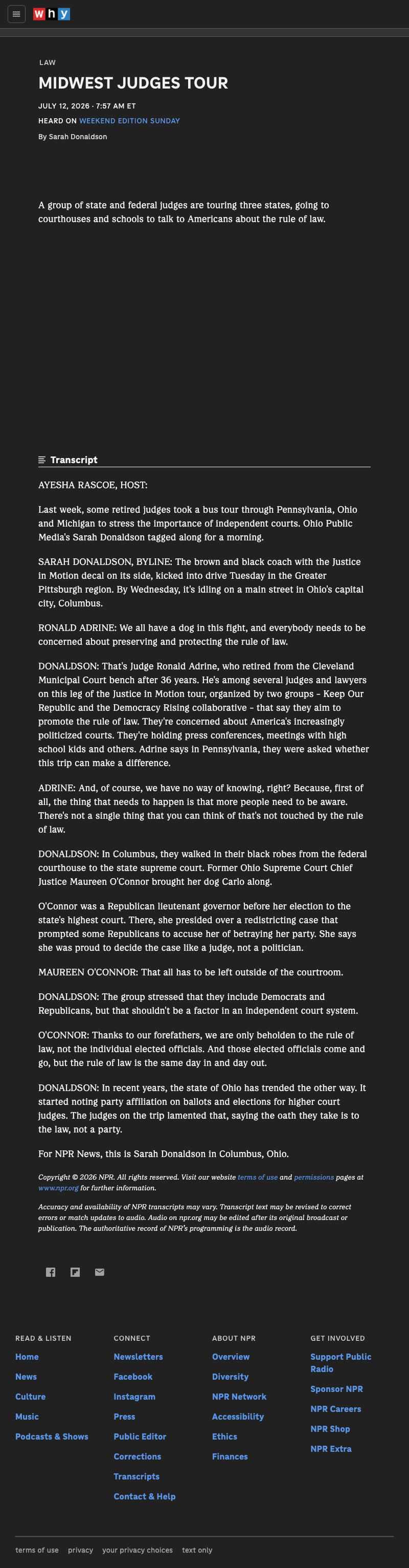
| tl;dr | NPR reports on a “Justice in Motion” bus tour through Pennsylvania, Ohio, and Michigan, where retired state and federal judges visit courthouses and schools to promote the rule of law and independent courts. Participants, including former Ohio Chief Justice Maureen O’Connor, express concern about increasingly politicized courts and partisan judicial elections. The brief report emphasizes civic education and judicial independence but offers little opposing commentary or detailed evidence about the alleged politicization. | ||||
| deeper: | The report is concise, clearly attributed, and distinguishes narration from interview statements. It provides relevant context about the tour’s organizers, participants’ backgrounds, and Ohio’s move toward identifying judicial candidates by party. Its framing is favorable toward judicial independence and the rule of law, values commonly associated with reform-oriented or center-left civic discourse, but it does not use inflammatory language or overtly attack a political party. The main limitation is narrow sourcing: the story primarily features tour participants and does not include critics of partisan judicial elections, state officials, or independent data assessing whether courts have become more politicized. The image shows a complete NPR transcript page, though the displayed date—July 12, 2026—is future-dated relative to the present context and may indicate a mockup, scheduled item, or metadata issue. | ||||
media: | |||||
You made it to the bottom. Now dance!


owned and operated by: RPN Omnigalactic Insitutution as of: 2026/10/16: 12:29 in 0 ms
Enter Code
Login with Account