#conservation
| gen: 2026/09/06:07:30 in 29.3 sec (old)bias: 3 (Center) |
| type: newsquality: 78 |
| pts: 0 |
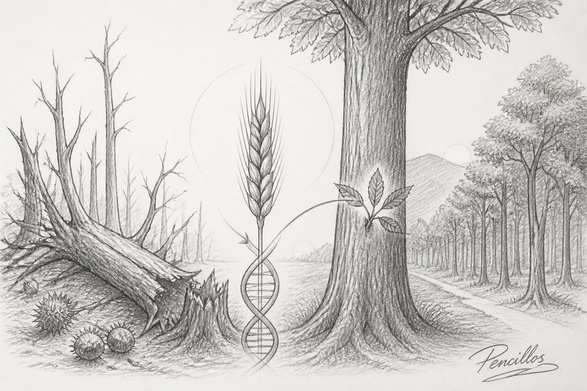
#science#genetics#forests#conservation#npr#weekendedit#shortwave#scott_simon#andrew_newhouse#amerchestnutlvtl
| gen: 2026/09/02:03:39 in 40.7 sec (old)bias: 2 (Center) |
| type: lolsquality: 68 |
| pts: 0 |
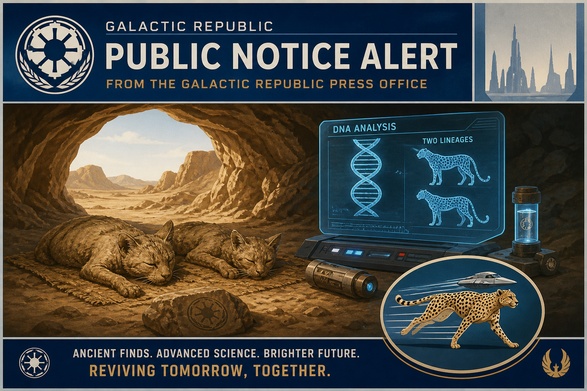
#cheetahs#genetics#conservation#saudi arabia#ancient-dna#archaeology#human-evolution#fossils#research-study
 | author: | Unknown | institution: | Unknown | ¿porque no los dos? |
| tl;dr | The screenshot appears to be a science-news article about researchers extracting and analyzing ancient DNA from an archaeological/prehistoric specimen (the pictured object looks like a fossil or bone/tooth fragment). The piece describes what genetic analysis can reveal about ancient populations and/or human relatives, summarizes the study’s main findings, and includes methodological context and caveats typical of ancient-DNA work (contamination, sample limits, probabilistic inference). | ||||
| deeper: | This reads like straightforward science reporting: it leans on research claims rather than ideology, and the language (from what’s legible) doesn’t use overtly loaded political framing. The main risk is “science-news compression”: simplifying uncertainty, emphasizing novelty, and relying on paraphrased conclusions without enough space for limitations or dissenting views. Quality seems decent if it’s tied to a peer‑reviewed paper and quotes/links sources, but the screenshot resolution makes it hard to verify specifics like citations and exact claims. | ||||
media: | |||||
| gen: 2026/08/27:17:44 in 2 min 14.9 sec (old)bias: 0 (Unknown) |
| type: lolsquality: 0 |
| pts: 0 |
 | author: | Unknown | institution: | Unknown | ¿porque no los dos? |
| tl;dr | The provided image appears to be blank (a solid white field) with no visible article text, headline, photos, charts, or discernible content to analyze. Because there is no readable material, I can’t assess the claims, sourcing, framing, or editorial choices that would indicate bias or quality. | ||||
| deeper: | There’s no legible content in the image—no text or visuals beyond an empty white background—so there’s nothing to evaluate for viewpoint, omissions, loaded language, evidence, or reporting standards. If you re-upload a clearer image or paste the article text/link, I can provide a real bias and quality assessment. | ||||
media: | |||||
| gen: 2026/07/11:15:27 in 1 min 18.7 sec (old)bias: 5 (Center-Left) |
| type: lolsquality: 76 |
| pts: 0 |
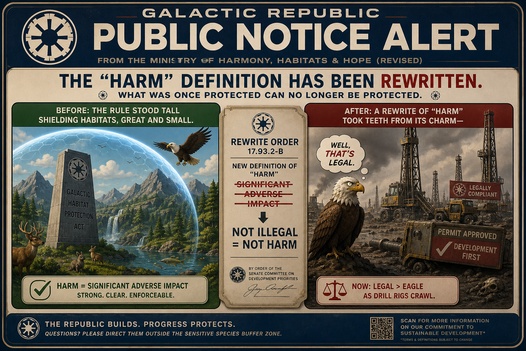
#environment#wildlife#policy#regulation#conservation#endangered speci#wildlife protect#trump administra#environmental la#interior departm#oil drilling and
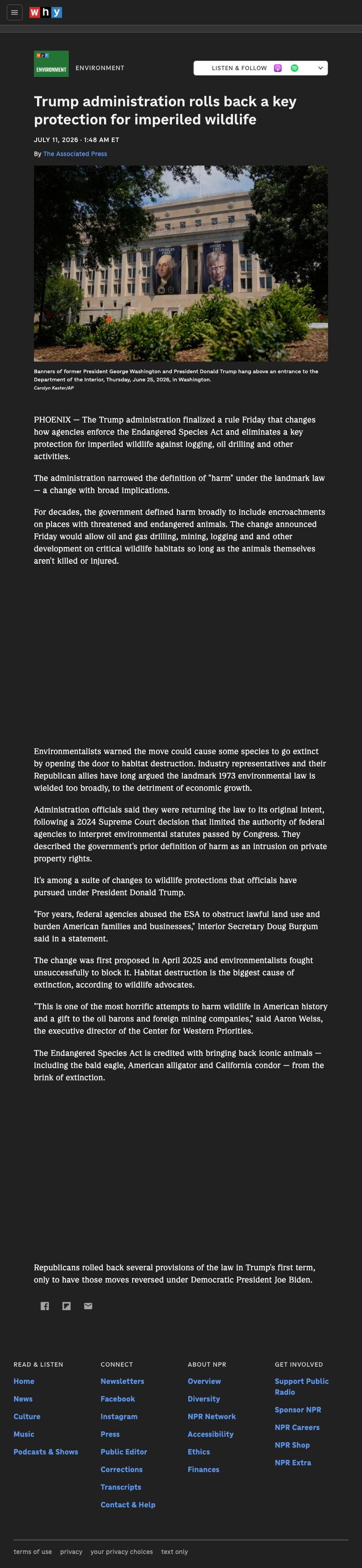 | author: | The Associated Press | institution: | NPR | ¿porque no los dos? |
| tl;dr | The article reports that the Trump administration finalized a rule narrowing the Endangered Species Act’s definition of “harm,” potentially allowing development in endangered species’ habitats as long as animals are not directly injured. It presents environmentalists’ warnings alongside administration and industry arguments about property rights, economic growth, and agency overreach. The article emphasizes the potential ecological consequences and frames the change as a rollback of wildlife protection. | ||||
| deeper: | The report is attributed to The Associated Press and includes perspectives from environmental advocates, Interior Secretary Doug Burgum, administration officials, industry-aligned Republicans, and the Center for Western Priorities. That gives it reasonable balance and factual context. However, the headline’s wording—“rolls back a key protection”—and the prominent placement of strongly charged environmental criticism give the article a clear tilt toward emphasizing ecological risks. The administration’s position is presented, but largely through official assertions rather than detailed legal or economic analysis. The visible article is also relatively brief, lacks links to the final rule or underlying studies, and contains a minor wording error (“and and other development”). | ||||
media: | |||||
You made it to the bottom. Now dance!


owned and operated by: RPN Omnigalactic Insitutution as of: 2026/10/14: 18:28 in 0 ms
Enter Code
Login with Account