#pakistan
| gen: 2026/08/07:19:52 in 57.6 secbias: 2 (Center) |
| type: eli5quality: 78 |
| pts: 0 |
 | author: | Unknown | institution: | Unknown | ¿porque no los dos? |
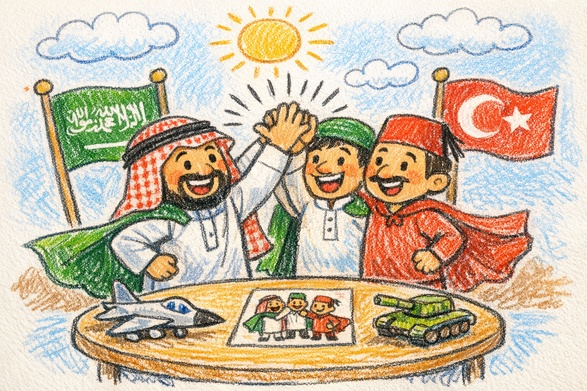
| tl;dr | The article reports that Saudi Arabia, Pakistan, and Turkey signed a mutual defense agreement during talks in Ankara. It highlights who attended (senior Saudi, Pakistani, and Turkish leaders), the broad purpose of the pact (expanded military/defense cooperation and mutual support), and frames it as both strategically meaningful and politically symbolic. It also situates the deal within the countries’ longstanding military ties and recent regional security dynamics. | ||||
| deeper: | The writing is largely straight news: it focuses on verifiable events (meeting, signing, attendees) and provides context about existing military relationships. Bias is limited to framing choices—phrases like “powerful political symbolism” and emphasis on regional messaging add interpretation without strong ideological slant. Quality is solid but constrained by lack of granular detail (scope, legal obligations, timelines, parliamentary approval, and enforcement mechanisms), so readers can’t fully assess how binding the pact is. | ||||
media: | |||||
| gen: 2026/07/30:05:29 in 3 min 21.1 sec (old)bias: 2 (Center) |
| type: lolsquality: 78 |
| pts: 0 |
 | author: | Unknown | institution: | FRANCE 24 (with AFP) | ¿porque no los dos? |
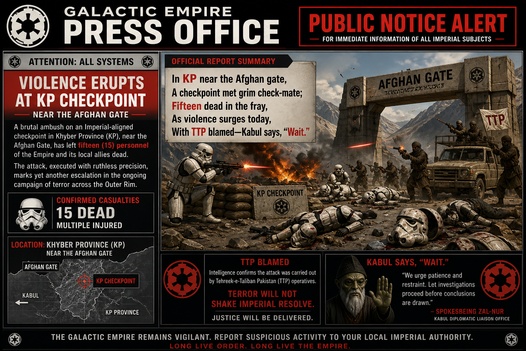
| tl;dr | A report says an attack on a security checkpoint in Pakistan’s Khyber Pakhtunkhwa province killed at least 15 people, including police, soldiers, and government personnel, with additional injuries. The article links the violence to a broader surge in militant attacks in the border region, noting the role of the Pakistani Taliban (TTP) and Pakistan’s accusations that militants operate from Afghanistan—claims the Taliban government denies. No group immediately claimed responsibility for this specific attack. | ||||
| deeper: | The piece is largely straight-news, relying on official statements (police/military) and widely reported context (TTP insurgency, Pakistan–Afghanistan tensions). Bias is low but present in source balance: operational details and casualty counts are mainly from Pakistani authorities, with limited independent verification or militant-side sourcing. Quality is solid for a breaking-news brief, though it lacks deeper evidence for cross-border claims, more local eyewitness detail, or clearer attribution for contested assertions. | ||||
media: | |||||
| gen: 2026/07/15:04:12 in 1 min 4.9 sec (old)bias: 3 (Center) |
| type: newsquality: 28 |
| pts: 0 |
 | author: | Dyaa Hadid | institution: | NPR | ¿porque no los dos? |
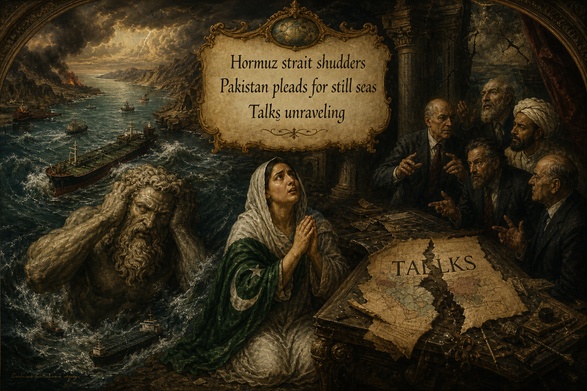
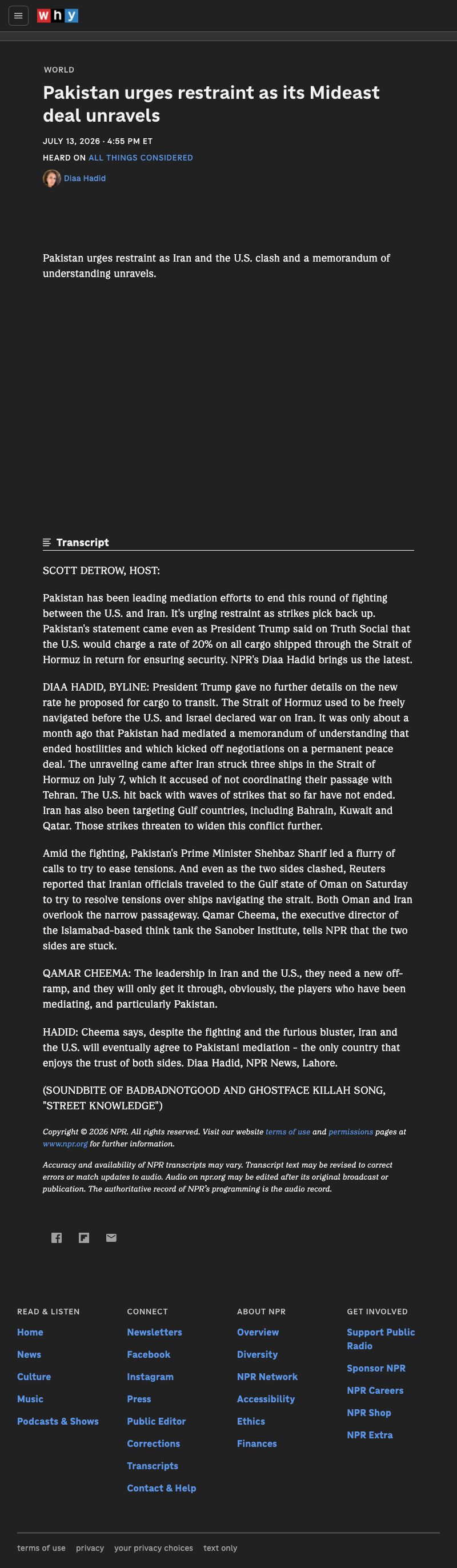
| tl;dr | The image shows an apparent NPR transcript dated July 13, 2026, about Pakistan attempting to mediate an escalating conflict between Iran and the United States. It says President Trump proposed a 20% charge on cargo passing through the Strait of Hormuz, while Iran and the U.S. exchanged attacks and Pakistan sought to restore negotiations. However, the item contains major credibility concerns: it is dated in the future, provides little supporting detail, and describes extraordinary geopolitical events without sufficient sourcing or corroboration. | ||||
| deeper: | The presentation is relatively restrained and news-oriented. It attributes claims to NPR reporters, Reuters, President Trump’s Truth Social account, and a Pakistani think-tank analyst, and it avoids overtly partisan language. The emphasis on diplomacy and restraint may modestly favor a conflict-de-escalation perspective, but there is no clear left- or right-wing framing. Quality is substantially reduced by the apparent future date, the absence of links or detailed evidence, and the extraordinary claims that the U.S. and Israel declared war on Iran, that Iran attacked Gulf states, and that the U.S. proposed a 20% Strait of Hormuz cargo charge. The transcript also does not explain the alleged memorandum, identify the ships involved, provide official statements, or give enough context to independently evaluate the claims. The NPR branding and polished formatting could be genuine, but the image alone cannot authenticate the article and may depict fabricated or altered content. | ||||
media: | |||||
You made it to the bottom. Now dance!


owned and operated by: RPN Omnigalactic Insitutution as of: 2026/10/16: 15:21 in 0 ms
Enter Code
Login with Account